
The joyous celebrations of Sri Nrisimha Jayanthi were conducted with great fervour on May 10/11, 2025 at the Sri Andal Rangamanar Kovil, Bheemana St., Abiramapuram ( near my home). The jayantotsavam included all regular rituals such as “Homa Sankalpam”, “aavaahanam” , “Agni Pratishta” and various yagnya havis and dravya offerings accompanied by 24/108/1008 mantra japam chanting all finally culminating in grand “purnaahuthi”. The utsavam was attended by several devotees from the local neighbourhood .
It was a divine opportunity bestowed upon me by Sri Lakshmi Nrisimhan to be present at the utsavam on both days from start to finish of the event and to participate in the Homam proceedings as one of the “ritviks”.
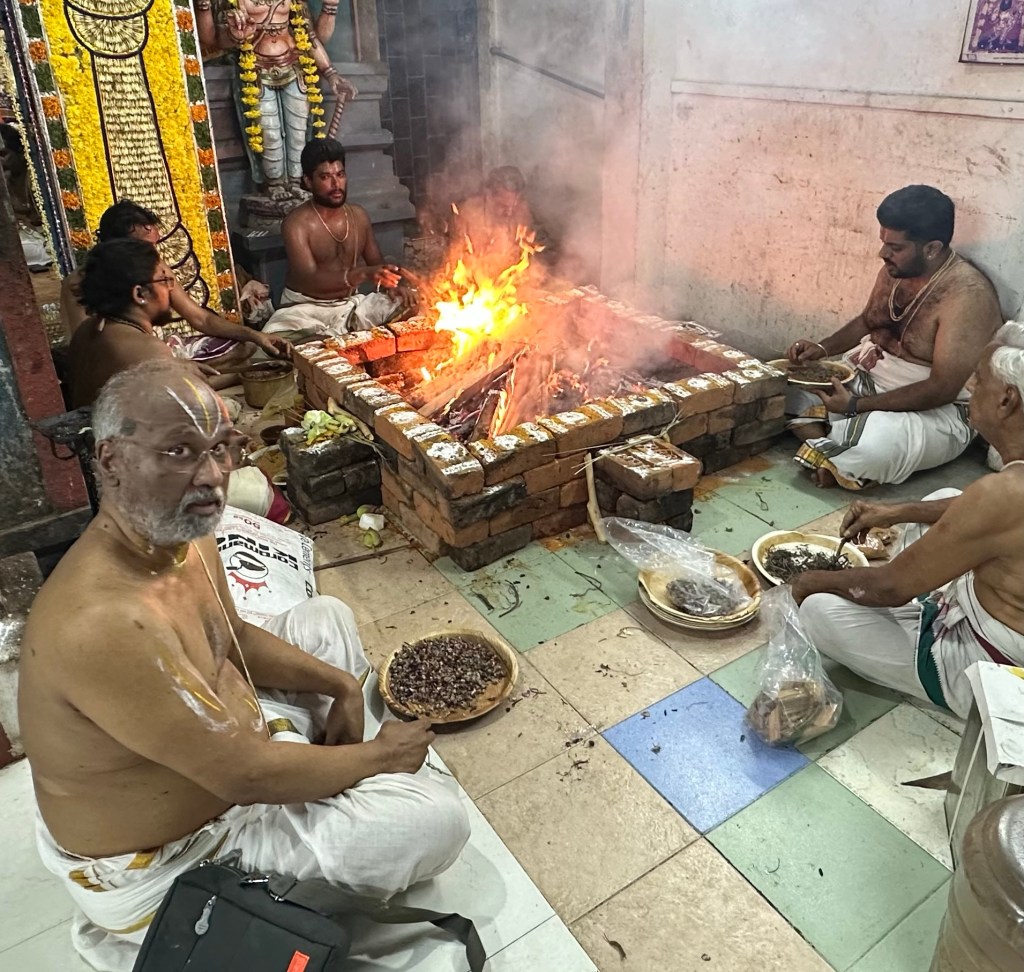
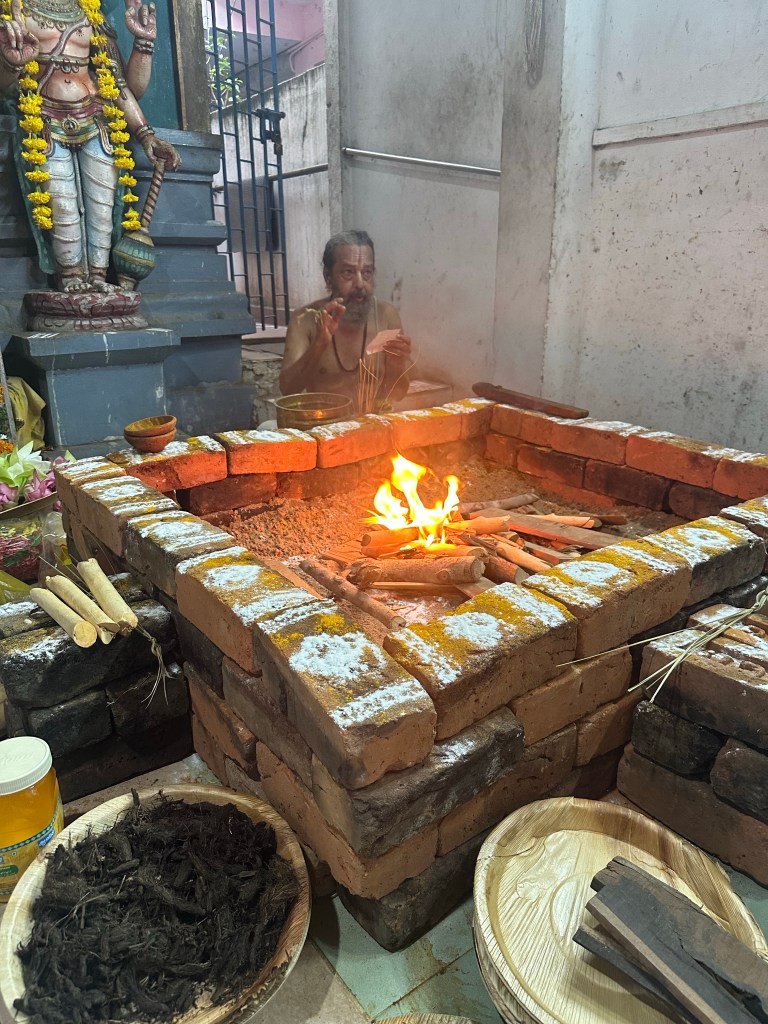
The highlight of the Homam this year was the performance of yagnya offerings through the recitation of the ApAmArjana Stotra Japam … which is a very sacred text found in the Vishnu-dhamottara Purana.
The Vishnudharmottara Purana is traditionally attributed to the sage Markandeya. Other scholarly sources attribute its authorship to Vyasa. There is scholarly debate about its exact date, but most sources place its composition between the 5th and 7th centuries CE. Some scholars (such as David Pingree) suggest the compilation was likely complete by the 5th or 6th century CE. Other analyses, considering literary influences and references, suggest it was written not earlier than 400 CE and not later than 650 CE.
Apamarjana Stotram is a powerful prayer found in the Vishnu Dharmottara Purana, and is dedicated to various forms of Lord Vishnu-specifically Varaha, Narasimha, Vamana, Vishnu, and Sudarshana Chakra. The term “Apamarjana” means cleansing or purification, and this stotram is recited for the removal of diseases, afflictions caused by evil spirits, and negative planetary or other occult influences.
Context and Structure:
• The stotram is presented as a conversation where Sage Dhalabhya asks Sage Pulasthaya for a remedy to cure all sickness and afflictions for the benefit of all beings. Sage Pulasthaya then teaches this stotram.
• It includes specific invocations (nyasa) to different forms of Vishnu, associating each with different fingers and parts of the body, symbolizing the act of purifying and protecting oneself.
Purpose and Significance
• The main goal is the purification of both body and mind, driving away all forms of physical and mental ailments, as well as inauspiciousness caused by malefic planetary movements.
• It is considered akin to ritual purifications (like PuNyAhavAchanam) performed in temples, but focused on the individual’s own body and mind.
• The stotram is especially valued for its association with “Vaidhya Narayana,” the healer aspect of Vishnu, and is believed to be effective when chanted daily or for those suffering from chronic illnesses.
Key Features
• Forms Invoked: Varaha (boar), Narasimha (man-lion), Vamana (dwarf), Vishnu, and Sudarshana (discus).
• Benefits: Cleansing from diseases, protection from evil spirits and planetary afflictions, mental peace, and general well-being.
• Philosophy: Emphasizes the body as a sacred dwelling for the Lord, which must be kept pure and healthy for spiritual practice.
Usage
• Recited during times of illness, negative planetary periods, or as a daily prayer for maintaining health and purity.
• The stotram is available in Sanskrit with translations and commentaries for better understanding.
The Apamarjana Stotra contains several important verses that highlight its purpose-removal of diseases, poisons, evil planetary effects, and afflictions. Here are some of the most significant verses and their meanings:
• Verse 4:
vratopavāsairyair viṣṇur nānya janmani toṣitaḥ,
te narā muniśārdūla viṣa rogādi bhāginaḥ
“Those who have pleased Lord Vishnu by penance and fasting will never suffer from poison or diseases, O best among sages.”
• Verse 6:
ārōgyaṁ paramārudhiṁ manasā yady adhīcchati,
tad anpotya saṁdigdhaṁ paratra ācyuta toṣa kr̥t
“Whether one desires health or great wealth, it will be surely attained by one who pleases Achyuta (Vishnu).”
• Verse 7:
nādhīn prāpnoti na vyādhīn viṣa grahaṁ nibandhanam,
kr̥tyā sparśa bhayaṁ vāpi toṣite madhusūdane
“No sorrow, disease, poison, planetary problems, or fear of evil spirits will affect one who has pleased Lord Madhusudana.”
• Verse 10:
toṣakāṣṭā jayante narāḥ pūrṇa manorathāḥ,
arogāḥ sukhino bhogān bhoktāro muni sattama
“He who pleases the Lord will have all his wishes fulfilled, will be free from disease, and will enjoy happiness.”
• Verse 77:
mama astu sarva duḥkhānāṁ praśamo yācanādhare,
śāntaḥ samasta rogāste grahāḥ sarva viṣāṇi ca
“Let this prayer remove all my sorrows, make all my diseases peaceful, and neutralize the effects of planets and poisons.”
• Verse 78:
bhūtāni sarva praśamyantu saṁsmṛte madhusūdane,
etat samasta rogeṣu bhūta grahaṁ bhayeṣ ca
“Let all evil spirits be pacified by meditating on Madhusudana, and all sickness, planetary effects, and fears be destroyed.”
Several verses in the Apamarjana Stotra are especially revered for their potency in removing diseases, poisons, evil planetary effects, and negative energies. The following are widely considered the most powerful:
• Verse 52:
Achyutānanta Govinda Vishnor Nārāyanāmṛta,
Rogān me nāśaya aśeṣān āśu Dhanvantare, Hare.
“O Dhanvantari, O Vishnu! Let all my diseases be completely cured by the nectar-like names of Achyuta, Ananta, Govinda, Vishnu, and Narayana.”
This verse is a direct appeal to the divine healer aspect of Vishnu, invoking his various names as a remedy for all diseases.
• Verse 51:
Vilayam yāntu te sarve Vishnor uccāranena cha,
Kṣayam gacchantu cha śeṣāś cha kṛṇabhi-hatā Hare.
“Let all afflictions be subdued by the repetition of Vishnu’s names, and whatever remains be destroyed by the holy wheel of Hari.”
This highlights the power of chanting Vishnu’s names and the Sudarshana Chakra for complete protection.
• Verse 66:
Kṣiptvā Sudarśanam cakram jvālā-mālati-bhīṣaṇam,
Sarva-duṣṭopasamanam kuru deva-vara Achyuta.
“O Achyuta, send your Sudarshana Chakra, fierce and blazing, to destroy all evil.”
This verse is often recited for protection from negative forces.
• Verse 77:
Mamasthu sarva-duḥkhānāṁ praśamo yācanādhare,
Śāntaḥ samasta-rogās te grahāḥ sarva-viṣāṇi cha.
“Let this prayer remove all my sorrows, pacify all diseases, and neutralize the effects of planets and poisons.”
This is a comprehensive prayer for relief from all forms of suffering.
• Verse 78:
Bhūtāni sarva praśamyantu saṁsmṛte Madhusūdane,
Etad samasta-rogeṣu bhūta-grahaṁ bhayeṣ cha.
“Let all evil spirits be pacified by remembering Madhusudana (Vishnu), and let all sickness, planetary effects, and fears be destroyed.”
These verses are frequently singled out for daily recitation or during times of illness and adversity, as they encapsulate the core protective and healing intent of the Apamarjana Stotra.
All the above verses encapsulate the stotra’s core themes: seeking divine protection from illness, negativity, and misfortune through devotion to Vishnu. The stotra ends with a prayer for total well-being and pacification of all troubles
In summary, the Apamarjana Stotram from the Vishnu Dharmottara Purana is a revered hymn for spiritual and physical cleansing, invoking the healing powers of Vishnu in his various forms to protect and purify the devotee.
************ ************ **********
Below are attached a few video-clips of the recitation of the ApAmArjana Stotra Japa Homam on the day by the chief priest.
Sri Lakshmi Nrisimha Parabrahmane Namah!
🙏🙏🙏🙏
Sudarshan Madabushi