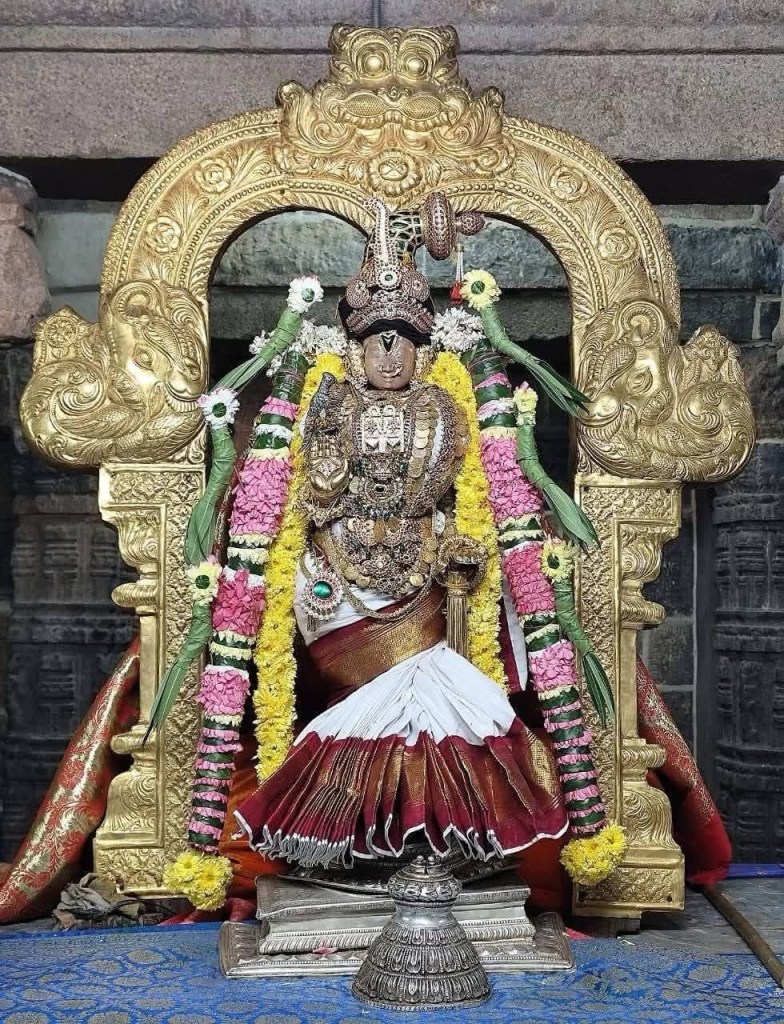
Bhakti’s triumph over plunder and mayhem: revisiting the legend of Sri Rangam “thulaka naachiyaar” with “Eepa”

This morning “Eepa” — a doyen of Tamil literature known for his Sahitya Akademi Award-winning novels and plays — Indira Parthasarathy sent me a sharp question as a WhatsApp message. It tested my familarity if not knowledge, as a Sri Vaishnava (albeit an “Unknown and Unusual” one!), of age-old temple customs and traditions in the Sri Rangam Temple.

“What’s your take on துலுக்க நாச்சியார் and that Sri.Ranganathar’s breakfast “நைவேத்தியம்” is served from her sannadhi everyday?”

Momentarily, I was taken aback by the query since although I have worshipped at the temple of Sri Ranganathan at Sri Rangam several times in my life, and also had heard of the “thulaka nacchiyaar sannidhi” (the “shrine of the Muslim consort of the Deity”), I had given it really no more than cursory attention or thought. It was my understanding that it was one of several hundreds of legends and hyperbolic narratives that over centuries had been woven around the history and hagiography of the famous temple so dearly cherished by all Sri Vaishnavas in the world.

However, Eepa’s question to me that came right out of the blue, so to say, made me sit up and try and recollect all that I knew from vague and patchy memory about this shrine dedicated to a Muslim princess who came to be apotheosised, deified and idolised inside the sanctity of this premier Sri Vaishnava place of worship.

Here below are a few snatches of the exchange on the matter that Eepa and I shared with each other later this the morning.

*********

Sir, I’ve not read the sampradaya texts on this old legend . What I know is limited to whatever I’ve been able to gather about this Temple tradition from just hearsay… Whatever I’ve heard was narrated to me by family elders and relatives, Sri Rangam priests and a few other knowledgeable friends. I’m not sure what the “sthala purana” says about this. But like you, I too have always wondered if during Ramanuja’s time this practice of offering Sri Ranganatha “breakfast naivedyam” sent from “Thulaka Nacchiyaar” had been prevalent. I know for a fact that Ramanujacharya did not include it as a routine “sevai” (ritual service) in the temple’….

Eepa then posed another question: “In Tirupathi she is called ‘Bibi Nacchiyar‘ . Right?”

And I replied: No, Sir …. That’s in Melkote Tirunarayanapuram. Tirumala has no such shrine.

Eepa’s probing made me try even harder to remember whatever I had earlier gathered from hearsay about this shrine of Thulaka Nacchiyaar… and slowly, one by one, the halting memories began to surface inside my mind.

*************

Thulukka Nachiyar, also known as Surathani, represents a legendary figure in Sri Vaishnava tradition at the Ranganathaswamy Temple in Srirangam, embodying profound devotion that transcends religious boundaries.

The story originates from the 14th-century invasions by Malik Kafur, when the temple’s utsava murti (processional idol) of Lord Ranganatha was seized by the Muslim army general and taken to Delhi; there, the Muslim commander’s daughter — a pubescent lass and a royal — fell deeply in love with the idol of the Deity. Her bridal-mystic instincts were stirred , and she began treating it with utmost care, affection and reverence. She also became very possessive about Sri Rangantha’s icon.

History suggests that Ramanujacharya travelled up to the Delhi Sultanate capital city to secure the recovery with the help of devotees and temple devotees of the idol and brought it back to Sri Rangam. But the little princess was so besotted with the Lord of Sri Rangam that she refused to part with it and followed it all the way to Srirangam. She never left the holy city. She sacrificed her life in devotion to the Deity until her end when she was believed to have merged into the sanctum in much the same manner as Sri Vaishnavas believe Sri Andaal herself too attained union with Lord Ranganatha. It was thus that Thulakka Naachiyaar’s deification came about as one of Ranganatha’s consorts with a dedicated shrine being consecrated in the temple’s second circular concourse or prakaram.

*********

The custom of offering “breakfast naivedyam“—specifically butter rotis and sugar prepared in Mughalai style —from Thulukka Nachiyar’s sannidhi persists daily to this day. It is first presented to her before Lord Ranganatha. This practice honors her legendary bhakti, where Ranganatha is said to have appeared in her dreams, accepting her as his wife, and temple priests built her shrine as a portrait rather than as an idol, (respecting Islamic aniconism!) with agil and sandalwood rituals. Such syncretic elements highlight Sri Vaishnavism’s historical inclusivity, as seen in Ramanuja’s era, reflect devotion superseding caste and creed.

In Sri Vaishnava lore, this narrative exemplifies bhakti’s universality, portraying divine grace extending to even a Muslim woman whose love rivaled that of traditional consorts like Andal. Variations of this legend of Sri Rangam exist —some link it to Melkote Temple’s “Bibi Nachiyar or emphasize Ramanuja’s role in consecrating it there in that temple town —but the Srirangam version is meant to underscore Ranganatha’s compassion, when he accepted the Muslim girl-bhakta merging herself unto himself.

The legend affirmed two of Sri Vaishnavism’s theological tenets: feminine right to worship as equalling male’s and syncretism in worship that brooked no communal difference. It brought the entire community of Sri Rangam together. It thus countered the Islamic invasion’s trauma suffered by Sri Rangam and at the same time, it also affirmed the doctrine of “saranagathi tattva” — the true surrender to Vishnu that dissolves divisions — which aligns with Vishishtadvaita principles of qualified non-dualism.

The annual festival — “kalyana utsavam” — in Sri Rangam celebrates the Thulaka Naachiyaar’s union with the Almighty with great fanfare and grandeur, reinforcing communal harmony while at the same time solemnly memorialising — amidst the old collective memories of — community sufferings of historical pillage and plunder that once upon a time in history had been wreaked upon them.

***********

Even amongst the faithful within the Sri Vaishnava community, there are those who believe in the historicity of Thulakka Naachiyaar.… lock, stock and barrel… while there are equal number of skeptics too who view it as a post-invasion compromise. And that is what I told Eepa too in my messages to him:

Sir, I feel that this shrine was probably constructed after the Muslim invasion . Maybe the temple administrators wanted to maintain communal amity through what is known in political discourse today as “minority appeasement” .

Forgive me, Sir, if you think I am sounding a bit too cynical and incredulous here, but some serious historians of Sri Rangam temple do classify this temple custom as myth-making intended to foster harmony, not literal history, since it perfectly aligns with Sri Vaishnava emphasis on prapatti or saranagathi over rigid historicity.

I am sure that you will agree with me when I say that we Sri Vaishnavas as a community are extremely flexible to a fault. We are so very agile and our adaptiveness to social and political changes and circumstances is what makes us as survivors of historical upheavals and tumult through the ages. It should therefore not surprise us at all that even so soon after the Islamic Invasions of the Sri Rangam temple, Sri Vaishnavism was so very adept and resilient that it could convert Adversity (i.e. Muslim invasion) into Opportunity (i.e. co-opting and then digesting utterly alien religious influences into its own body of religious customs).

***********

Temple records and oral traditions uphold the legend of Thulaka Nachiyar’s bhakthi as genuine devotion, not merely some kind of conquest glorification. Also, her story of devotion to Ranganatha almost rivals that of Sri Andal since it is a narrative that enriches Tamil Vaishnava heritage, inviting reflection on how bhakti unites diverse souls before the Divine.

While we cannot challenge the faith of the faithful, at the same time we also cannot dismiss outright the skeptics view of the legend of Thulaka Nachiyaar. Their incredulity is based on their view that the most authentic record of the history of the Sri Rangam temple and its rituals must remain true to the “kovil ozhugu” manual of sanctum which was authored by Sri Ramanujacharya himself.

For the skeptics it would be impossible to conceive anything like a daily rite of offering breakfast naivedyam from Thulukka Nachiyar’s sannidhi as part of the temple protocols outlined in the “Kovil Ozhugu“. The introduction of it into temple protocols later by the Sri Vaishnavas of Sri Rangam amounts to a travesty of the priestly order ordained by Ramanuja. So, their moot question is: If that Muslim princess followed Sri Ramanuja all the way from Delhi to Sri Rangam and became lifelong bhaktha of Ranganatha, why did Ramanuja not institute this “naivedyam” rite as part of the “kovil ozhugu” if at all he did wish to instal and immortalise her as an exemplar of Sri Vaishnavite faith?

Kovil Ozhugu chronicles the Srirangam temple’s history, rituals like annual Adhyayanotsavam, and Ramanuja’s reforms on daily conduct, temple management, and festivals such as Pagal Pathu and Ira Pathu. It details his efforts to organize services, introduce order against vested interests, and specify procedures for utsavams, but lacks mention of Thulukka Nachiyar or her naivedyam custom.​ Ramanuja lived in the 11th-12th centuries, implementing core protocols amid opposition, including a brief exile to nearby Tiruvellarai. Thulukka Nachiyar’s legend ties to the 14th-century Malik Kafur invasion, but only as a post-Ramanuja event, making her rite as clearly much later syncretic addition, not codified in his manual.​

While Ramanuja emphasized inclusive bhakti, the specific Muslim-style butter roti offering could have evolved only post-invasion as a new sacramental form of devotional homage, upheld by temple custom but absent from Kovil Ozhugu’s documented reforms. This perhaps highlights Sri Vaishnava adaptability, layering new practices onto foundational rites…. yes, no doubt it indeed! … but it does not vouchsafe a historical fact or truth for the Sri Vaishnava laity. ​

So, who then included it in daily rites of the temple ? And when?

No, historical records attribute the inclusion of Thulukka Nachiyar’s naivedyam rite in Srirangam’s daily protocols to even the times of Sri Manavala Mamunigal (15th century) or his immediately later disciples.​ The custom therefore must have emerged only after the idols’ return around 1370 CE, following the Vijayanagara Empire’s defeat of Muslim forces, as devotees then might have formalized her shrine and breakfast offerings to honor her legendary devotion during the 60-year exile of the deity’s utsava murthy out of Sri Rangam temple.

Temple priests and bhattars, guided by oral traditions and the Kovil Ozhugu’s spirit of adaptation and flexibility, most likely integrated the Mughalai-style butter rotis without naming a specific acharya. Sri. Manavala Mamunigal certainly revitalized Srirangam, post-Invasion, by reorganizing services and emphasizing Ramanuja’s ideals, but sources like temple chronicles focus more on his contributions to festivals and sampradaya revival,than to this syncretic rite of Thulaka Nachiyaar. Pillai Lokacharyar (13th-14th century), who safeguarded the Ranganatha utsava murti idol during the invasions, is closer temporally but he too is unlinked to formalizing this Muslim Nachiyaar’s daily naivedyam.​

The temple practice got solidified mainly perhaps through collective bhakti of Sri Rangavaasis (citizens of Sri Rangam) , reflecting Sri Vaishnava resilience, with this Nachiyaar sannidhi’s rituals evolving via priestly consensus rather than any single acharya’s decree.

All this certainly is meant to underscore devotion’s triumph over historical trauma.​

***********

Often a legend or myth is created as a way of coping with trauma and of coming to terms with psychological scars and aftermath. So, did Sri Rangam priests invent this Thulaka Nacchiyaar simply to serve as a collective therapeutic to help soften the pain of invasion trauma?

Such a question naturally arises in the mind of even the most devout Sri Vaishnava, if he is honest to himself/herself.

Was this Muslim girl real or perhaps fictional ?

Thulukka Nachiyaar can only be understood — even by Sri Vaishnavas — as a legendary figure in Sri Vaishnava tradition rather than as a verifiable historical person. She is rooted in temple lore only to commemorate devotion amid those terrible 14th-century invasions.

The narrative of a Muslim commander’s daughter falling in love with Ranganatha’s utsava murti during its Delhi exile draws credence only from oral traditions and temple chronicles like Kovil Ozhugu extensions, but it lacks contemporary Islamic or Delhi Sultanate records naming “Surathani” or such an event. Historians view it as hagiographic, symbolizing bhakti’s triumph over plunder and mayhem by Malik Kafur (1311 CE) and Ulugh Khan (1323 CE), with the Nachiyaar’s shrine and her portrait (not idol) and her naivedyam evolving more as post-recovery syncretism rather than true sacrament. It most probably got instituted inside the temple on considerations and severe compulsions which really had nothing to do with either Ramanuja’s manual of temple rites or the Paancharaatra Agama which alone regulates, in fact, all other rites of this famous Sri Vaishnava temple.

**********

The narratives of Ramanuja going to the Delhi Sultanate to recover the idol of Ranganatha – has 2 versions : one that he went from Sri Rangam and returned with the idol and the other that he went from Melkote and returned there with the idol known as Selvapillai.

Which is true ? Which is more prevalent in popular belief?

These too are questions raised by serious historians abd hagiographers.

Neither version attributing idol recovery from the Delhi Sultanate directly to Ramanuja is historically accurate, as he lived in the 11th-12th centuries, predating the 14th-century invasions by Malik Kafur and later sultans. Both narratives are hagiographic legends blending his life with later temple events to exalt his divine prowess.

Melkote Variant:
The more prevalent popular belief links Ramanuja to recovering the utsava murti “Ramapriya” (later named Selvapillai or Sampatkumara) from Delhi for Melkote (Tirunarayanapuram), where he resided for 12 years. In this tale, Ramanuja journeys north, identifies the idol cherished by the sultan’s daughter via divine vision, calls it forth miraculously, and returns it amid pursuit, with her following as Bibi Nachiyar.


Srirangam Ranganatha Variant:
A rarer version swaps locations, claiming Ramanuja retrieved Ranganatha’s idol from Delhi for Srirangam, sometimes conflated with Thulukka Nachiyar lore. This lacks strong hagiographic support and contradicts timelines, as Srirangam’s invasions occurred post-Ramanuja.


Melkote’s Selvapillai story dominates Sri Vaishnava lore, upasana texts, and pilgrim narratives, symbolizing Ramanuja’s universal bhakti triumph, while Srirangam credits later acharyas like Pillai Lokacharyar for safeguarding during actual invasions. These myths underscore Vishishtadvaita’s inclusive ethos over literal history.

********

The fantastic tradition and shrine of Thulaka Nachiyaar of Sri Rangam thus suggests only one stand-out motif of the art of archetypal storytelling: The necessity to heal communal trauma and affirm Vishnu’s universal grace.

**********

Sudarshan Madabushi

How the mantric “ma” syllable (“म”or “ம”) inspired Andal’s “Tiruppavai” and Vedanta Desikan’s “Paduka Sahasram”

Today’s Tiruppavaipaasuram” is Verse 9 which reads as follows :

தூமணி மாடத்து சுற்றும் விளக்கெரியத்* தூமம் கமழத் துயிலணைமேல் கண்வளரும்* மாமான் மகளே மணிக்கதவம் தாழ்திறவாய்* மாமீர் அவளை எழுப்பீரோ உன்மகள்தான்* ஊமையோ அன்றி செவிடோ அனந்தலோ* ஏமப் பெருந்துயில் மந்திரப் பட்டாளோ* மாமாயன் மாதவன் வைகுந்தன் என்றென்று* நாமன் பலவும் நவின்றேலோர் என்பாவாய்!

ஆண்டாள் நாச்சியார்

In this verse , it is intriguing to see the syllable “ma” appear so many times : maadatthu, maamaan magale, manikadhavu, maameer, mandhiram, maamaayan, maadhavan…. 8 times ! Does this have esoteric significance with the sacred Ashtaakshara mantra ?

In Āṇṭāḷ’s Tiruppāvai (pāsuram 9), “māmayan” (மாமாயன்) refers to Lord Viṣṇu as the “Great Magician” or “Supreme Enchanter.” This term draws from the Sanskrit “māyāvin” (मायाविन्), highlighting Viṣṇu’s divine power of māyā—his illusory potency that creates, sustains, and bewilders the universe, captivating devotees like the gōpīs.

In Sri Vaishnava theology, it evokes Krishna’s enchanting līlās, as invoked alongside names like Mādhava (husband of Mā, the Earth) and Vaikuṇṭha, urging awakening through his sacred names.

Now, it may strike one as rather odd that “maamayan” , the God as Illusion Artist should be Andal’s choice of poetic epithet for Lord Ranganatha here in this verse. We know that Sri Ramanuja’s Visishtadvaita philosophy , the concept of “maya” as an ontological reality is not posited in the same way as in Advaita metaphysics. So, why then is the Tiruppavai speaking of “maamayan” as Vishnu the creator of Maya?

In Rāmānuja’s Viśiṣṭādvaita, māyā is not outright rejected but is only reinterpreted as the real, creative power (śakti) of Viṣṇu, manifesting the universe as his dependent body rather than an illusion as in Advaita philosophy. Thus, “māmayan” in Tiruppāvai-9 praises Viṣṇu as the “Great Magician” whose māyā-śakti enchantingly sustains creation and devotees’ bhakti, aligning perfectly with Viśiṣṭādvaita’s qualified non-dualism where the world is substantively real yet inseparable from Bhagavān.

The epithet “maamaayan” thus is aptly employed by Andal since it indeed contrasts Advaita’s illusory māyā by affirming the gopīs’ (i.e. Andal’s “aayarpaadi” fellow maidens) experience of Krishna’s līlās as ontologically valid, urging us all to surrender to his potent, personal grace.

**********

Then there’s also the phrase maamaan Mahale… One will immediately begin to wonder if it has any connection with maamaayan?

In Tiruppāvai pāsuram 9, “māmaṇ maḷḷē” (மாமன் மகளே) addresses the sleeping gōpī as “uncle’s daughter” or cousin, using familial intimacy to urge her awake for the nōṉpu. This connects to “māmayan” (மாமாயன்) through layered wordplay: “māmaṇ” (uncle) echoes “mā-mayōn,” linking the gōpī‘s human kinship to Krishna’s divine enchantment, as her “maternal uncle” (Viṣṇu) who wields māyā to captivate souls. In ancient Tamil culture, it was customary for families to betroth a young maternal uncle in the family to one’s own nubile daughter … in the same way that Andal too regarded herself as already betrothed to Lord Ranganatha, the celestial maamaayan.

Āṇṭāḷ thus portrays all devotees of Vishnu as one extended family under Mādhava’s grace, where calling Viṣṇu “māmayan” invokes his enchanting names to dispel the gōpī‘s slumber, symbolizing bhakti’s triumph over tamas.

*********

In this Tiruppavai verse , it is also very intriguing to see the syllable “ma” appear so many times :

maadatthu, maamaan magale, manikadhavu, maameer, mandhiram, maamaayan, maadhavan….

8 times !!

Again, it makes one wonder if this probably has any esoteric significance with the sacred Ashtaakshara mantra ?

In Tiruppāvai pāsuram 9, the repeated “ma” syllable (māmaṇ, māmaṇ maḷḷē, māmayōṉ, etc.) forms an intentional anusandhāna (sonic linkage), evoking the Ashtākshara mantraoṃ namo nārāyaṇāya,” whose first four syllables prominently feature “na-ma-oṃ na” with “ma” as a pivotal sound.

Periyavāccāṉ Piḷḷai (Sri Vaishnava Acharya of the 15th century CE) reveals to us that this is indeed Āṇṭāḷ’s esoteric “ma-Bija akshara” embedding, where the eightma” echoe or mirror the mantra’s eight akṣaras, infusing the verse with its siddhānta potency to awaken bhakti from slumber.… “maameer avaLai ezhuppiro”!

This alankāra (poetic flourish of symbols) aligns the gōpīs‘ playful familial call with nāma-saṅkīrtana, transforming poetic repetition into a veiled upadeśa of Rāmānuja’s profound prapatti doctrine , where Viṣṇu’s names dispel avidyā (nescience) like dawn dispels night.

Besides, Periyavāccāṉ Piḷḷai, also Nampiḷḷai in Īṭu, links the eight “ma” repetitions in Tiruppāvai pāsuram 9 to the Ashtākshara mantra (oṃ namo nārāyaṇāya) through esoteric anusandhāna (sound linkage) and ma-bīja symbolism. They interpret the syllable “ma” recurring in words like māmaṇmaḷḷēmāmayōṉ, as mirroring the mantra’s eight akṣaras, where “ma” (from namo) acts as a sonic pivot invoking Viṣṇu’s enchanting māyā-śakti to awaken the soul from spiritual slumber, akin to the gōpī’s tamasic sleep.

This wordplay — pāda-vākya-pramāṇa-alankara — embeds nāmajapa (meditative chanting) within Āṇṭāḷ’s poetry, equating the verse’s recitation to Ashtākshara upadeśa, as echoed by later āchāryas like Uttamur Veeraraghavachariar Swāmi, (19th-20th century CE) who see it as veiled prapatti instruction (upadesa) for bhakti realization.

***********

This kind of pada alankara— repetitive use of “bija” syllables — is also used extensively by Vedanta Desika in his Paduka Sahasram .

It is so fascinating to note that he used the very same “ma” syllable in his very own pada alankara studded verses in that splendid Sanskrit poesy work of his. Extensive  pāda-alankāra (syllabic repetition) in Pādūka Sahasram, his 1000-verse eulogy to Lord Ranganātha’s sandals, were surely by inspired coincidence that mirrors Āṇṭāḷ’s own sonic artistry in Tiruppāvai.

Deśika uses the “ma” syllable prominently in Paddhati 9 (verses 81–90), where it recurs across pādas in a ma-bīja pattern—e.g., mādhava-mauli-mādhuryammama-mānasa-mohana—evoking the Ashtākshara’sma” pivot while praising the pādūkas‘ enchanting grace akin to Viṣṇu’s māyā. Traditional commentators in their vyākhyāna link this to Tiruppāvai’s ma-repetition, and view it as Deśika’s homage to Āṇṭāḷ’s anusandhāna, embedding nāma-saṃkīrtana to exalt bhakti’s familial intimacy under Ranganātha’s divine shelter.

Vedānta Deśika masterfully deploys pāda-alankāra as follows while mirroring Tiruppāvai’s ma-bīja, embedding Ashtākshara potency in praise of the Lord’s sandals.

Verse 81: माधुर्यमागम्य मानवेन्द्रमाधवमौळे । मम मानसमोहनं मां मायया मोहय ॥
Transliteration: mādhuryam āgamya mānavendra-mādhava-mauḷe | mama mānasa-mohanaṃ māṃ māyayā mohaya || 

Verse 85 : माधुर्यमाधारममलं मधुरं माधवप्रियम् । मम हृदयमोहनं मानं मानव्य माधुर्यम् ॥
Transliteration: mādhuryam ādhāram amalaṃ madhuraṃ mādhava-priyam | mama hr̥daya-mohanaṃ mānaṃ mānavya-mādhuryam || 

Verse 87: मामकमानस रागं मायामयं मधुरिकम् । माम् समर श्रममुक्तिं आप्नुयां मानवेन्द्र ॥
Transliteration: māmaka-mānasa-rāgaṃ māyā-mayaṃ mādhurī-kam | māṃ samara-śrama-muktim āpnuyāṃ mānavendra || 

Verse 89: मां मायया माधवमोहनमाधुर्यमाधाय । मानवेन्द्रपादुके मां रक्ष मानवेन्द्र ॥
Transliteration: māṃ māyayā mādhava-mohana-mādhuryam ādhāya | mānavendra-pādūke māṃ rakṣa mānavendra ||

************

The mantric “ma” syllable (“म”or “ம”) can be assumed to have inspired both Andal’sTiruppavai” and Vedanta Desikan’s “Paduka Sahasram” for the most obvious of reasons in that this very significant “bija Akshara” is also found embedded in the primordial Vedic shabdha of Pranava mantra composed of 3 syllables —- : अ , उ , and wherein the last “ma” syllable symbolises the jivatma tattva… the individual soul that yearns for its ultimate eternal destiny (“parama purushaartha”) which is bridal, mystic union with Godhead in the celestial realm of Sri Vaikuntam… a deep, spiritual yearning which is truly the central theme of the entire 30 verses of Andal’s magnificent Tamil hymn, the Tiruppavai.

Sudarshan Madabushi
I love this “anti-library” quote of Nassim Taleb because …

…. Because at any time you visit my private home-library, on the shelves you will find at least half a dozen books lying around gathering a bit of dust, and all still waiting for me to pick them up and finish reading …

Amongst them a few would still be smelling of fresh page-unopened print-aroma that wafts around the posh roomy bookstores one visits … others, would be half-read … others with pages filled with the graffiti of my “on the margin” scrawls … and all still though would be waiting to have their last page turned and cover shut .

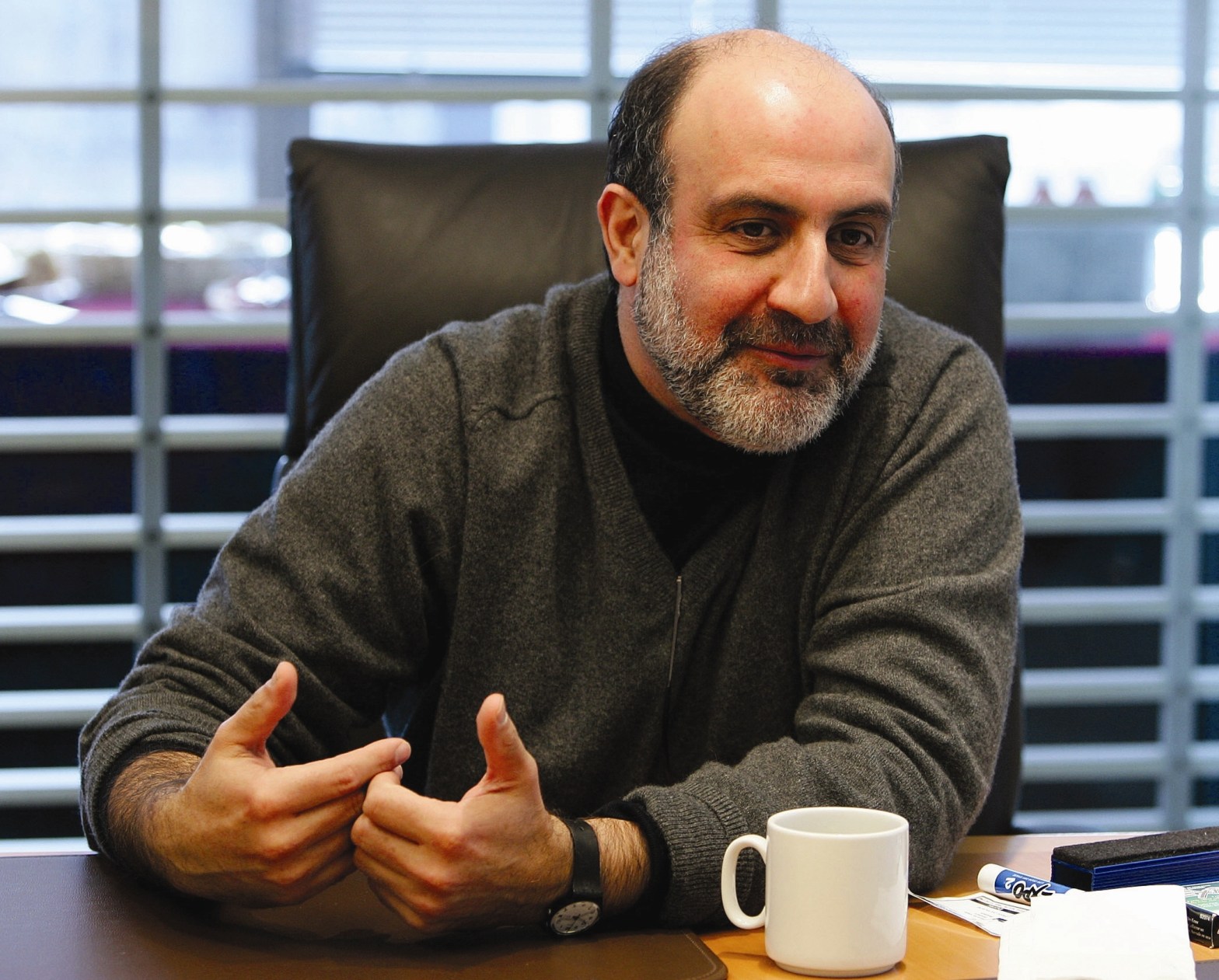
That’s the Anti Library that Nassim Taleb talks about below ⬇️… and it makes me so proud of my own private one at home .

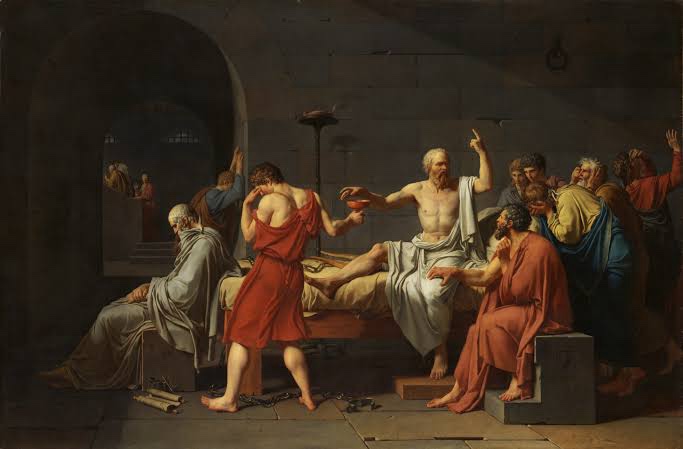
My library is nowhere as huge as Umberto Eco’s — 30,000! — but it’s certainly way well over 300 … And it’s big enough to make me feel small and even humbler all my life than ever before, and with that classic Socratic thought stuck, deeply, firmly and constantly inside my mind : “All that I know is that I know nothing”.

The Death of Socrates

Sudarshan Madabushi
*********

Nassim Taleb

The Anti-Library

This story offers an interesting solution to protect yourself against negative black swans. The solution is to build what Taleb calls an “antilibrary”.

🟠 Nassim Nicholas Taleb:

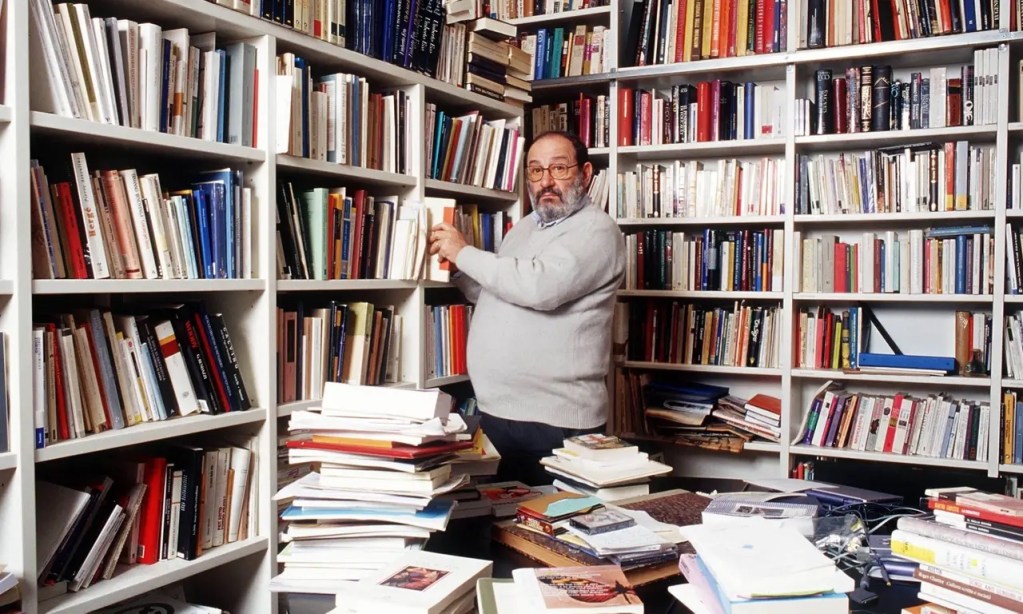
The writer Umberto Eco belongs to that small class of scholars who are encyclopedic, insightful, and nondull. He is the owner of a large personal library (containing thirty thousand books), and separates visitors into two categories: those who react with “Wow! Signore professore dottore Eco, what a library you have! How many of these books have you read?” and the others—a very small minority—who get the point that a private library is not an ego-boosting appendage but a research tool. Read books are far less valuable than unread ones. The library should contain as much of what you do not know as your financial means, mortgage rates, and the currently tight real-estate market allow you to put there. You will accumulate more knowledge and more books as you grow older, and the growing number of unread books on the shelves will look at you menacingly. Indeed, the more you know, the larger the rows of unread books. Let us call this collection of unread books an antilibrary.

Umberto Eco

We tend to treat our knowledge as personal property to be protected and defended. It is an ornament that allows us to rise in the pecking order. So this tendency to offend Eco’s library sensibility by focusing on the known is a human bias that extends to our mental operations. People don’t walk around with anti-résumés telling you what they have not studied or experienced (it’s the job of their competitors to do that), but it would be nice if they did. Just as we need to stand library logic on its head, we will work on standing knowledge itself on its head. Note that the Black Swan comes from our misunderstanding of the likelihood of surprises, those unread books, because we take what we know a little too seriously.

Let us call an antischolar a skeptical empiricist. Someone who focuses on the unread books, and makes an attempt not to treat his knowledge as a treasure, or even a possession, or even a self-esteem enhancement device.

Charlie Munger has a great line on this idea of not treating your knowledge as a treasure: “Any year that passes in which you don’t destroy one of your best loved ideas is a wasted year.”

And the co-founder of Airbnb Brian Chesky also talks about this idea of never settling with what you currently know, and always being in a place of becoming… 

🟠 Brian Chesky:

I think that that is the key. It’s learning, it’s growing, it’s curiosity, it’s constantly having that hunger and that fire to always want to be better, to feel like I haven’t made it yet.

The reason I say I haven’t made it yet is because if I’ve made it, then I’m done.

And I want to feel like an artist. Bob Dylan used to say an artist has to be in a constant place of becoming. And so long as they don’t become something, then they’re gonna be okay.

“Could not even understand the secret of their talent”!

Both Ramanujan and Shakuntala Devi probably had very rare noetic faculty. 

Their minds had intuitive capacity to unravel abstract and abstruse constructs without using Reason… Reasoning was just an aid but not the driver of their mathematical prowess. 

Sometimes , they even did not understand  how their mind and intellect came up with the mathematical feats they found themselves achieving so involuntarily. 

That’s the power of the intuition of noetic minds. 

Ramanujan often said that his theorems and equations were intuited in a cognitive flash involuntarily. And he could attribute it only to his “Ishta devata”… the Namagiri Ambal of Namakkal. 

I don’t know if Shakuntala Devi was religious minded and similarly experienced also noetic divinations as Ramanujan. 

Please read this blogpost 

Regards , 

Sudarshan Madabushi
Sent from my iPhone

On 20 Dec 2025, at 7:53 AM, Chittanandam V R <> wrote:

These are massages exchanged in another Group on Srinivas Ramanujan and Shakuntala Devi.

Chittanandam

Shakuntala Devi and Srinivasa Ramanujan are often mentioned together because both were Indian numerical prodigies—but their genius, contributions, and places in mathematics are fundamentally different. Comparing them carefully helps avoid a very common misunderstanding.

Below is a clear, respectful, side-by-side comparison.


1. Nature of genius

Shakuntala Devi

  • Genius in mental computation and numerical intuition
  • Excelled at speed, accuracy, and pattern recognition
  • Mathematics as performance, play, and pedagogy

Srinivasa Ramanujan

  • Genius in abstract mathematical creation
  • Excelled at discovering deep, original structures
  • Mathematics as theory, proof, and discovery

Key difference:

Devi mastered existing mathematics in astonishing ways; Ramanujan created new mathematics.


2. Type of mathematical contribution

AspectShakuntala DeviRamanujanNew theorems❌ No✅ HundredsFormal proofs❌ No⚠️ Rare (but ideas were original)New formulas❌ No✅ YesResearch impact❌ None✅ EnormousEducational impact✅ Very high⚠️ Limited during life

Ramanujan’s formulas are still used today in:

  • Number theory
  • Modular forms
  • Partition theory
  • Mathematical physics

Shakuntala Devi’s work impacted:

  • Math education
  • Public engagement
  • Cognitive understanding of calculation

3. Relationship with formal mathematics

Shakuntala Devi

  • Largely self-trained
  • Did not work within academic mathematics
  • Focused on practical arithmetic and puzzles

Ramanujan

  • Also largely self-taught
  • Worked at the frontiers of pure mathematics
  • Collaborated with Hardy at Cambridge
  • His notebooks are still being studied a century later

Both lacked formal schooling—but only Ramanujan advanced the discipline itself.


4. Creativity vs. discovery

A useful analogy:

  • Shakuntala Devi is like a virtuoso pianist performing existing compositions at superhuman speed and precision.
  • Ramanujan is like a composer inventing entirely new musical languages.

Both require genius—but they are different kinds.


5. Public perception vs. mathematical legacy

Shakuntala Devi

  • Famous worldwide during her lifetime
  • Guinness records
  • Inspired millions
  • Legacy is cultural and educational

Ramanujan

  • Little-known while alive outside academia
  • Now regarded as one of the greatest mathematicians in history
  • Legacy is foundational and eternal within mathematics

6. How mathematicians view them today

  • Shakuntala Devi is admired as:
    • A phenomenal mental calculator
    • A gifted communicator
    • A symbol of intuitive numerical ability
  • Ramanujan is revered as:
    • A once-in-a-century mathematical mind
    • A source of ongoing research
    • A creator of ideas far ahead of his time

Mathematicians do not place them in the same category—and that is not a criticism of Devi.


Final takeaway

Shakuntala Devi showed what the human mind can do with numbers.
Ramanujan showed what the human mind can discover about numbers.

Both are extraordinary.
They are simply extraordinary in different dimensions.

Y.Markandeyalu

**********************************

I am still confused as to whether she was a Mathematician or an Entertainer.She did not derive any theorem that could have made such calculations easier and simpler for thousands of youngsters in India. In short she could not even understand the secret of her talent.To compare her with Ramajunan or other mathematicians , i think, would be sacrilege.Yes,she was blessed with a great memoryDr.Sundaram Sriniasan*******************************

She did mainly 2 books; one about the homosexual because she found her husband to be that later after the marriage and disappointment in life made her write the book. Another about the numbers mystery Joy of numbers which would show how she derived on her own short routes for phase of derivation which she did mention. Even Ramanujan did a one line answer by calculating in mind. Her memory power was sited right as a kid and developed not only in Maths, but applied the maths to astrology which she learnt later. SO ONE CANNOT CALL IT AS A FLUKE OR BY MEMORY ENTERTAINER. ASHATAVADHANI WAS NEVER AN ENTERTAINER. As a matter of fact she taught the methods of derivation by training daughter and she also went well ahead. Vedas do have shulva sutras and how big multiplications or divisions etc can be done by transfer of the digits and in 2 steps deriving the right answer. Ofcourse she when questioned expressed her ignorance about the vedic maths. Hence she is a prodigy. There were too many on earth and 80% of them did not invent anything but applied maths. So sakuntala is not an entertainer like pack of cards magician. World ack her talents.

Rajaram

**********************************

Everyone is differently endowed. In her own way she was remarkable and brilliant. But Ramajunan belongs to the league of Einstein’s. Einsteins happen once in a century.

Y.Markandeyalu

*********************************

Not on the talents of Shakuntala, but her behaviour during a trip she made to Tokyo, where she was our (my family’s) guest.  Her purpose during that trip was to promote her power in astrological prediction from the Indian Community in Tokyo.  There was  good response as she was talented in that art.  While she attended thousands of queries on a compensation basis, her temper in general did not go with a lady of her stature.  She was shouting at some of the people who had doubts about their astrological predictions.  Out of ten, six were disappointed.  As a host for her, it was a tough task for me to handle the situation.  Just an addition!  

Mani, who lived in Tokyo for nearly 40 years.

********************************************************

The European Union (EU): a “tin-pot republic” in stark contrast to India’s sophisticated and enduring political Union?

The ongoing Russo-Ukraine War has badly exposed the fragility and instability of the political unity and integrity of Europe and NATO. Watching the scenes and debates inside the European Parliament makes one suspect that the Union is rapidly fraying at its seams which may give way anytime soon.

As an Indian looking at the the EU from outside, I cannot help comparing the European Union of 27 states and the Indian Union of States of 25 States and concluding that the Indian one is by far more solid and enduring than the former.

1. In what fundamental and characteristic ways — i.e. constitutionally, structurally, culturally, economically, politically and militarily — is the EU different from the Indian Union ?

2. What are the reasons why, relatively speaking, the EU of the First World look so ragged and disunited in contrast to the Indian Union of the so-called “global South”?

3. Why does the EU look like a “banana tin-pot republic” in stark contrast to India’s sophisticated and enduring political Union?

In trying to further explore the question, we come up with the following comprehensive answers shedding quite some light on it.

*********

The European Union (EU) and Indian Union differ fundamentally in their foundational design, with the EU functioning as a confederation of sovereign states and India as a centralized federal republic. These distinctions, amplified by historical, cultural, and geopolitical factors, contribute to perceptions of EU fragility amid crises like the Russo-Ukraine War, contrasting with India’s relative cohesion.


Constitutional Differences
India’s Constitution establishes a “union of states” with a strong center, blending federal and unitary features through a single written document that vests sovereignty at the national level and limits state secession. The EU lacks a unified constitution; instead, treaties like the Lisbon Treaty create supranational institutions, but ultimate sovereignty remains with member states, allowing opt-outs and vetoes. This makes India’s framework more integrated, as states cannot unilaterally exit, unlike EU members.


Structural Variations
India operates a hierarchical structure with a dominant Union government controlling defense, foreign affairs, and finances, while states handle local matters under central oversight via bodies like the GST Council and NITI Aayog. The EU’s structure is decentralized, with the European Commission proposing policies, the Council representing states, and the Parliament providing limited oversight, leading to fragmented decision-making. India’s “national federalism” pools resources centrally, fostering uniformity, whereas EU “executive federalism” relies on intergovernmental consensus.


Cultural Factors
India’s ancient ethos of “unity in diversity,” rooted in shared philosophical traditions and historical assimilation, underpins national identity despite linguistic and ethnic pluralism. The EU, comprising historically independent nations with distinct languages, religions, and memories of conflict (e.g., Franco-German wars), pursues “unity in diversity” post-World War II but lacks deep cultural homogeneity. India’s civilizational continuity promotes instinctive solidarity, while Europe’s nation-state loyalties often override EU allegiance.


Economic Distinctions
The EU features deep integration via a single market, common currency (eurozone for 20 states), and customs union, but fiscal policies vary, causing tensions like during debt crises. India’s economy is a unified internal market with centralized taxation (e.g., GST), enabling resource redistribution from richer to poorer states without veto risks. EU economic interdependence exposes divisions over burdens, such as Ukraine aid funding, unlike India’s cohesive fiscal federalism.


Political Dynamics
India’s parliamentary system ensures single-party or coalition majorities at the center, enabling decisive action and national parties bridging states. EU politics involve multi-party fragmentation across 27 states, with frequent vetoes (e.g., Hungary/Slovakia on Ukraine/Russia), populist rises, and bilateral preferences over EU unity. This confederal politicking amplifies disunity in crises, contrasting India’s electoral federalism that channels regionalism into national stability.


Military Aspects
India maintains a unified armed forces under central command, with no state militaries, ensuring seamless defense. The EU has no army; defense relies on NATO (22 overlapping members) and national forces, revealing fissures like burden-sharing disputes and varying threat perceptions (e.g., Eastern vs. Western Europe on Russia). NATO’s expansion and Ukraine debates highlight these cracks, absent in India’s monolithic military structure.


Reasons for Perceived Disunity
The EU’s recent strains stem from its voluntary, shallow integration—recent sovereign states with clashing interests (e.g., energy ties to Russia, migration)—exacerbated by the Ukraine war’s economic costs and populist nationalism. India’s endurance arises from post-colonial centralization to avert balkanization, shared anti-colonial memory, unified institutions (judiciary, bureaucracy), and cultural resilience amid diversity. Despite First World resources, EU confederalism prioritizes national vetoes over collective action, making it appear “ragged” relative to India’s robust union model.

**********

Any Indian today who is able to read and appreciate the above stark contrast between the European and Indian models of political union will have compelling reason to be proud of the sagacity and foresighted-ness of our founding fathers of nationhood who designed and established for their progeny generations a rock-solid Constitutional Order that assures the sovereignty, integrity and cultural identity of nation as vast and diverse as ours.

There are many powerful politicians and interest-groups in our country today who go around decrying and denigrating the way our Indian Union of States functions, the way our Constitution serves the people and the way many institutions of federalism lay and regulate jurisdictional boundaries. Rahul Gandhi, M.K.Stalin, Mamata Banerjee, to name only a few political big-honchos, are known to hold views that range from anarchist to near-secessionist stances. Then there are also legal luminaries like Kapil Sibal and P. Chidambaram — and half a dozen other Supreme Court of India lawyers —- who constantly gripe about the Union of India resembling some sort of “elected autocracy”, “crony-capitalist republic” or a “dictatorship disguised as a parliamentary democracy” …. Etc. They even oftentimes, when invited on to speak in international forums in the West, hail the model of the EU as a role-model for modern sovereign governance!

Well… if the Stalins and Rahul Gandhis, and the Chidambarams and other ragtag civil-liberties champions and activists like Prashant Bhushan and Yogendra Yadav … really took a good hard look at the way the European Union is today slowly coming apart at its seams, they would surely feel happy and more humble that they still remain citizens of the Indian Union.

Jai Hind !

Sudarshan Madabushi
(PS: A few AI-contributed inputs are part of this blogpost).

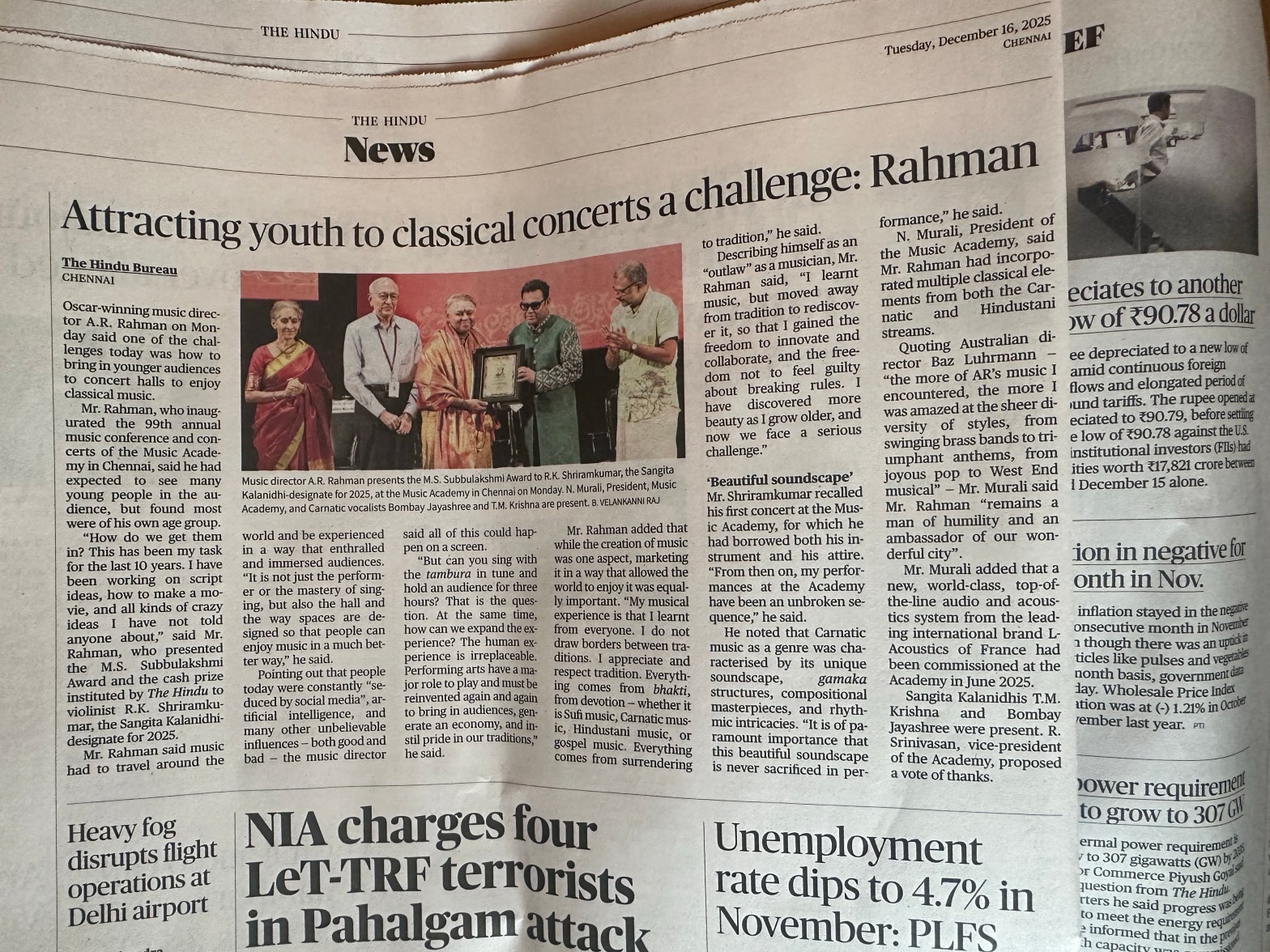
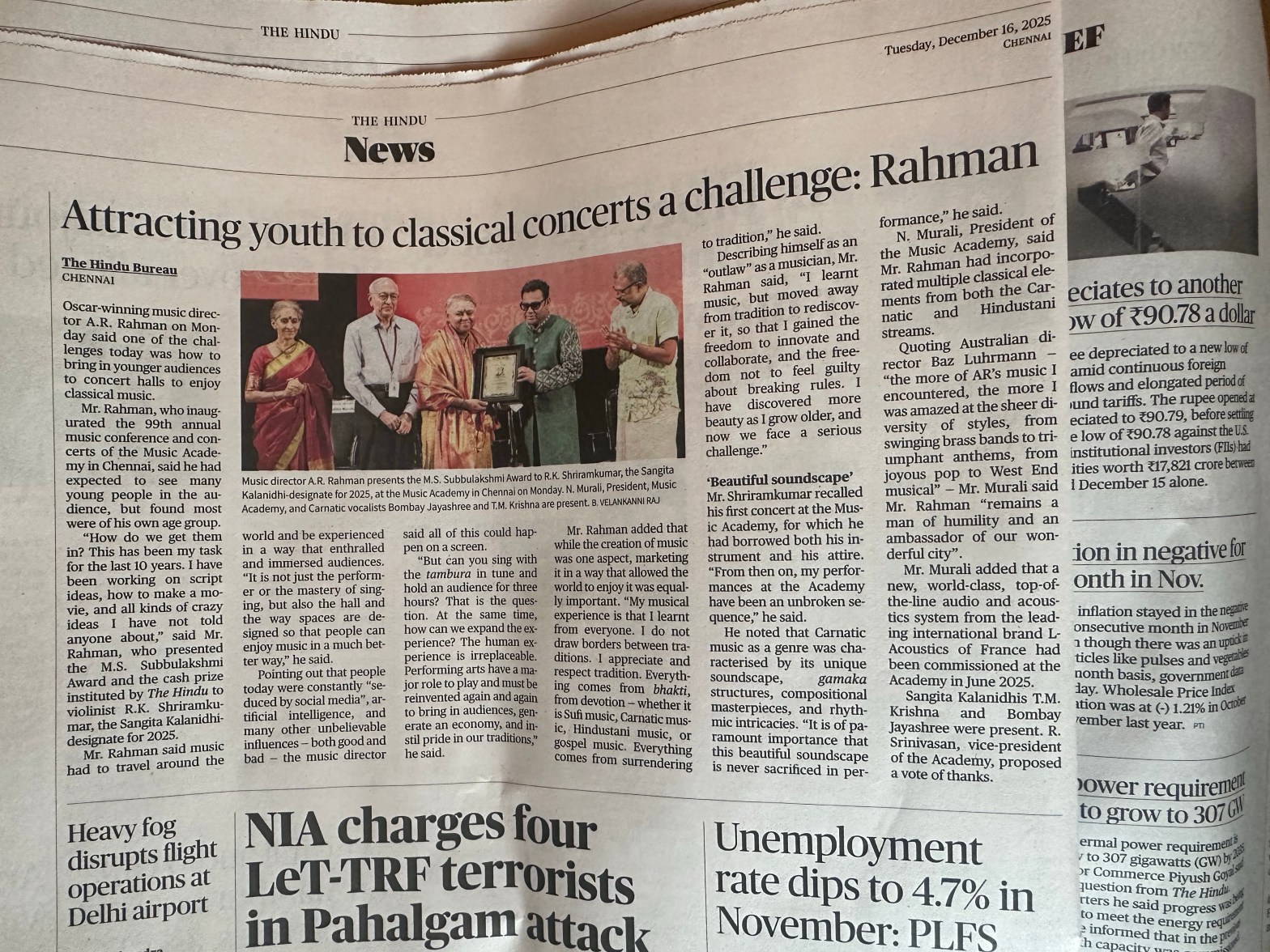
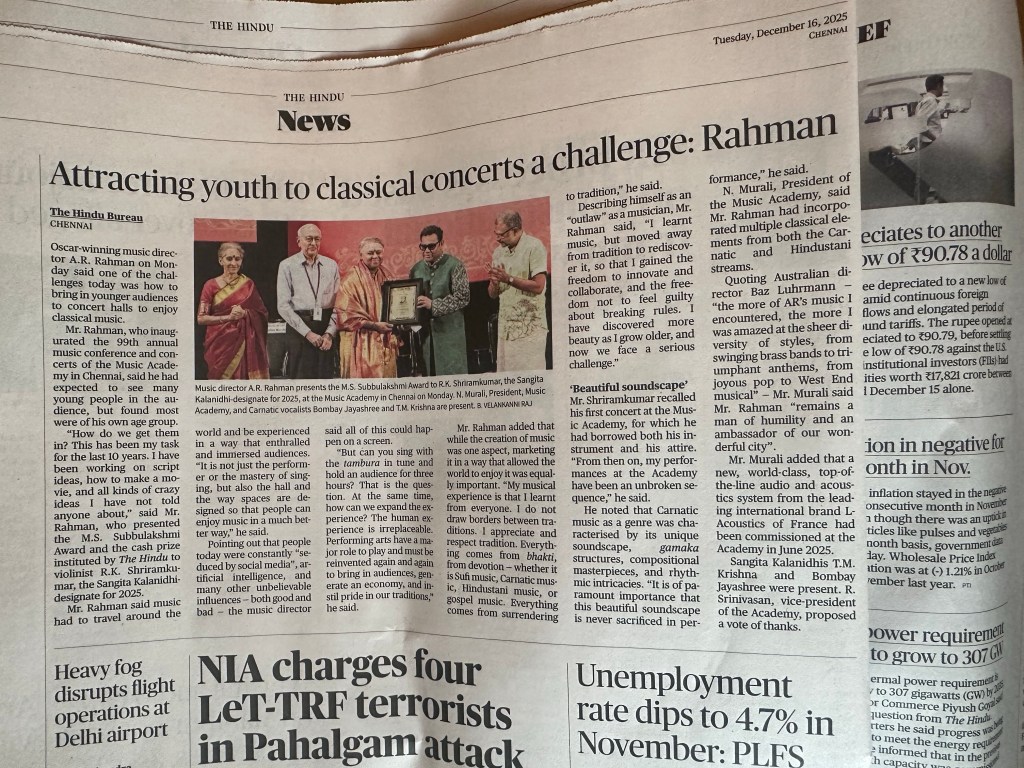
What notable contribution to Carnatic Music has A.R. Rahman made that made Madras Music Academy invite him to preside over its prestigious 2025 Music Festival?

A.R.Rahman is without doubt a great popular musician. But he is NOT a classical musician. The MMA is an institution whose main mission is to preserve and promote classical Carnatic music .

A.R. Rahman’s skill or depth in Carnatic music has no third-party independent endorsement.

No doubt he has notably incorporated many elements of Carnatic music into film compositions, but that doesn’t make him an authentic Carnatic music vidwan.

Rahman’s Compositions with traces of Carnatic Music elements

Rahman’s soundtrack for Sangamam features Carnatic-style or imitative “fusion” tracks like “Mazhai Thulli” and “Sowkiyama Kannae,” blending traditional vocals with modern elements. Songs such as “Munbe Vaa” (raga Darbari Kanada), “Marghazi Thingal Allava” (Sindhu Bhairavi), and “En Veetu Thotaththil” showcase only his dalliance not true prowess with Carnatic music foundation.

Also often Rahman resorts to fusing ragas with Hindustani and Western styles… that kind of fusion is said to be creative but then it also pollutes classical standards and values. He takes liberties at will with ragas even in live concerts, in the name of “educating audiences” on Carnatic and Hindustani nuances or genres. This comes across to genuine “Rasikas” as travesty not tribute to Carnatic music traditions.

Rahman Foundation’s Contributions

The A.R. Rahman Foundation has been reported to have provided funds for projects that ostensibly revive Tamil music heritage, including research on Karunamirtha Sagaram by Abraham Pandithar. No one knows for sure what links they really have with Tamil traditions to Carnatic music. Rahman’s so-called Carnatic music forays only end up documenting Christian Carnatic hymns. These efforts are however hailed by populist politically biased media and fan clubs as though they genuinely preserve “underrepresented aspects” (whatever that means!) of Carnatic history. Such collaborations involve Rahman’s own daughter Khatija Rahman. Is there participation by any other cross-sections of society ? Not to my knowledge.

Rahman addressed challenges in attracting youth to classical music at the Music Academy’s 99th conference. The moot question is “What has he done about it that can be called useful if not impactful?” How many young Carnatic musicians — boys and girls — has he helped to make careers ? How many institutions devoted to research and development of the art has he supported in the years since he himself achieved international celebrity status? To the best of my knowledge, zilch.

MMA is simply corporatising Carnatic music for its own business interests. And anything in the world that gets corporatised must inevitably suffer some degree of decay and corruption. The MMA catalyses that process very subtly.

Sudarshan Madabushi
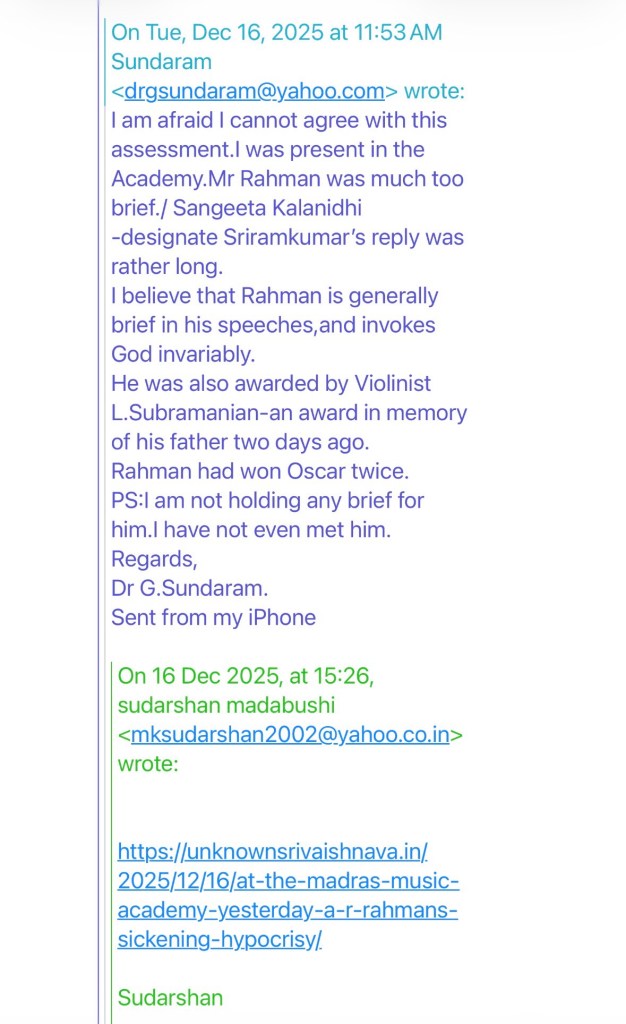
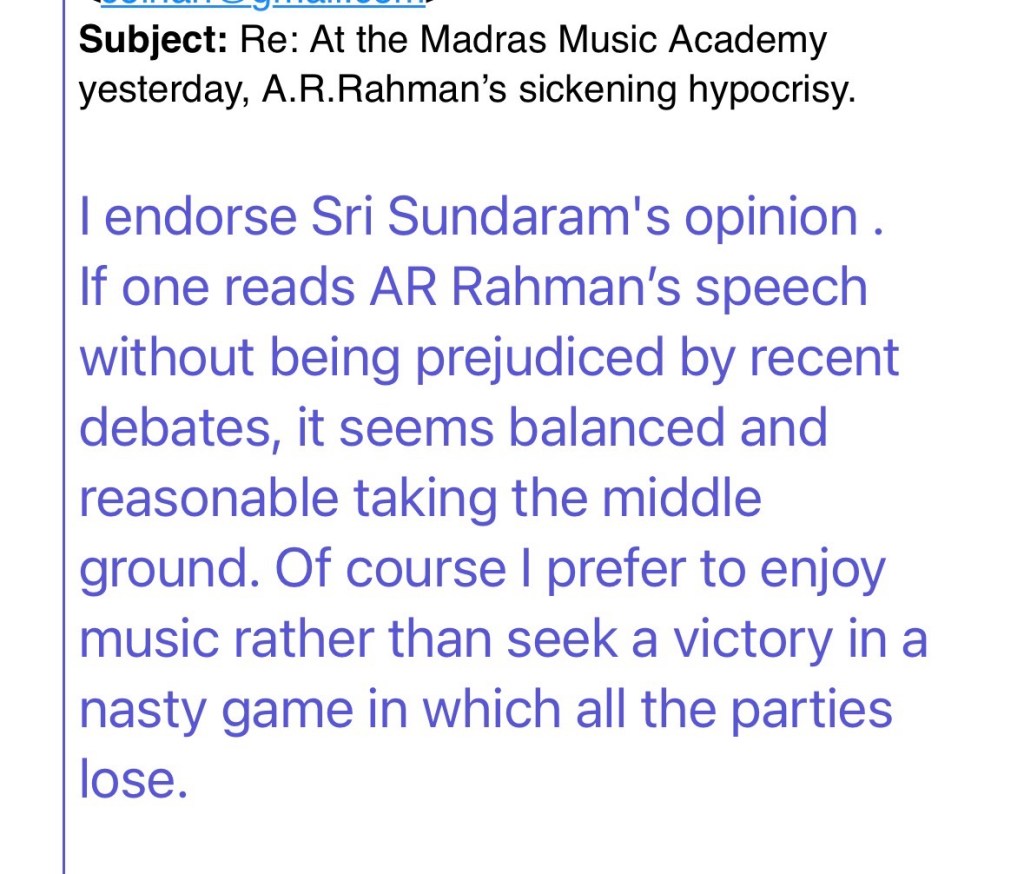
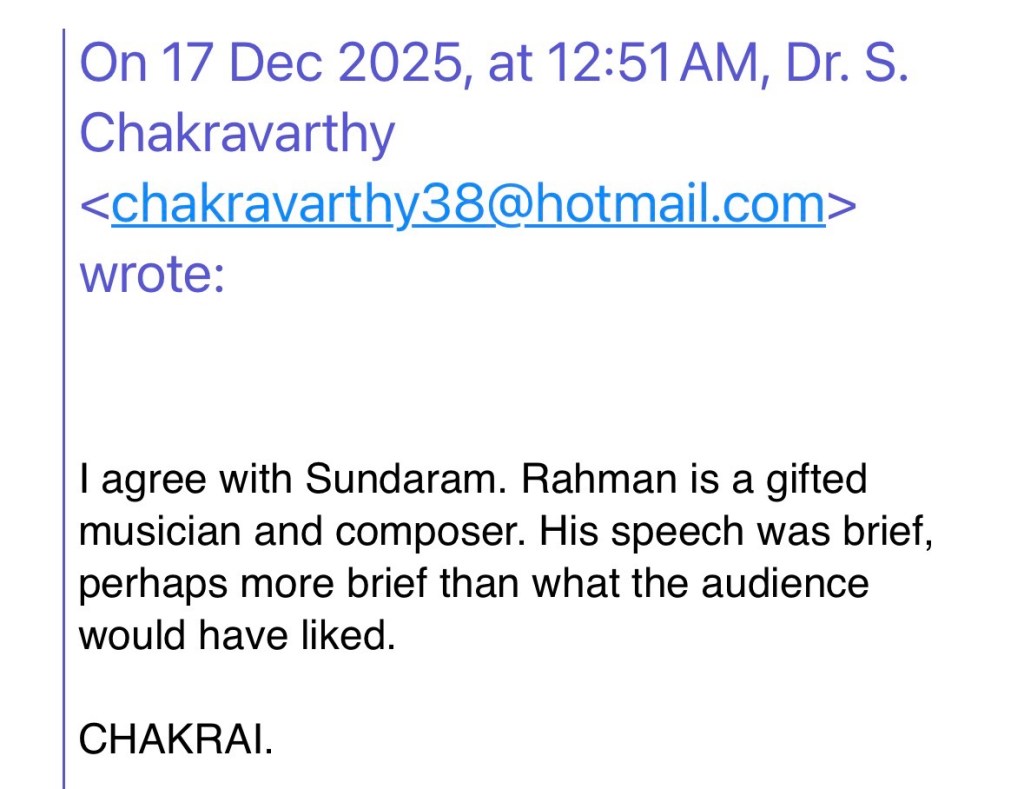
Readers disagree with my blogpost yesterday on A R Rahman @ Madras Music Academy Annual Music Festival inauguration : Dec 16, 2025 … and my reply

At the Madras Music Academy yesterday, A.R.Rahman’s sickening hypocrisy.

He was careful not to displease either the “traditionalist” reactionaries of Mylapore or the eminent revolutionaries of the Carnatic Music world who were seated beside him on stage.

So in one breath A R Rahman spoke from both sides of his mouth … and with the forked tongue within.

If you read his quoted words below (and between the lines too if you can) you’ll easily understand why Rahman gingerly had to pull off a treacherous moral sleight-of-hand both on himself and the audience by doing that rope trick of the Carnatic music world called “extreme unctuousness”.

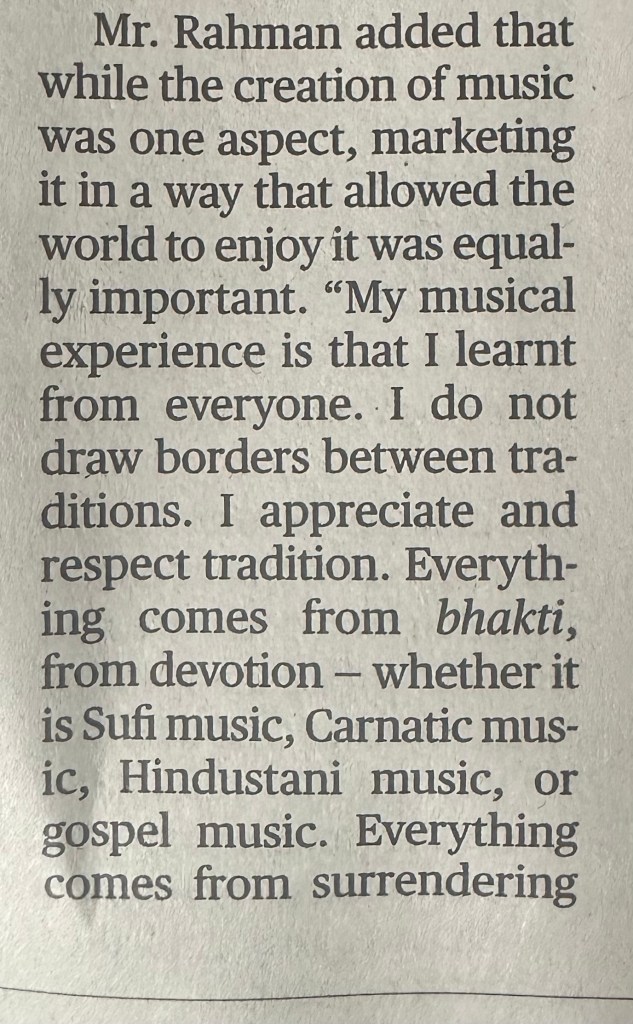
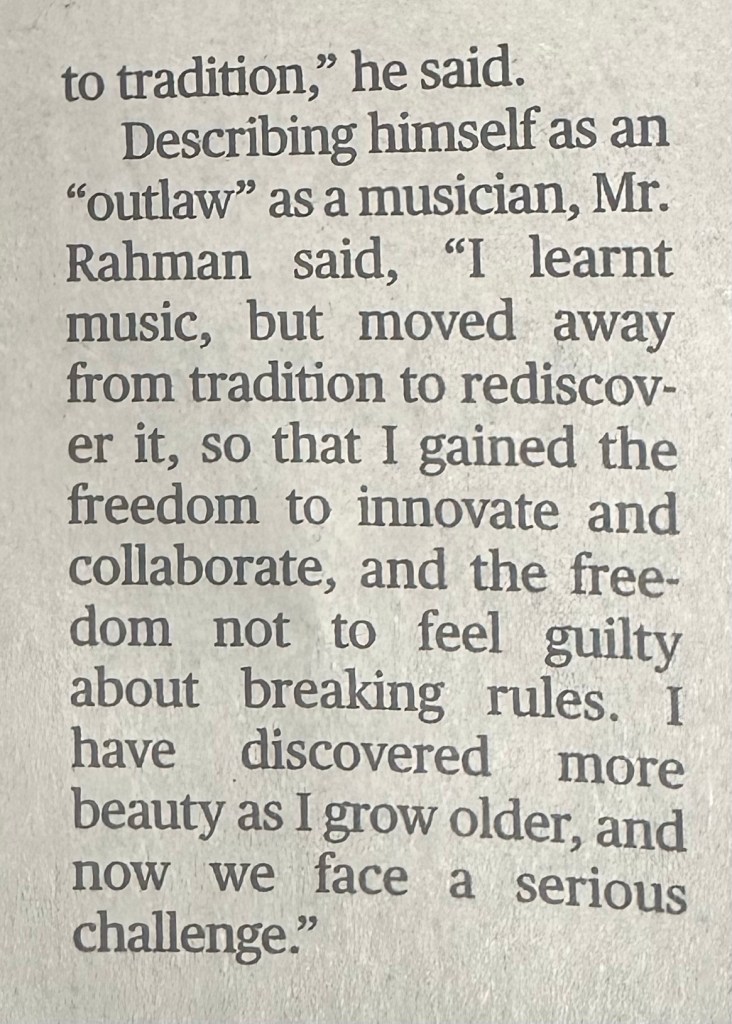
On one hand , Rahman said this: “Everything comes from Bhakthi … everything comes from surrendering to tradition”. Then immediately, almost as if he had bitten his tongue through a heretical faux pas , he quickly flipped over to make amends for the Freudian slip. Read below and come to your own conclusions: “… I moved away from tradition to rediscover it …so that I gained the freedom to innovate and collaborate … and the freedom not to feel guilty about breaking rules”!

What sickening hypocrisy ! What humbug these great celebrities are! And how low they stoop to scratch each others’ backs!

O Tempora! O mores!

Sudarshan Madabushi
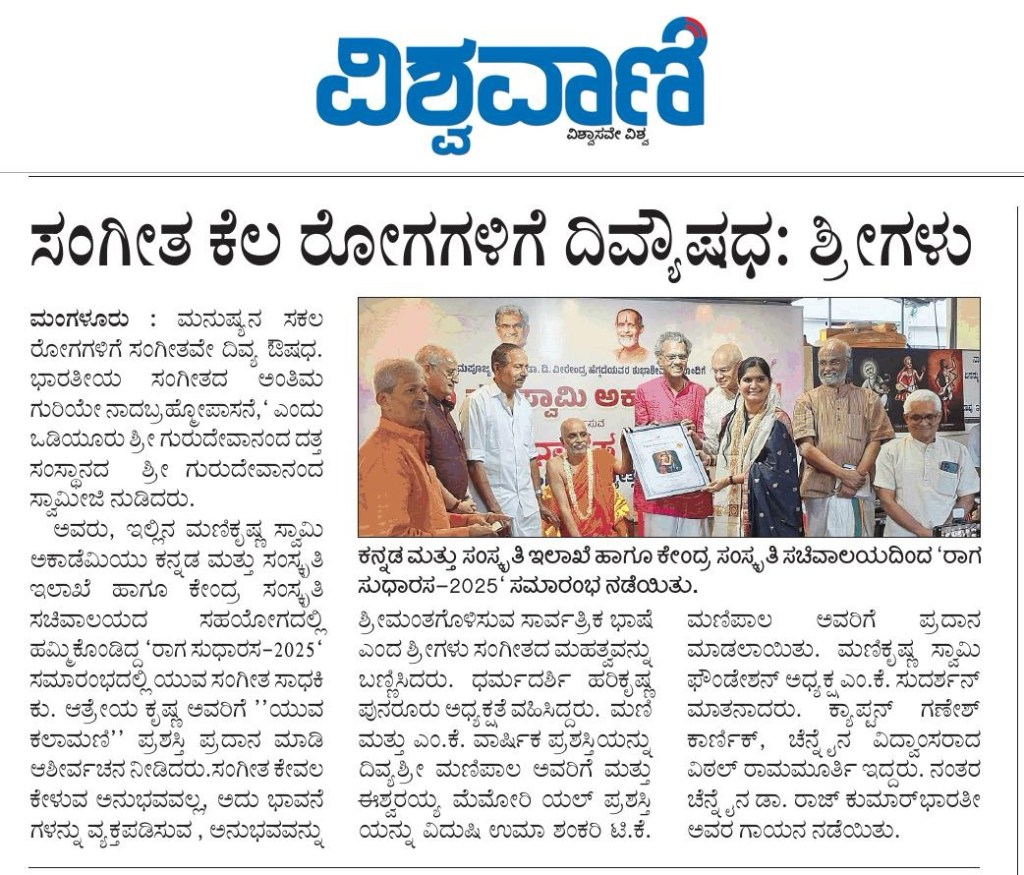
AWARD PRESENTATION CEREMONY AT RAGA SUDHA RASA 2025: Music and Dance Festival Dec 13-20, 2025 @ Surathkal, Karnataka – “Mani & MK ANNUAL AWARD-2025 for OUTSTANDING YOUNG TALENT in Carnatic Music”(instituted by the Dr. Smt. Mani Krishnaswami Foundation, Chennai): Full Text of Speech by the “Guest of Honour”, Sri. M.K. Sudarshan (Managing Trustee Dr. Smt. Mani Krishnaswami Foundation, Chennai)

(Below are AI assisted translations in Kannada and Tamil of the original speech rendered in English: please view at https://unknownsrivaishnava.in/wp-admin/post.php?post=16122&action=edit )

Screenshot
Screenshot
Screenshot

ಮೊದಲು ಸ್ವಾಮೀಜಿಗೆ ನಮಸ್ಕಾರ ಮಾಡಿ ಅವರ ಆಶೀರ್ವಾದ ಕೇಳುತ್ತೇನೆ. ವೇದಿಕೆಯಲ್ಲಿ ಇರುವ ಎಲ್ಲ ಗೌರವನೀಯರಿಗೆ ನಮಸ್ಕಾರ. ರಸಿಕರೂ, ಕಲಾವಿದರೂ ಎಲ್ಲರಿಗೂ ನನ್ನ ನಮಸ್ಕಾರ. ಉಳಿದ ಭಾಷಣವನ್ನು ಇಂಗ್ಲಿಷ್‌ನಲ್ಲಿ ಮಾಡಬೇಕಾಗಿ ಬರುತ್ತದೆ, ಏಕೆಂದರೆ ನನಗೆ ಇನ್ನೂ ಕನ್ನಡದಲ್ಲಿ ಸುಲಭವಾಗಿ ಮಾತನಾಡಲು ಆಗುತ್ತಿಲ್ಲ. ದಯವಿಟ್ಟು ಕ್ಷಮಿಸಿ. ಧನ್ಯವಾದಗಳು.​

(ಇಲ್ಲಿ ಇಂಗ್ಲಿಷ್ ಭಾಗದ ಭಾವಾನುವಾದ:)​
ಈ ವೇದಿಕೆಯಲ್ಲಿ ಕುಳಿತಿರುವ ಎಲ್ಲಾ ಗಣ್ಯರಿಗೆ ಮತ್ತು ಇಲ್ಲಿ ಹಾಜರಿರುವ ಎಲ್ಲಾ ರಸಿಕರು, ಕಲಾವಿದರು ಎಲ್ಲರಿಗೂ ನನ್ನ ಹೃತ್ಪೂರ್ವಕ ವಂದನೆಗಳು. ನಾನು ಇಲ್ಲಿ ಚೆನ್ನೈಯ ಡಾ. ಶ್ರೀಮತಿ ಮಣಿ ಕೃಷ್ಣಸ್ವಾಮಿ ಫೌಂಡೇಶನ್‑ನ ಪರವಾಗಿ ಬಂದಿದ್ದೇನೆ. ಇದು ಕರ್ಣಾಟಕ ಸಂಗೀತ ಮತ್ತು ಶಾಸ್ತ್ರೀಯ ಕಲೆಯ ಉತ್ತೇಜನಕ್ಕೆ ಸಮರ್ಪಿತವಾದ ಒಂದು ಖಾಸಗಿ ಟ್ರಸ್ಟ್. ಫೌಂಡೇಶನ್ ಅನ್ನು 2004ರಲ್ಲಿ ನನ್ನ ತಾಯಿ ಸಂಗೀತ ಕಲಾನಿಧಿ, ಪದ್ಮಶ್ರೀ ಡಾ. ಶ್ರೀಮತಿ ಮಣಿ ಕೃಷ್ಣಸ್ವಾಮಿ ಅವರ ಸ್ಮರಣಾರ್ಥ, ನನ್ನ ತಂದೆಯಾದ ಶ್ರೀ ಎಂ. ಕೃಷ್ಣಸ್ವಾಮಿ (ಎಂ.ಕೆ.) ಅವರು ಸ್ಥಾಪಿಸಿದರು.​

ನನ್ನ ತಂದೆ‑ತಾಯಿರಿಬ್ಬರೂ ಕರ್ಣಾಟಕ ಸಂಗೀತವನ್ನು ಪೋಷಿಸುವ ಹಲವು ಕೆಲಸಗಳಿಗೆ ತಮ್ಮನ್ನು ಅರ್ಪಿಸಿಕೊಂಡಿದ್ದರು. ಅವುಗಳಲ್ಲೆಲ್ಲ, ಯುವ ಪ್ರತಿಭಾವಂತರನ್ನು ಉತ್ತೇಜಿಸುವ ಕಾರ್ಯವೇ ಮಣಿ ಕೃಷ್ಣಸ್ವಾಮಿ ಅವರಿಗೆ ಅತಿ ಹತ್ತಿರದ ಮಾತಾಗಿತ್ತು. ಇಂದು ಫೌಂಡೇಷನ್ ಶಾಂತವಾಗಿ ದೇಶದ ನಾನಾ ಭಾಗಗಳಲ್ಲಿ ಯುವ ಪ್ರತಿಭೆಗಳ ಪ್ರಯತ್ನಗಳನ್ನು ಬೆಂಬಲಿಸುತ್ತಿದ್ದು, ಸುರತ್ಕಲ್/ಮಂಗಳೂರು/ಉಡುಪಿ ಪ್ರದೇಶದಲ್ಲಿರುವ ಮಣಿ ಕೃಷ್ಣಸ್ವಾಮಿ ಅಕಾಡೆಮಿಯಂತಹ ಸಂಸ್ಥೆಗಳ ಕಾರ್ಯವನ್ನೂ ಉತ್ತೇಜಿಸುತ್ತಿದೆ.​

ಕಾರ್ಪೊರೇಟ್ ಪ್ರಾಯೋಜಕತ್ವ ಮತ್ತು ಅದರ ಲಾಭಗಳು

ಇಂದಿನ ಕರ್ಣಾಟಕ ಸಂಗೀತ ಲೋಕ ಕ್ರಮೇಣ ಕಾರ್ಪೊರೇಟ್ ಜಗತ್ತಿನಂತಾಗುತ್ತಿದೆ. ಸಂಗೀತದ ಸಮಸ್ತ ಪರಿಸರವೇ “ಕಾರ್ಪೊರೇಟೀಕರಣ” ಹೊಂದುತ್ತಿದೆ ಎಂದು ಹೇಳಬಹುದು.​
ಕಂಪನಿಗಳು, ಬ್ಯಾಂಕ್‌ಗಳು, ನಿಗಮಗಳು ನೀಡುವ ಪ್ರಾಯೋಜಕತ್ವದಿಂದ ಚೆನ್ನೈಯ ಮೆಗಾ ಮಾರ್ಗೌಳಿಸೀಸನ್ ಹಾಗು ಇತರ ನಗರಗಳಲ್ಲಿ ನಡೆಯುವ ಅನೇಕ ಅನುದಿನ ಸಂಗೀತೋತ್ಸವಗಳು ಆರ್ಥಿಕವಾಗಿ ತಾನಾಗಿಯೇ ನಡೆಯಬಹುದಾದಂತಾಗಿವೆ. ಇಂತಹ ಕಾರ್ಪೊರೇಟ್ ಬೆಂಬಲದಿಂದ ಯುವ ಕಲಾವಿದರಿಗೆ ಹೆಚ್ಚಿನ ವೇದಿಕೆಗಳು, ಕಾಣಿಸಿಕೊಳ್ಳುವ ಅವಕಾಶಗಳು ಮತ್ತು ಪ್ರಸಾರ ಸಿಗುತ್ತಿವೆ.​

ಸ್ಪಾನ್ಸರ್‌ಗಳು ಕೊಡುವ ಹಣದಿಂದ ದಿನಕ್ಕೆ ಅನೇಕ ಕಚೇರಿಗಳು ನಡೆಯುತ್ತವೆ, ಕಲಾವಿದರಿಗೆ ನೇರವಾಗಿ ಸಂಭಾವನೆ ಹೋಗುತ್ತದೆ, ಮತ್ತು ಶಾಸ್ತ್ರೀಯ ಕರ್ಣಾಟಕ ಸಂಗೀತವನ್ನು ಒಂದು ಸಣ್ಣ, ಆದರೆ ಶಕ್ತಿಯುತ ಪರಂಪರೆಯಾಗಿ ಉಳಿಸಲು ಇದು ಸಹಾಯಕವಾಗುತ್ತದೆ. ಯುವಕರಿಗಾಗಿ ಹಮ್ಮಿಕೊಳ್ಳುವ ವಿಶೇಷ ಕಾರ್ಯಕ್ರಮಗಳು, ನಿಗಮಗಳ ನೆರವಿನಿಂದ, ಪ್ರಮುಖ ಸಭಾಗೃಹಗಳಲ್ಲಿ ಹೊಸ ಪ್ರತಿಭೆಗಳಿಗೆ ಸ್ಲಾಟ್‌ಗಳನ್ನು ಕೊಡಿಸುತ್ತಿವೆ ಮತ್ತು ಹೊಸ ಪೀಳಿಗೆಯ ಶ್ರೋತೃಗಳನ್ನು ಆಕರ್ಷಿಸುತ್ತಿವೆ.​

ಕಾರ್ಪೊರೇಟೀಕರಣದ ಹಿನ್ನಡೆಗಳು

ಆದರೆ, ಯಾವ ವಿಷಯವನ್ನೇ ಹಿಡಿದರೂ ಕಾರ್ಪೊರೇಟ್ ಜಗತ್ತಿನ ಸಹಜ ಸ್ವಭಾವವೇ ಅದನ್ನು ವಾಣಿಜ್ಯೀಕರಣ ಮಾಡುವುದಾಗಿದೆ; ಕರ್ಣಾಟಕ ಸಂಗೀತವೂ ಅದಕ್ಕೆ ಹೊರತಾಗಲಾರದು.​
ವಾಣಿಜ್ಯ ಒತ್ತಡಗಳು ಜನಪ್ರಿಯತೆ, “ಫ್ಯೂಷನ್” ಕಾರ್ಯಕ್ರಮಗಳು, ಹೊಸ ಪ್ರಯೋಗಗಳ ಹೆಸರಿನಲ್ಲಿ ನಡೆಯುವ ಗಿಮಿಕ್‌ಗಳನ್ನು ಪ್ರೋತ್ಸಾಹಿಸುತ್ತವೆ. ಶುದ್ಧ, ಕಟ್ಟುನಿಟ್ಟಿನ ಶಿಲ್ಪದ ಮೇಲೆ ಆಧಾರಿಸಿದ ಹೊಸ ಪ್ರತಿಭೆಗಳ ಆಯ್ಕೆಗೆ ಬದಲಾಗಿ, “ರಿಕಮೆಂಡೇಷನ್”‑ಗಳ ಆಧಾರದಲ್ಲಿ ಆಯ್ಕೆ ಪ್ರಕ್ರಿಯೆ ನಡೆಯುವ ಅಪಾಯ ಮೂಡುತ್ತದೆ. ಇದರಿಂದ ಕುಟುಂಬ ಸಂಬಂಧಗಳು, ಪರಿಚಯ ವಲಯಗಳು ಮುಂತಾದವುಗಳ ಪ್ರಭಾವ ಹೆಚ್ಚುತ್ತದೆ; ಕಲೆಯ ಆಳ, ಅಸಲಿತನಕ್ಕೆ ಧಕ್ಕೆ ಉಂಟಾಗುತ್ತದೆ.​

ಸ್ಪಾನ್ಸರ್‑ಮೆಚ್ಚುಗೆಗಾಗಿ ಕಲಾವಿದರು ಸುರಕ್ಷಿತವಾದ, ಎಲ್ಲರಿಗೂ ಗೊತ್ತಿರುವ ಕೃತಿ–ರಚನೆಗಳನ್ನೇ ಹೆಚ್ಚಿನಷ್ಟು ಪ್ರಸ್ತುತಪಡಿಸುವ ಪ್ರವೃತ್ತಿ ಬೆಳೆದುಕೊಳ್ಳುತ್ತದೆ. ಅಪರೂಪದ ರಾಗಗಳು, ಆಳವಾದ ಮನೋಧರ್ಮದ ವಿಸ್ತಾರ, ದೀರ್ಘ ಆಲಾಪನೆ ಇವುಗಳಿಗೆ ವೇದಿಕೆಯಲ್ಲಿ ಕಡಿಮೆ ಸಮಯ ಸಿಗುತ್ತದೆ. ಆಗ ಕಾರ್ಯಕ್ರಮಗಳು ಒಂದರಂತೇ ಇನ್ನೊಂದು ಎನ್ನುವಂತೆ, ಒಂದೇ ರೀತಿಯ, ಒಂದೇ ರೀತಿಯ “ಹಿಟ್” ಕೃತಿಗಳ ಸಾಲಾಗಿ ಕಾಣಿಸಿಕೊಳ್ಳುತ್ತವೆ; ಗುರು‑ಶಿಷ್ಯ ಪರಂಪರೆಯಿಂದ ಬಂದ ದೀರ್ಘಸಾಧನೆಯ ಬದಲು, “ಬ್ರ್ಯಾಂಡಿಂಗ್” ಮತ್ತು “ಇಮೇಜ್” ಕಾಳಜಿಯೇ ಮುಂದಿರುತ್ತದೆ.​

ಸ್ಪರ್ಧಾತ್ಮಕ ಒತ್ತಡ ಮತ್ತು ಯುವ ಕಲಾವಿದರು

ಕಂಪನಿ ಪ್ರಾಯೋಜಕತ್ವದಿಂದ ವೇದಿಕೆಗಳ ಸಂಖ್ಯೆ ಹೆಚ್ಚಾದಂತೆ, ವಿಶೇಷವಾಗಿ ಚೆನ್ನೈ ಮಾರ್ಗೌಳಿ ಕಾಲದಲ್ಲಿ, ಯುವ ಕಲಾವಿದರ ನಡುವೆ ತೀವ್ರವಾದ ಸ್ಪರ್ಧಾತ್ಮಕ ವಾತಾವರಣ ಉಂಟಾಗಿದೆ.​
ಡಿಸೆಂಬರ್‑ಜನವರಿಯಲ್ಲಿ ನೂರಾರು ಕಚೇರಿಗಳ ನಡುವೆ ಕೆಲವೇ ಉತ್ತಮ ಸ್ಲಾಟ್‌ಗಳಿಗೆ ನೂರಾರು ಯುವ ಕಲಾವಿದರು ಸ್ಪರ್ಧಿಸುತ್ತಾರೆ; ಸ್ಪರ್ಧೆಗಳು, ಕುಟುಂಬ ನೆಟ್‌ವರ್ಕ್‌, ಸ್ಪಾನ್ಸರ್ ಪರಿಚಯ ಇವುಗಳ ಮೂಲಕ “ಪ್ರೈಮ್ ಟೈಮ್” ಪಡೆಯಲು ಕದನ ನಡೆಯುತ್ತದೆ. ಇದರಿಂದ ತುರ್ತು ಸಿದ್ಧತೆ, ಫಾರ್ಮುಲಾ ರೀತಿಯ ರೆಪರ್ಟೊರಿ ಮತ್ತು ಸಾಮಾಜಿಕ ಮಾಧ್ಯಮದಲ್ಲಿ ತೋರಾಟ ಹೆಚ್ಚಾಗಿ, ಆಳವಾದ ತರಬೇತಿ ಹಿಂಬದಿಗೆ ಹೋಗುತ್ತದೆ.​

ಯುವಕರಿಗಾಗಿ ವಿಶೇಷ ಸರಣಿ ಕಾರ್ಯಕ್ರಮಗಳು ಹೆಚ್ಚಾದರೂ, ಅವುಗಳು ಸಹ ಸ್ಪರ್ಧೆಯನ್ನು ಇನ್ನಷ್ಟು ತೀವ್ರಗೊಳಿಸುತ್ತವೆ. ಹಿರಿಯ ಕಲಾವಿದರಿಗೆ ಸಿಗುವ ಸಮಯ ಸೀಮಿತವಾಗಿರುವುದರಿಂದ, ಹೊಸವರನ್ನು “ಆಡಿಷನ್”‌ಗಳು, ಥೀಮ್​ ಕಾರ್ಯಕ್ರಮಗಳು, ಅಭಿಮಾನಿ ಬಳಗಗಳು, “ರಸಿಕ ಫೋರಂ”‌ಗಳ ಮೆಚ್ಚುಗೆ ಇವೆಲ್ಲದರ ಒತ್ತಡದೊಳಗೆ ತಳ್ಳಲಾಗುತ್ತಿದೆ. ಇದರಿಂದ ಕಲೆಯ ಮಟ್ಟ ಕುಸಿಯುವ, ಕುಟ್ಟು ತುಂಬಿದ ಪರಿಸರದಲ್ಲಿ “ಸ್ಲಾಟ್‑ಗಿಟ್ಟುಕೊಳ್ಳುವ” ಧಾವಂತವೇ ಮುಖ್ಯವಾಗುವ ಅಪಾಯವಿದೆ.​

ಪೋಷಕರ, ಗುರುಗಳ ಜವಾಬ್ದಾರಿ

ಯುವ ಕಲಾವಿದರ ಪೋಷಕರು, ಗುರುಗಳು, ಸಂಗೀತ ಶಾಲೆಗಳೂ ಈ ಕಾರ್ಪೊರೇಟೀಕರಣ ಪ್ರಕ್ರಿಯೆಯಿಂದ ದೂರವಿಲ್ಲ.​
ತರಬೇತಿ ವೇಳೆ నుంచೇ “ಕಾಂಪಿಟಿಷನ್ ಗೆಲ್ಲಬೇಕು”, “ಸ್ಟೇಜ್ ರೆಡಿ ಆಗಬೇಕು”, “ಸ್ಪಾನ್ಸರ್‌ಗಳಿಗೆ ತೋರಿಸಬೇಕು” ಎಂಬ ಮಾನಸಿಕ ಒತ್ತಡವನ್ನು ಮಕ್ಕಳಿಗೆ ಹೇರಲಾಗುತ್ತದೆ. ದೀರ್ಘಕಾಲದ ಸಾಧನೆಯ ಬದಲು, “ಶಾರ್ಟ್, ಫ್ಲಾಷಿ, ಪಾಪುಲರ್ ಕೃತಿ”ಗಳನ್ನೇ ರೆಪರ್ಟೊರಿಯ ಕೇಂದ್ರವಾಗಿ ಮಾಡಲಾಗುತ್ತದೆ.​

ಕೆಲವು ಗುರುಗಳು ಸ್ಪಷ್ಟವಾಗಿ ಹೇಳುವುದು ಇದೇ: ಜನಪ್ರಿಯ ಕೃತಿಗಳನ್ನು, ಹೆಚ್ಚು “ನೇರವಲ್”, ಹೆಚ್ಚು ಕರಪಣೆ ಇರುವ ರೀತಿ ಹಾಡಿದರೆ, ಸ್ಪಾನ್ಸರ್‑ಫಂಡೆಡ್ ಸರಣಿಗಳಿಗಾಗಿ ಆಯ್ಕೆ ಆಗುವ ಸಾಧ್ಯತೆ ಹೆಚ್ಚು. ಅಪರೂಪದ ಕೃತಿಗಳ ಆಳವಾದ ಅಧ್ಯಯನ, ದೀರ್ಘಕಾಲದ ಸಾಧನೆ, ದೀರ್ಘ ಆಲಾಪನೆ ಇವುಗಳಿಗೆ ಇಂದು ಅಷ್ಟೊಂದು ಮೌಲ್ಯ ನೀಡಲಾಗುತ್ತಿಲ್ಲ.​

ಹಳೆಯ ಪೋಷಕತ್ವದಿಂದ ಇಂದಿನ ಸ್ಥಿತಿ

ಸುಮಾರು ಅರವತ್ತು ವರ್ಷಗಳ ಹಿಂದೆ ಇದ್ದ ಕರ್ಣಾಟಕ ಸಂಗೀತ ಲೋಕ—ರಾಜಪೋಷಕತ್ವ, ಜಮೀಂದಾರರ ಸಹಾಯ, ದೇವಾಲಯ ಕೇಂದ್ರಿತ ಜೀವನ, ಗುರುಕುಲ ವಾತಾವರಣ—ಇವುಗಳ ಮೇಲೆ ನಿಂತಿತ್ತು.​
ಅಂದಿನ ಕಲಾವಿದರಿಗೆ ಜೀವನಪೂರ್ತಿ ಅರಮನೆ ಅಥವಾ ದೇವಾಲಯದಲ್ಲಿ ಅವಕಾಶ ಇದ್ದುದರಿಂದ, “ಶೋಮ್ಯಾನ್ಶಿಪ್” ಅಥವಾ ಪ್ರಚಾರಕ್ಕೆ ಅಷ್ಟು ಅವಲಂಬನೆ ಇರಲಿಲ್ಲ. ದೇವಾಲಯ, ಖಾಸಗಿ ಗೃಹ ಸಂಗೀತ, ಚಿಕ್ಕ ಸಭೆಗಳು—ಇವುಗಳೇ ಮುಖ್ಯ ವೇದಿಕೆಗಳು; ಇಂದಿನಂತ ದೊಡ್ಡ “ಮಾಸ್ ಕಚೇರಿ”ಗಳು ಅನ್ನುವುದು ವಿರಳ.​

ಸ್ವಾತಂತ್ರ್ಯಾನಂತರ ನಗರ ಕೇಂದ್ರಿತ ಸಭೆಗಳು, ಟಿಕೆಟ್ ಕಾರ್ಯಕ್ರಮಗಳು ಬಂದ ಮೇಲೆ, ಪ್ರೇಕ್ಷಕ ಸಂಖ್ಯೆಯ ಕೊರತೆ ತುಂಬಲು, ಮಾಧ್ಯಮ ಮತ್ತು ಕಂಪನಿ ಪ್ರಾಯೋಜಕತ್ವದ ಅವಲಂಬನೆ ಹೆಚ್ಚುತ್ತಾ ಇಂದಿನ 2020ರ ದಶಕದ ಸ್ಥಿತಿಗೆ ಬಂದಿದ್ದೇವೆ.​

ತರಬೇತಿ, ಗುರುಕುಲ ಮತ್ತು ಇಂದಿನ ಶಾಲಾ ಮಾದರಿ

ಹಳೆಯ ಗುರುಕುಲ ಕಾಲದಲ್ಲಿ, ವಿದ್ಯಾರ್ಥಿಗಳು ಗುರುಗಳ ಮನೆಯಲ್ಲಿ ವಾಸವಿದ್ದು, ಹತ್ತು‑ಇಪ್ಪತ್ತು ವರ್ಷಗಳ ಕಾಲ ಶ್ರವಣ, ಮನನ, ನಿದಿಧ್ಯಾಸನ ಮೂಲಕ ಆಳವಾದ ಅಭ್ಯಾಸ ಮಾಡುತ್ತಿದ್ದರು.​
ಯಾವುದೇ ನಿಗದಿತ “ಸಿಲೇಬಸ್” ಇರಲಿಲ್ಲ; ವಿದ್ಯಾರ್ಥಿಯ ಸಾಮರ್ಥ್ಯ, ಗುರುನಿರ್ಣಯ ಇವೆಯೇ ಅಧ್ಯಯನದ ದಿಕ್ಕನ್ನು ತೀರ್ಮಾನಿಸುತ್ತಿದ್ದವು. ಮನೆ ಕೆಲಸ, ಪೂಜೆ, ದೈನಂದಿನ ಶಿಸ್ತಿನ ಜೀವನ—all ಈವರೆಲ್ಲವೂ ಸಾಧನೆ‑ಯ ಒಂದು ಭಾಗವಾಗಿತ್ತು.​

ಇಂದಿನ ನಗರ ಕೇಂದ್ರಿತ ಸಂಗೀತ ಶಾಲೆಗಳು, ವಾರದ ಎರಡು/ಮೂರು ತರಗತಿಗಳು, ನೋಟೇಷನ್ ಪುಸ್ತಕಗಳು, ಗ್ರೇಡ್ ಪರೀಕ್ಷೆಗಳು, ವೇಗವಾಗಿ ಅರಂಗೇಟ್ರಮ್ ಮಾಡುವ ಗುರಿ—ಇವುಗಳ ಮೇಲೆ ನಿಂತಿವೆ. ಡಿಜಿಟಲ್ ರೆಕಾರ್ಡಿಂಗ್, ಆನ್‌ಲೈನ್ ಕ್ಲಾಸ್, ಗುಂಪು ಬ್ಯಾಚ್‌ಗಳು, ಸ್ಪರ್ಧೆಗಳ ತಯಾರಿ—ಹೀಗೆ ವೇದಿಕೆ ಸಿದ್ಧತೆ ಮುಖ್ಯ ಗುರಿಯಾಗಿದ್ದು, ವೈಯಕ್ತಿಕ, ಆಳವಾದ ಗುರು‑ಶಿಷ್ಯ ಸಂಬಂಧ ಕಡಿಮೆಯಾಗಿದೆ.​

ಕಲೆಮಟ್ಟದ ಮೌಲ್ಯನಿರ್ಣಯ (ಕ್ಯುರೇಶನ್) ಅವಶ್ಯಕತೆ

ಇಂತಹ ಹಿನ್ನೆಲೆಯಲ್ಲೇ ಯುವ ಪ್ರತಿಭೆಗಳ ಮೌಲ್ಯಮಾಪನ ಮಾಡುವ ವ್ಯವಸ್ಥೆಯನ್ನು ಸಂಪೂರ್ಣ ಮರುಪರಿಶೀಲನೆ ಮಾಡುವ ಅಗತ್ಯವಿದೆ.​
ಓರ್ವ ಕಲಾವಿದನ ಟೋನ್, ಸ್ವರ ಶುದ್ಧತೆ, ಲಯ, ಉಚ್ಚಾರಣೆ, ಭಾವ ವ್ಯಕ್ತೀಕರಣ, ಶೈಲಿ ಅನುಸರಣೆ ಇಂತಿಗೂ ಪ್ರತ್ಯೇಕ, ಸ್ಪಷ್ಟ ಮಾನದಂಡಗಳಿರುವ ಮೌಲ್ಯನಿರ್ಣಯ ಪಟ್ಟಿಗಳು (ರುಬ್ರಿಕ್‌ಗಳು) ಬೇಡಿಕೆ. ಸಾಮಾನ್ಯ “ಒಟ್ಟು ಮಾರ್ಕ್” ಕೊಡುವುದರಿಂದ, ಹೊರಪ್ರದರ್ಶನ, ಚರಿಷ್ಮಾ, ಜನಮೆಚ್ಚುಗೆಗಳಿಗೆ ಮಾತ್ರ ಮೌಲ್ಯ ನೀಡುವದು ತಪ್ಪು.​

ಆಡಿಯೋ/ವೀಡಿಯೊ ದಾಖಲೆಗಳನ್ನು ಬಳಸಿಕೊಂಡು, ಅಭ್ಯರ್ಥಿಯ ಆಲಾಪನೆಯ ವಿಸ್ತಾರ, ನೇರವಲ್ ಸೃಜನಶೀಲತೆ, ಅಪರೂಪದ ಕೃತಿನಿರ್ವಹಣೆ ಇವುಗಳನ್ನು ಪುನಃಪರಿಶೀಲಿಸುವ ಪ್ರವೃತ್ತಿ ಬೆಳೆಬೇಕು. ಸ್ವ‑ಪರಿಶೀಲನೆ, ಸಮವಯಸ್ಕರ ವಿಮರ್ಶೆ, ಗುರು‑ಶಿಷ್ಯ ಪರಂಪರೆಗೆ ನಿಷ್ಠೆ ಇವಕ್ಕೆ ಒತ್ತು ಕೊಟ್ಟು, ಒಂದು ಒಂಟಿ ಸ್ಪರ್ಧೆಯ ಫಲಿತಾಂಶದ ಮೇಲೆ ಕಲಾವಿದನ ಭವಿಷ್ಯ ತೀರ್ಮಾನಿಸುವ ಪ್ರವೃತ್ತಿಯನ್ನು ತೊರೆದುಬಿಡಬೇಕು.


முதலில் நான் இங்கே கலாநிதி ஸ்வாமிஜிகளுக்கு என் அடியணை வணக்கங்களை சமர்ப்பிக்கிறேன்; அவர்களின் ஆசீர்வாதங்களை வேண்டுகிறேன். மேடையில் அமர்ந்துள்ள எல்லா மதிப்பிற்குரிய பெருமக்களுக்கும் என் வணக்கங்களைத் தெரிவித்துக் கொள்கிறேன்; இங்கே இருக்கிற ரஸிகர்களுக்கும், கலைஞர்களுக்கும் என் அன்பான வணக்கங்கள்.​

நான் இப்போது சென்னை நகரிலுள்ள டாக்டர் திருமதி மணி கிருஷ்ணஸ்வாமி அறக்கட்டளை சார்பாகவும் அதை பிரதிநிதித்துவப்படுத்தியும் பேச இருக்கிறேன். இது கர்நாடக இசை மற்றும் பாரம்பரிய சம்ஸ்கிருத கலைகளைப் பாதுகாக்கவும், வளர்க்கவும் அர்ப்பணிக்கப்பட்ட ஒரு தனியார் அறக்கட்டளை. என் தாயார், சங்கீத கலாநிதி, பத்மஸ்ரீ டாக்டர் திருமதி மணி கிருஷ்ணஸ்வாமி அவர்களின் நினைவாக, என் தந்தையார் ஸ்ரீ எம். கிருஷ்ணஸ்வாமி (எம்.கே.) அவர்களால் இந்த அறக்கட்டளை 2004 ஆம் ஆண்டு நிறுவப்பட்டது.​

என் பெற்றோர் இருவரும் கர்நாடக இசையை நிலைநிறுத்தும் பல காரணங்களுக்கு வாழ்க்கையே அர்ப்பணித்தவர்கள். அவற்றில், நாட்டின் பல பகுதிகளில் இருக்கும் இளம் திறமைகளை ஊக்குவிப்பது என்பது, என் தாயார் மணி கிருஷ்ணஸ்வாமிக்கு மிகவும் நெருக்கமான ஒரு குறிக்கோள். இன்று இந்த அறக்கட்டளை அமைதியாகவே அத்தகைய பல முயற்சிகளுக்கு துணைநின்று வருகிறது; குறிப்பாக இங்கு சுரத்கல்/மங்களூர்/உಡುப்பி பகுதியிலுள்ள மணி கிருஷ்ணஸ்வாமி அகாடமி போன்ற அமைப்புகளின் முயற்சிகளையும் இது உறுதியாக ஆதரிக்கிறது.​

ராகஸுதா 2025 என்ற இந்த ஆண்டு இசை விழாவின் அழைப்பிதழில், 2018 முதல் தற்போது வரை “MANI AND MK Annual Award for OUTSTANDING YOUNG TALENT” பெற்றிருக்கும் இளம் கலைஞர்கள் எல்லோருடைய பெயர்களையும் நீங்கள் காணலாம்.​
இன்று வரை அந்த விருதைப் பெற்ற பல இளம் இசைக்கலைஞர்கள்—உதாரணமாக அத்ரயீ கிருஷ்ணா, மேலும் ஷ்ரேயா கொலதேயாஅநீஷ் பட்ட் போன்றவர்கள்—கடந்த ஐந்து ஆண்டுகளில் தங்கள் இசை பயணத்தில் மிகப் பெரிய முன்னேற்றத்தை நிகழ்த்தியிருப்பது, எங்கள் அறக்கட்டளைக்கும், எங்கள் குடும்பத்திற்கும் ஒரு பெருமை. இந்த ஆண்டு சென்னை மார்கழி இசைக்காலத்தில், கர்நாடக மாநிலத்தைச் சேர்ந்த இந்த இளம் கலைஞர்கள் பலரும் பல முக்கிய சங்கங்களின் கச்சேரிகளில் பாடுவதற்கான வாய்ப்பைப் பெற்றுள்ளனர்.​

கர்நாடக இசையில் நிறுவன ஆதரவு – பயன்கள்

இன்றைய கர்நாடக இசை உலகம், நாளுக்கு நாள் நிறுவன உலகத்தைப் போன்ற வடிவத்தை எடுத்துக் கொண்டிருக்கிறது. இசைச் சூழல் முழுக்க “கார்ப்பரேட்டைசன்” என்ற வடிவில் மாறிக்கொண்டே இருக்கிறது என்று தைரியமாகச் சொல்லலாம்.​
வங்கிகள், நிறுவனங்கள் மற்றும் பல்வேறு கார்ப்பரேட் அமைப்புகளின் ஆதரவு, சென்னை நகரின் புகழ்பெற்ற மெகா மார்கழி சீசன் உட்பட, இந்தியா முழுவதிலும் பல்வேறு நகரங்களில் நடைபெறும் கச்சேரி விழாக்களுக்குத் தேவையான நிதியுதவியை வழங்குகிறது. இதன் மூலம் இளம் கலைஞர்களுக்குப் பல மேடைகள், அதிக காட்சிப் புலன், மற்றும் ஊடகங்களில் வெளிப்பாடு கிடைக்கிறது.​

இந்த நிறுவன ஆதரவின் மூலம், ஒரு நாளில் பல கச்சேரிகளை நடத்துவதும், கலைஞர்களுக்கு நேரடியாகப் பரிசளிப்பதும் சாத்தியமாகிறது; அதே சமயம் கர்நாடக இசை போன்ற சற்று குறுகிய வட்டாரத்திலுள்ள பாரம்பரியக் கலையையும் உயிருள்ள வடிவில் பாதுகாப்பதற்கும் இது உதவுகிறது. இளைஞர்களை மையமாகக் கொண்ட திட்டங்கள், இத்தகைய நிதி உதவியுடன், முக்கிய சபைகளில் புதியவர்களுக்கு சிறப்பு இடங்களை உருவாக்கி, இளம் தலைமுறையினரையும் இசை மண்டபங்களுக்குத் தள்ளி அழைத்து வந்து, புதுமையான நிகழ்ச்சிகளின் மூலம் கூட்டங்களை ஈர்க்கின்றன.​

கார்ப்பரேட்டைசனின் பாதகங்கள்

ஆனால், கார்ப்பரேட் உலகின் இயல்பே, அது தொடும் ஒவ்வொரு துறையையும் வணிகப் பொருளாக்கம் செய்யும் பழக்கம். கர்நாடக இசைத் துறையும் அதிலிருந்து விலகி நிற்க முடியாது.​
வணிக அழுத்தங்கள், திடீரெனப் புகழ் பெறக்கூடிய நிகழ்ச்சிகள், “ஃப்யூஷன்” கச்சேரிகள், புதுமை என்ற பெயரில் நடக்கும் கிமிக்குகள் போன்றவற்றை முன்னிலைப்படுத்தத் தொடங்குகின்றன. உண்மையான, கடுமையான தேர்வு முறைக்கு பதிலாக, பரிந்துரைகள், வலையமைப்புகள், குடும்ப உறவுகள் தலையிடும் சூழல் உருவாகிறது; இது கலையின் ஆழமும் உண்மையும் பாதிக்கும் வகையில் திரிபை உண்டாக்கலாம்.​

ஸ்பான்சர் விருப்பங்களுக்கு ஏற்ப, கலைஞர்கள் பாதுகாப்பான, எல்லோருக்கும் பழக்கமான கீர்த்தனைகளைத் தான் தேர்ந்தெடுத்து பாட வேண்டிய சூழ்நிலை உருவாகிறது. அரிதாகக் கேட்கப்படும் ராகங்கள், ஆழமான மனோதர்ம ஆலாபனைகள், வித்தியாசமான கீர்த்தனைகளின் விரிவான வெளிப்பாடுகள் போன்றவை மேடையில் குறைந்து போகின்றன. அதன் விளைவாக, கச்சேரிகள் அனைத்தும் ஒரே மாதிரியான, சில “ஹிட்” பாடல்களைக் கொண்ட, இலகுவான வடிவங்களில் நடந்து, உண்மையான குரு-சிஷ்ய பரம்பரை மூலம் உருவான பாரம்பரிய ஆழத்தை ஒழித்து, “பிராண்ட் இமேஜ்” மற்றும் நிறுவன எதிர்பார்ப்பு மட்டுமே முன்னிலையாகிறது.​

போட்டி சூழல் மற்றும் இளம் கலைஞர்கள்

சிறப்பாக சென்னை மார்கழி காலத்தில், நிறுவன ஆதரவு பெற்ற இடங்கள் அதிகரித்தாலும், அதே நேரத்தில் இளம் கலைஞர்கள் மத்தியில் மிகுந்த போட்டி நிலவுகிறது.​
டிசம்பர்–ஜனவரி மாதங்களில், நூற்றுக்கணக்கான கச்சேரிகள் நடைபெறும் நிலையில், சில முக்கியமான நேரங்களில் மேடைப் பெறுவதற்காகப் பல நூறு இளம் கலைஞர்கள் போட்டியிடுகிறார்கள். போட்டிகள், குடும்ப மற்றும் நண்பர்கள் வலையமைப்புகள், ஸ்பான்சர் பரிந்துரைகள்—all இவை மூலம் ஒரு “பிரைம் ஸ்லாட்” கிடைக்க வேண்டும் என்பதே குறிக்கோளாக மாறுகிறது. இதனால் அவசரத் தயாரிப்பு, வடிவமைக்கப்பட்ட ரெப்பர்டுவார், மற்றும் சமூக ஊடகங்களில் தன்னை நிரூபிக்கும் ஓட்டம்—all இவை உண்மையான, ஆழமான பயிற்சியை பின்தள்ளுகின்றன.​

இளைஞர்களுக்கென நடத்தப்படும் சிறப்பு தொடர் நிகழ்வுகள், வாய்ப்புகளை உயர்த்தினாலும், அதே நேரத்தில் போட்டியையும் மேலும் கூர்மையாக்குகின்றன. முன்னணி இடங்களில் கச்சேரி வாய்ப்புகள் குறைவாக இருப்பதால், புதியவர்களை கடுமையான ஆடிஷன்கள், ஸ்பான்சரை மகிழ்விக்கும் வகையில் வடிவமைக்கப்பட்ட தீம் நிகழ்ச்சிகள், ரசிகர் குழுக்கள், “ரசிகா ஃபோரம்” ஆதரவு போன்றவைகளின் மீதான நம்பிக்கை நோக்கிச் செலுத்துகிறது. இதனால் தரநிலைகள் குறையும் அபாயம், கூட்ட நெரிசல் காரணமாக, “இடம் கிடைப்பது” என்றோ, “சில்லென்று மேடையில் தெரியும்” என்றோ செய்யும் ஓட்டமே முக்கியமாய் மாறும் அபாயம் உள்ளது.​

குடும்பங்கள், ஆசிரியர்கள், பள்ளிகளின் பொறுப்பு

இளம் கர்நாடக இசைக் கலைஞர்களின் பெற்றோர்கள், ஆசிரியர்கள், மென்டார்கள், இசைப் பள்ளிகள்—all இவையும் இந்த கார்ப்பரேட்டைசன் நிகழ்விலிருந்து தனியாக இருக்க முடியாது.​
மாணவர்களின் இசைப் பயணத்தில் மிகச் சிறிய வயதிலிருந்தே, “போட்டியில் ஜெயிக்க வேண்டும்”, “ஸ்டேஜ்-ரெடி ஆக வேண்டும்”, “ஸ்பான்சர் கண்களில் பட வேண்டும்” என்ற மனப்பாங்கு உருவாகும்படியாகப் பயிற்சி பக்கம் திசை திருப்பப்படுகிறது. எளிதில் மனதில் பதியும், குறுகிய, சுறுசுறுப்பான, கூட்டத்தை உடனே கைப்பற்றும் கீர்த்தனைகளைக் கற்றுக் கொடுப்பதற்கே அதிக முன்னுரிமை கொடுக்கப்படுவதால், அரிதான கீர்த்தனைகள், ஆழமான சாதனை, நீண்ட கால சாதனைக் கட்டமைப்புகள்—all இவற்றின் மதிப்பு குறைந்து வருகிறது.​

சில ஆசிரியர்கள், நேருக்குநேராகவே, குறுகிய, பளபளப்பான, மிகவும் பிரபலமான கீர்த்தனைகளுக்கு நீண்ட நேரவல் மற்றும் கவர்ச்சியான ராக அலங்காரங்கள் சேர்த்துப் பாடினால், ஸ்பான்சர் ஆதரவு கொண்ட தொடர் நிகழ்ச்சிகளுக்கான ஆடிஷன்களில் விரைவில் தேர்ச்சி பெறலாம் என்று சொல்லி வருகிறார்கள். அதற்கிடையில், அரிதான படைப்புகளின் ஆழமான ஆராய்ச்சி, நீண்ட ஆண்டுகள் எடுத்துச் செய்ய வேண்டிய சாதனை போன்றவை பெரும்பாலும் பின்தள்ளப்படுகின்றன.​

பழைய கால ப்ரோட்ஸ்ஸகம் மற்றும் இன்றைய நிலை

அறுபது வருடங்களுக்கு முன்னிருந்த கர்நாடக இசை உலகம்—அரச மரபு ப்ரோட்ஸ்ஸகம், ஜமீந்தார்கள், கோவில் மையப்பட்ட வாழ்க்கை, உண்மையான குருகுல அனுபவம்—இவை எல்லாம் இன்றைய கூட்டமான, வணிகமயமான சூழலுக்கு நேர்மாறான ஒன்று.​
அந்தக் காலத்தில் இசைக் கலைஞர்கள் பலரும், அரண்மனைகள் அல்லது சாமஸ்தானங்களில் நிரந்தர பணியாற்றிக் கொண்டு, வாழ்நாள் முழுவதும் உறுதிப்படுத்தப்பட்ட வாழ்வாதாரத்தைப் பெற்றிருந்ததால், “ஷோம்யான்ஷிப்” அல்லது வேகமான புகழ் தேடி ஓட வேண்டிய அவசியமே இல்லை. கோவில்கள், அறை இசை (சாம்பர் கான்சர்ட்ஸ்), தனியார் மண்டபங்கள்—all இவையே முக்கிய மேடையாக இருந்தன; இன்றைப்போல் பெரிய சபை கச்சேரிகள், கூட்டம் நிரம்பிய நிகழ்ச்சிகள் ஆகியவை அப்போது மிகவும் குறைவு.​

இந்த நிலை, சுதந்திரத்திற்குப் பிறகு, நகர மையங்களில் உருவான சபைகள், டிக்கெட் அடிப்படையிலான கச்சேரிகள், பாதிக்கப்பட்ட வருகையாளர் கணக்குகள்—all இவற்றின் காரணமாக, மெதுவாக நிறுவன ஆதரவு சார்ந்த ஒரு சார்பு நிலைக்கு மாறியது. இன்றைய 2020களில் அந்த சார்பு மிகுந்த அளவுக்கு உயர்ந்திருக்கிறது.​

பயிற்சி முறை – குருகுலம் vs. இன்றைய அகாடமிகள்

குருகுல முறை நிலவிய காலத்தில், மாணவர்கள் குருவுடன் ஒன்றாக வசித்து, 10–20 ஆண்டுகள் வரை ஶ்ரவண, மனன, நிதித்யாஸனம் ஆகிய முப்பரிமாணங்களிலும் ஆழமான பயிற்சி பெற்றனர்.​
எந்த வகையான நிரந்தர பாடத்திட்டமும் அப்போது இல்லை; மாணவரின் தனிப்பட்ட திறமை, குருவின் பார்வை ஆகியவை தான் பயிற்சியின் திசையை உருவாக்கின. வீட்டு வேலைகள், தினசரி பூஜை, ஒழுக்கம், ஆன்மிக வாழ்க்கை—all இவை சாதனையின் இன்றியமையாத பகுதிகளாகக் கருதப்பட்டன.​

இன்றைய நகர மைய அகாடமிகள் மற்றும் இசைப் பள்ளிகள், வாரத்திற்கு ஒருமுறை அல்லது இருமுறை நடைபெறும் வகுப்புகள், நோட்டேஷன் புத்தகங்கள், தரப்படுத்தப்பட்ட தேர்வுகள், குறுகிய காலத்தில் அரங்கேற்றம் செய்யும் குறிக்கோள்கள்—all இவற்றை மையமாகக் கொண்டுள்ளன. டிஜிட்டல் சாதனங்கள், ஆன்லைன் வகுப்புகள், குழு வகுப்புகள், போட்டி தயாரிப்புகள்—இவற்றின் மூலம் மேடைத் தோற்றம் மற்றும் உடனடி மேடைக் கிடைப்பு தான் கோட்டையாகிப் போய், தனிப்பட்ட மற்றும் ஆழமான குரு-சிஷ்ய உறவு குறையும் நிலை உருவாகியுள்ளது.​

திறமைகளை மதிப்பிடும் கியுரேஷன் முறை – மாற்றத்தின் அவசியம்

இந்தப் பின்னணியில், இளம் திறமைகளை மதிப்பீடு செய்யும் முறையை முழுமையாக மறுசீரமைக்க வேண்டிய அவசியம் தோன்றியுள்ளது.​
ஒரு கலைஞரின் ஸ்வரத் தூய்மை (intonation), லயச் சரியான்மை, ஒலித்தன்மை (tone), உச்சரிப்பு, பாவ வெளிப்பாடு, பாணி ஒழுங்கு போன்ற எல்லா அம்சங்களுக்கும் தனித்தனி வகைப்படுத்தப்பட்ட, பல பரிமாணங்களைக் கொண்ட மதிப்பீட்டு அட்டவணைகள் தேவை. வெளித்தோற்றம், மேடை நடத்தை, கவர்ச்சி போன்றவற்றை மட்டுமே முன்னிலைப்படுத்தும் “ஒட்டுமொத்த மதிப்பெண்” முறை இனி போதுமானதல்ல.​

ஆடியோ/வீடியோ பதிவுகளைப் பயன்படுத்தி, பரீட்சார்த்தியின் ஆலாபனை விரிவாக்கம், நேரவல் சிருஷ்டி, அரிதான கீர்த்தனைகளை நடத்தும் திறன்—all இவற்றைச்சார்ந்த விவரமான தன்னிலை பகுப்பாய்வு மற்றும் இணைமாணவர்களின் விமர்சனங்கள் நடைபெற வேண்டும். குரு-சிஷ்ய மரபுக்கு உண்மையான நம்பிக்கை வைக்கும் அளவுக்கு குணாதிசய வளர்ச்சிக்கும் இடம் அளித்து, ஒரு நாள் போட்டியின் முடிவை மட்டுமே கொண்டு ஒரு கலைஞரின் வருங்காலத்தை முடிவு செய்யும் பழக்கத்தை மெல்லக் குறைத்து விட வேண்டும்.

M.K.Sudarshan

AWARD PRESENTATION CEREMONY AT RAGA SUDHA RASA 2025: Music and Dance Festival Dec 13-20, 2025 @ Surathkal, Karnataka – “Mani & MK ANNUAL AWARD-2025 for OUTSTANDING YOUNG TALENT in Carnatic Music”(instituted by the Dr. Smt. Mani Krishnaswami Foundation, Chennai): Full Text of Speech by the “Guest of Honour”, Sri. M.K. Sudarshan (Managing Trustee Dr. Smt. Mani Krishnaswami Foundation, Chennai)

Screenshot
Screenshot
Screenshot

ಮೊದಲು ಸ್ವಾಮೀಜಿಗೆ ನಮಸ್ಕಾರ ಮಾಡಿ ಅವರ ಆಶೀರ್ವಾದ ಕೇಳುತ್ತೇನೆ. ವೇದಿಕೆಯಲ್ಲಿ ಇರುವ ಎಲ್ಲ ಗೌರವನೀಯರಿಗೆ ನಮಸ್ಕಾರ. ರಸಿಕರೂ, ಕಲಾವಿದರೂ ಎಲ್ಲರಿಗೂ ನನ್ನ ನಮಸ್ಕಾರ. ಉಳಿದ ಭಾಷಣ ಇಂಗ್ಲಿಷ್‌ನಲ್ಲಿ ಮಾಡುತ್ತೇನೆ, ಕನ್ನಡ ಸುಲಭವಾಗಿ ಹೇಳಲು ಇನ್ನೂ ಬರಲಿಲ್ಲ. ಕ್ಷಮಿಸಿ. ಧನ್ಯವಾದಗಳು.

(At the outset I offer my humble prostrations to the Swamiji to seek his blessings. I wish to offer my greetings to all the eminent persons on the dais here and my humble salutations to one and all “Rasikas” and artistes seated in the audience. I now apologise to switching to English in the rest of my address as I’ve still not been able to speak Kannada with ease. Kindly pardon me. Thank you).

Ladies and Gentlemen,

I am here on behalf of and representing the Dr. Smt. Mani Krishnaswami Foundation, Chennai. It is a private trust dedicated to the promotion of the cause of Carnatic Music and Classical Art. The Foundation was set up in 2004 by my father Sri. M.Krishnaswami (MK) in memory of my mother Sangitha Kalanidhi Dr. Smt Mani Krishnaswami (Padma Shri awardee).

Both my parents were devoted to many causes that sustained and cherished Carnatic Music but the one most close to Mani Krishnaswami’s heart was to encourage young talent across the country to pursue this wonderful classical music tradition. The Foundation in its own quiet way today supports many such efforts and also those endeavours of other organizations like this in Surathkal/Mangalore/Udupi viz. the Mani Krishnaswami Academy.

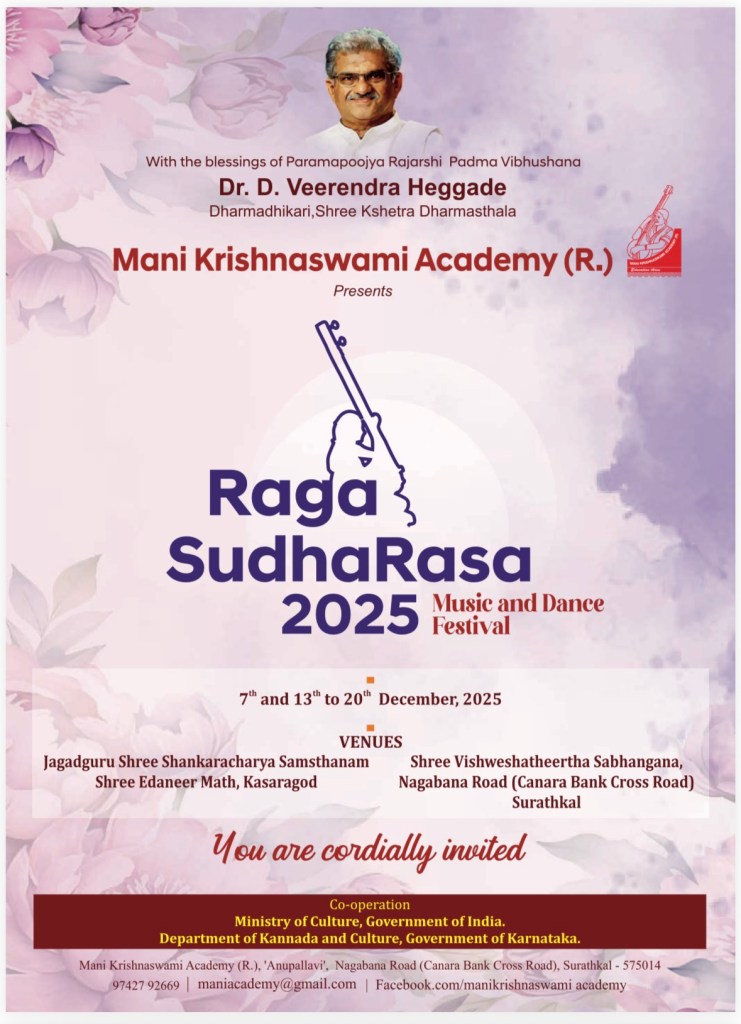
In the invitation card of the 2025 Annual Music Festival, RAAGASUDHA, you will see the list of all the young talented Awardees who were conferred the “MANI AND MK Annual Award for OUTSTANDING YOUNG TALENT” since 2018. They are:

Kum. Archana & Kum. Samanvi (Lathangi Sisters)

Kum. Athrayee Krishnaa

Sri Sundada Krishna Amai

Kum. Prajna Adiga

Kum. Shobhita Bhat & Kum. Ashweehja Udupa (Swaranjali Sisters)

Smt. Sunanda P.S.

And now in 2025

Kum. Divyashree Bhatt

It is a matter of great pride for the Mani Krishnaswami Foundation and the family members of both “Mani and MK” that many of the young musicians listed above — e.g. Athrayee Krishna and others like Shreya Kolatheya and Aneesh Bhatt — all have made tremendous strides in their musical journey of the last 5 years. The Music Season in Chennai this year is featuring the kutcheris of many of these young artistes from Karnataka. This is great progress indeed!

The footprints of many more of such young talented musicians — spotted and nurtured by the Mani Krishnaswami Academy and recognized by Mani Krishnaswami Foundation — will hopefully get bigger and bigger in the capital city of Carnatic Music, Chennai, in the years ahead.

**************

Ladies and Gentleme, now, I wish to make some general observations about the world of Carnatic Music as we all see it today. I have been given permission by Sri Nithyananda Rao of the Mani Krishnaswami Academy to make these general observations in this forum here since they are not specific to any one region (or institution) but to everywhere in the world where Carnatic Music is sung and enjoyed, whether it is here in Surathkal/Mangalore or in Mylapore, Chennai or in Cleveland, Ohio, America. There are 3 reasons why I wish to make these general observations on this occasion:

  1. Firstly, we all know that in the years and decades ahead, more young talented music artistes, all recognized by the Academy and the Foundation, are going to emerge from this region of Karnataka. These young musicians should therefore know what the real nature of the music world is which they will be entering.
  • Secondly, the observations I make are not something that other present day senior vidwans (like Sri. Rajkumar Bharathi or Vittal Ramamurthy, seated here on stage) or even retired vidwans will ever make in public forums like this one because they fear their words will be misunderstood and be dubbed “politically incorrect”. But I am a rasika … and an old one too… I have been an ordinary rasika since the 1970s, 1980s, through the 1990s to the present day. I do not have to fear anyone or any institution to speak my mind. In this forum of Mani Krishnaswami Academy, I have a right, in fact, to speak my mind as a Trustee of the Mani Krishnawami Foundation.
  • Lastly, I make these general observations here today, because I can make them in Surathkal on a public platform. In Chennai, I cannot make them because no one would ever care to listen or pay attention.

Now, let me proceed to make my general observations.

I say first that the world of Carnatic Music today increasingly resembles the corporate world. The music ecosystem today is getting increasingly corporatised. I can say this with confidence because I know both worlds quite well … My professional career as a Chartered Accountant stretched to 35 and more years in the corporate world both in Indian and abroad. So, what I say now is spoken with both with sincerity and truth.

*************

Corporate sponsorship in Carnatic music has boosted visibility and opportunities for young artistes, sustaining festivals like Chennai’s much celebrated Mega Margazhi season and other such Music festivals organised in many other cities. Corporatising Carnatic music does help in sustaining the classical Carnatic music ecosystem.

Benefits

Sponsorships from banks and corporates fund multiple daily concerts, pay performers directly, and preserve the tradition as a niche art.  Youth initiatives, amplified by such funding, have created slots for emerging talents in major sabhas, attracting younger audiences to the scene and drawing crowds through innovative events.​

It is in this context, that Mani Krishnaswami Academy’s tireless efforts and initiatives taken in this part of Western India are admirable since they have in the last 10-15 years helped to popularise youth-driven programs. This is why the Academy’s entire team led by Dr. Harikrishna Punarooru, Capt. Ganesh Karnik, Nithyananda Rao, Arvind Hebbar, Vibhu Rao, Dr. Arvind Hebbar, Vidwan Nagesh Boppanadu, B.Seetharama Tholpadhitaya, Smt Prarthana Sai Narsimhan and Sri Vibhu Rao must all be greatly applauded.

Drawbacks of Corporatisation of Carnatic music ecosystem

It is the nature of the corporate world to commercialise everything it touches, and Carnatic Music cannot be exempt from commercialisation.

Commercial pressures prioritize popularity, fusion concerts, gimmickry in the name of experimentation. They sponsor recommendations over rigorous curation of new talent scouting. That leads to a crowded field wherein family ties influence selections. Such trends signal risks to authenticity and depth in the art of Carnatic music.​

Sponsorships often lead to diluted artistic integrity, with performers selecting safer kritis or fusion elements to align with sponsor-recommended themes or demographics, sidelining deeper manodharma or exposition of rare ragas and kritis that define classical depth. This shift risks turning concerts into homogenized events, where family legacies or sponsor preferences overshadow merit-based innovation rooted in guru-shishya parampara.​

We see today many artistes — both senior as well as youth — opting for shorter, high-energy, high-decibel jazzy kutcheri formats delivering catchy well-known pieces. They seem aimed to maximize sponsorship visibility in social and TV media.  What this trend does is reduce space for elaborate alapana or lesser performed kritis that preserve cultural nuance. Commercial demands exacerbate this favouring of thematic songs more suited for branding image than for authentic exploration of Carnatic’s vast musical inventory. This potentially erodes repertoire diversity.​

To sum up, while sponsorship acts as a great boon for survival of the art and for access to large audiences, in a financially challenged ecosystem, Corporatisation of this Art form leans toward more towards the bane through overcrowding and quality erosion unless it is balanced by a much stronger curation system.

Competitive Pressures: Corporate sponsorship in Carnatic music fosters also a very competitive environment where young artistes often enter a rat race for stage time, prioritizing visibility over artistic depth.​

The influx of sponsorship-funded slots during Chennai’s Margazhi Season creates intense rivalry, with young performers relying on competitions, family networks, and sponsor endorsements to secure prime sabha stages amid hundreds of daily concerts throughout December-January. This leads to rushed preparations, formulaic repertoire, and social media promotion battles, sidelining rigorous training in favour of quick limelight grabs.​

Youth-focused series amplify opportunities, but they only further heighten the scramble, as limited senior slots push newcomers into cutthroat auditions and thematic events tailored for sponsors. fan-clubs and cheer-leading “Rasika forums”. Everything thus only ends up highlighting the declining standards, with overcrowding forcing artistes to chase “cuts” (performance slots) rather than nurture the genuine art form.​

Long-term Effects

This atmosphere risks burnout and superficiality. Behind it is equally competitive and unchecked mentorship that perpetuate a cycle whereby stage presence trumps tradition. Corporate sponsorships and overcrowding in Carnatic music thus push young performers toward showmanship and social-media hype, dramatic stage entries —flashy displays, audience-pleasing improvisations, and visual flair—over genuine artistry like nuanced manodharma in singing krithis. All this is driven by survival needs in a competitive field.​

Consequences

Parents of young Carnatic music students and their teachers, mentors and schools also cannot escape responsibility for these corporatising trends. It is they who often contribute to the belief that showmanship in their disciples and wards will help their careers by prioritizing competition wins and stage-ready polish to secure sponsorship slots, over immersive artistry training.​

Music schools today host kutcheri competitions mimicking sabha and TV Show formats, rewarding visual flair, confident banter, and social media appeal alongside a slick technique that fosters a “perform-to-win” mindset from very early ages.​

There are teachers today who openly emphasize that short, flashy renditions of popular kritis with extended neraval and crowd-pleasing raagas are the best way to prepare students for auditions in sponsor-funded series. Deep exploration of rare compositions or prolonged “saadhana” is not important anymore.

Patronage Shift

The world of Carnatic music and the way musicians lived and worked 60 years ago (around the 1960s and earlier) contrasted sharply with today’s corporate-driven, overcrowded scene. That world was rooted in royal patronage, guru-shishya intimacy, and ritualistic purity rather than commercial competition.​

Pre-1960s, musicians thrived under princely states and zamindars who provided lifelong sustenance via court positions, eliminating financial pressures for showmanship; post-independence, sabhas replaced this with ticketed events amid low attendance, birthing corporate sponsorship dependency now in the 2020s. The old-world life was centred on temples and chamber concerts (private soirées), not mass kutcheris, fostering depth over volume.​

Training and Performance

Teaching methods and the gurukula system in Carnatic music evolved dramatically from the immersive, oral tradition of 60 years ago (1960s and earlier) to today’s structured, accelerated academies, shifting from holistic mentorship to competition-oriented training.​ In the Gurukula Era (Pre-1960s) students lived with gurus in residential setups, absorbing alankaras, varnams, and krithis through shravana (listening), manana (reflection), and nididhyasana (practice) over 10-20 years, with no fixed syllabus—progress depended on individual aptitude and guru’s oral transmission. Emphasis lay on character, devotion, and manodharma via doing routine chores, religious rituals, and private tutorial sessions, free from fees via patronage, fostering unhurried depth in rare ragas and kritis.​

Gurukula system demanded several decades of residential immersion in sarali varisai, alankaras, and varnams before rare public debuts, prioritizing manodharma fidelity; artistes balanced music with devotion, often as temple vidwans or court retainers, valuing heritage over fame; today’s rat race demands branding, short sets, and sponsor-pleasing themes, eroding the unhurried artistry of yesteryears.

Modern Career Span (Post-1960s)

Post-independence, urban academies and schools adopted weekly classes, notations, and graded exams (e.g., from institutions like Music Academy Madras), shortening training to 5-10 years for quick arangetrams amid sponsorship demands. Digital aids, group batches, and competition prep now prioritize stage polish—short kritis, flashy neraval—over prolonged alapana, diluting personalized guru-shishya bonds for scalable, fee-based models.​

New entrants, often in 20s-30s after prolonged gurukula immersion, enjoyed lifelong careers (50-70 years) as court vidwans, wedding kutcheri-performers, or temple retainers, performing on sabha stages till age 80s-90s with community and rasika support ensuring financial security and gradual mastery without any rat-race dilution.​

By contrast, today’s young Carnatic artistes face shorter career spans of 20-30 years post-arangetram due to intense competition, burnout from rapid debuts, and diversification needs, contrasting sharply with 50-60+ year tenures 60 years ago under stable patronage.​

Young performers debut in teens after 8-12 years of academy training, sustaining via sponsorship slots for 2-3 decades before fading amid overcrowding, social media pressures, and supplemental gigs like teaching or fusions; many peak early (20s-30s) then pivot by 40-50.​

The Need for overhauling the Curation System that assesses young talent in Carnatic Music:

  • We need to start using multi-category rubrics evaluating tone, intonation, rhythmic accuracy, articulation, and interpretation (e.g., dynamics, phrasing, style adherence), with descriptive criteria for nuanced feedback rather than simply giving overall scores favouring charisma.​
  • We need to make far better and more extensive use of Formative Recordings and Reflection: Audio/video recordings should be used to analyze candidate’s alapana elaboration, neraval creativity, and rare krithi handling, paired with self/peer critiques focusing on guru-shishya fidelity over applause metrics.​ Carnatic music tutelage must include not only conspicuous skill development but also character.
  • Teachers, mentors and Carnatic music schools must also start assessing in a proper way the core elements of musical effect and technique separately, ensuring that expression (manodharma depth) weighs equally to the basics, and avoid single-event judgments.​

THANK YOU

M.K.SUDARSHAN