
What are the specific mantras are chanted at the time of the seemanthan ritual? What do they signify?
During the Seemantham ritual, specific Vedic mantras are chanted with the primary purpose of protecting the pregnant woman and her unborn child, invoking blessings for their health, prosperity, and safe delivery. The mantras also serve to ward off negative influences and ensure the intellectual and spiritual well-being of the child.
Key Mantras and Their Significance
1. Seemantha Mantra
A central mantra recited during the ritual is:
येनादितेः सीमानं नयाति प्रजापतिर्महते सौभगाय।
तेनाहमस्यै सीमानं नयामि प्रजामस्यै जरदष्टिं कृणोमि॥
Translation & Significance:
- This mantra refers to Prajapati (the Creator) performing Seemantha for Aditi (mother of the Devas) for her prosperity and the long life of her children.
- By chanting this, the husband symbolically parts his wife’s hair, invoking similar blessings of prosperity, long life, and protection for the mother and child.
2. Invocation of Lakshmi Devi
- The husband invokes Lakshmi Devi (goddess of prosperity) to protect the wife from evil influences, especially from negative spirits believed to be harmful during pregnancy.
- The mantra for this invocation is:
आयान्ति काश्चिद्राक्षस्यो रुधिराशनतत्पराः॥
तासां निरसनार्थाय श्रियमावाहयेत्पतिः।
सीमन्तकरणौ लक्ष्मीस्तामावहति मन्त्रतः॥
Significance:
- This set of verses seeks to drive away harmful spirits and invite auspiciousness and protection through the presence of Lakshmi Devi.
3. Mantras for Purification and Blessings
- Mantras are also chanted to purify the fetus and seek the protection of deities such as Brahma, Agni, Raga (Rika), Vishnu, Soma, and Ganga.
- The main deity invoked is often Raga (Rika), the presiding deity of the full moon, symbolizing beauty and intellect.
- The intent is for the pregnancy to be fruitful, the child to be intelligent (like the sharp quill of a porcupine), and beautiful (like the full moon).
4. Udaka Shanti and Other Ritual Chants
- Additional mantras, such as those from the Udaka Shanti ritual, are recited to sanctify water and bless the mother for strength and a smooth delivery.
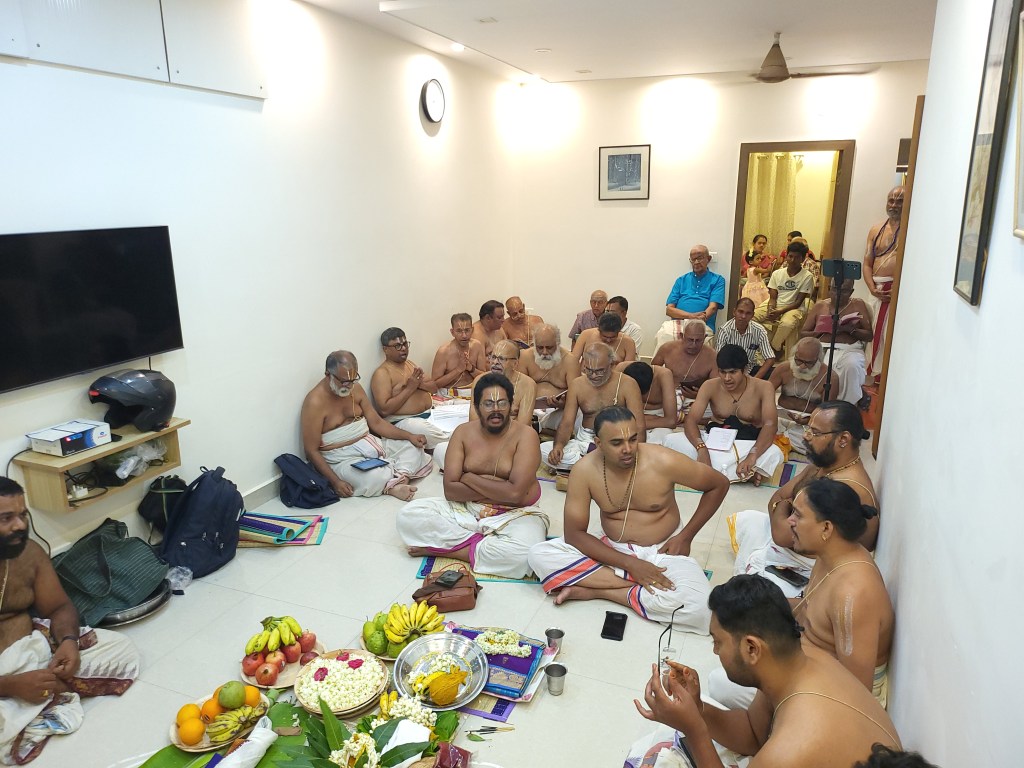
- Udaka Shanti Chant is a sacred Vedic ritual in Hinduism involving the chanting of 1441 mantras primarily from the Yajurveda, focused on invoking peace, harmony, and purification through the element of water (“Udaka” means water). The chant is performed during the Udaka Shanti Puja, which is conducted to purify the environment, remove negative energies, and seek blessings for prosperity and well-being in the home or before important ceremonies like Upanayana, Gruha Pravesh, marriages, or Seemantham before childbirth.
- The mantras begin with a request to Lord Agnee (fire deity) and Lord Vishnu to listen and accept the prayers.
- The chanting involves 1441 lines from the Yajurveda, each with a specific spiritual significance aimed at creating positive energy and pleasing the deities.
- The ritual uses a Kalasha (a sacred metal vessel) filled with pure water, topped with a coconut and decorated with haldi-kumkum and mango leaves, symbolizing fertility, prosperity, and divine presence.
- The chanting is accompanied by offerings such as flowers, Akshata (unbroken rice grains symbolizing fertility), and lighting of oil lamps (diyas) to invoke divine energies.
5. Grabh Raksha Stotram
- In some traditions, the Grabh Raksha Stotram is chanted, which are prayers specifically for the protection of the pregnant woman and her unborn child.
Summary Table
| Mantra/Chant | Purpose/Significance |
|---|---|
| Seemantha Mantra | Prosperity, long life, protection for mother and child |
| Invocation of Lakshmi Devi | Warding off evil, inviting auspiciousness |
| Purification Mantras | Protection by deities, intellectual and spiritual growth |
| Udaka Shanti Mantras | Blessings for strength and smooth delivery |
| Grabh Raksha Stotram | Protection of mother and fetus |
These mantras collectively sanctify the pregnancy, protect the mother and child, and invoke divine blessings for a healthy, intelligent, and prosperous future.
************
There is one question that still remains to be answered:
If the rite of “Seemantham” is a Vedic “samskara“; and if it must be conducted for sake of ensuring the wellbeing of the pregnant mother, the protection of her natal womb and the fetal life growing inside, how is it that the performance of the “samskara” is enjoined only upon Vedic adherents in India?
No such ritual is practised by pregnant women in other countries and belonging to other religious faiths. Do such women in the rest of the world not also conceive, become pregnant and nurture healthy fetuses? Are not healthy babies born to them too?
So what is so special about this Vedic “samskara” that it must be performed for the sake of our womenfolk belonging to the Vedic faith?
(Continued in Part-4)
Sudarshan Madabushi