
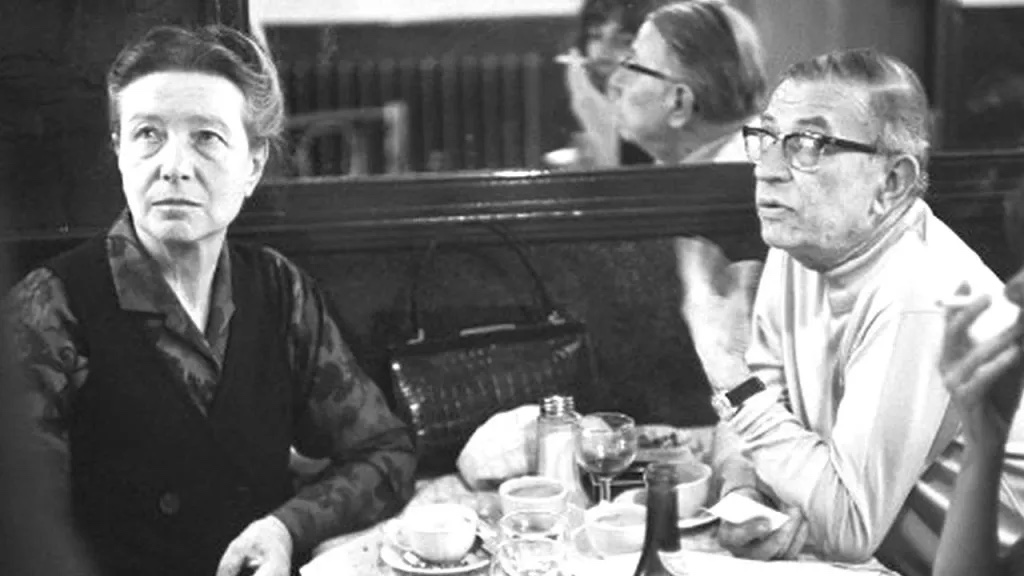
Simone de Beauvoir and Jean-Paul Sartre at the Café de Flore in Paris, 1970
The above article is an excellent commentary on the subject of the waning vigour of the traditions of intellectualism in public debate within the general life of societies right across the globe.
Why is the modern public intellectual a dying species?
The above essay traces the cause to many reasons in America. But after reading it, from the perspective of an Indian, I can say that “India is no country for intellectuals”. And the reason is the current generations of intellectuals in our country do not quite make the grade of those who are their forebears in ancient India.
1. A true intellectual must be open to learning from other cultures and engage in constant self-reflection.
2. The intellectual’s role is to challenge insularity and provoke introspection, not to blindly defend tradition.
3. The intellectual must stand apart from society to critique it honestly.
4. Today there is a huge disconnect between the intellectual elite and the masses. Indian intellectuals often fail to communicate effectively with broader society and they do not anymore drive meaningful cultural change.
5. The electronic media and social media are now the predominant intellectual marketplace or public square of the world.
_______________ ********* ——————-
A very perceptive online friend of mine, who currently lives in the USA, after reading the above Substack article emailed me his trenchant comments which I reproduce below ⬇️
Attention span these days has greatly been reduced. Everything has to be given in capsule form. No one has the inclination to digest – the Vedantic concept of Nidhidyasanam – it has vanished. Serious discussion is almost verboten. Entertainment is the preferred dish. An apposite example is the bastardisation of the old Pattimanram in Tamil. Solomon Pappiah has debased it to a coffee shop exchange of jokes. As the article rightly points out, today it is the Influencer and not the Intellectual who occupies centre stage. Laura Loomer of the USA is a prime example.
I could not have agreed more with the view of the friend from America. He was absolutely spot on ! And his observations triggered in me further thoughts on the matter which I then shared with him in a follow-up email this morning . Below ⬇️, I reproduce my email which is in fact, in a manner of speaking, amplification of the friend’s own views … especially on the vanishing ancient tradition of “nidhidhyaasana”.
Just by way of information, I give below in summary what is nidhidhyaasana.
In the traditional Vedantic process, spiritual practice is described in three main stages:
• Śravaṇa: Listening to the teachings of the scriptures.
• Manana: Reflecting on and reasoning about those teachings to remove doubts.
• Nididhyāsana: Engaging in continuous, focused meditation to internalize and directly realize the truth of those teachings.
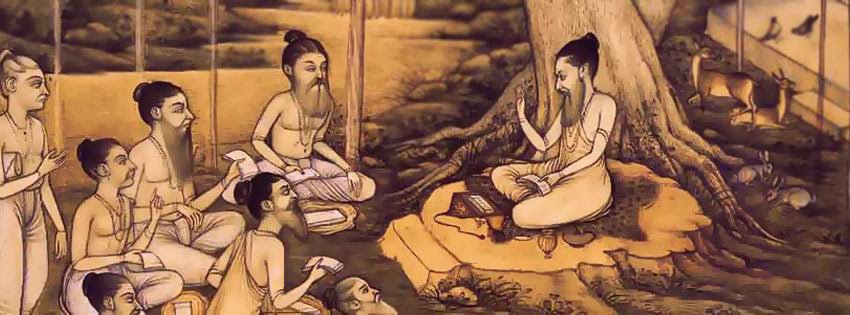
In the ancient past in India, however, this term had a very narrow and technical connotation. Nididhyāsana was the mental state where a practitioner meditated deeply on the mahāvākyas (great statements) of the Upanishads.
—————— ********* —————
Let me now , reproduce below my emailed response to my online friend in America:
Sir, Let me add to the list of main reasons you have compiled as accounting for the “death of the public intellectual”.
You have correctly diagnosed one to be shrinking “attention span” in people of the present generations.
I’d include also “intolerance” and impatience”.
By “impatience” I mean unwillingness and incapacity to listen to the other point of view to truly understand the opposite view or argument. In ancient time in India, much intellectual debate and discourse was fecund and lofty only because of the tradition of “purva paksha” that was embraced by all of those generations. Before starting of a debate, each side would first have to present in a summarised manner the opposite side’s view or position… and vice versa. Both parties must satisfy each other thus that they each had fully and correctly grasped each other’s respective ideas and arguments. It is only thereafter … after the “purva paksha” motion had been passed to mutual agreement … that the real debate started.
“Purva Paksha” demands not only great patience but also intellectual rigour and honesty … qualities which sadly are all woefully lacking in today’s fora of debate and discussions. It is because the etiquette of formal “purva paksha” has been lost , that we find today’s debates even in Parliament and Assembly to be so either rancorous, meaningless or downright vapid and slovenly.
Next, by “intolerance” I mean ill-tempered attitude to the debate. Today’s debating stage is a pugilist’s ring. Debaters today descend so easily into ad hominem attacks, personal pique the moment they sense that they can’t effectively counter an opposing view. An intellectual challenge at once is seen as a personal affront.
Instead of shedding light on the real motion of debate, the two sides then only end up generating great heat. In such an atmosphere of simmering or near-vituperative back and forth verbal attacks, no really valuable ideas or insights emerge from the so-called “intellectual exchange”. It all finally ends up as “sound and fury signifying nothing”.
The galleries of course find everything oh all so entertaining! Oh, so much fun! And they applaud! To them it is electrifying intellectual tamaasha of sorts.
It is true today that it is the “influencer” not the intellectual who is the arbiter of public opinion . Opinions are really winds of fashion . But serious thought — and the serious exploration of fresh or new ideas and insights in the public domain — today has totally gone out of fashion.
Intellectualism is just breezy fashion these days because it parades and preens itself on the glitzy catwalks of TV studios presided over by slick and glib anchorpersons who cannot really tell the difference between sober cerebration that can elevate the mind and frenzied celebration of what at best can tittilate or tantalise it .
Intellectualism is no longer the sartorial sophistication and elegance in which the ancient Rishis of India, once upon a time in our land, used as attire for their superior thinking minds.
To conclude, however, let’s turn to somber poetry.
“We are the hollow men
We are the stuffed men
Leaning together
Headpiece filled with straw. Alas!”
The above verse is from “The Hollow Men” by T.S. Eliot, a poem first published in 1925. This modernist work explores themes of spiritual emptiness, disillusionment, and the fragmented state of humanity after World War I.
The “hollow men” represent individuals who are spiritually and morally empty—lacking substance, conviction, or purpose. The “stuffed men” suggests they are filled with meaningless material, like straw, evoking the image of scarecrows.
I can’t help imagining to myself who amongst us in our societies in this country are “hollow men” and who are the “stuffed men”.
T.S. Eliot’s poem is known for its haunting tone and ends with the famous lines:
“This is the way the world ends
Not with a bang but a whimper
Well… about the “end of the world”, I know I cannot ascertain or predict it intellectually. However, what I can and so say with a reasonable degree of certainty and objectivity is this :
The great furious debates of our times that our own intellectuals in India — Eliot’s “stuffed men” — engage in are often no more than whimpers masquerading as bang….
Sudarshan Madabushi