
By the time Srinivasa Sastri returned in 1929 to India after successfully completing the diplomatic task in South Africa that had been assigned to him by the British Government of India and by Mahatma Gandhi as well, his intellectual and political stature had grown and he became renowned amongst both the Colonial Administrations of Great Britain and South Africa and as well as in Indian political spheres back home.
Srinivasa Sastri, due to his wide-ranging erudition, strong affinity and remarkable command of the English language, his polished oratory style, and his constitutional moderate approach that inclined towards cooperation with the British rather than confrontation had already gained considerable fame worldwide. He was admired by many British leaders and intellectuals for his eloquence— King George V made him a “Companion of Honour,” and British Prime Ministers and historians praised his English oratory highly.
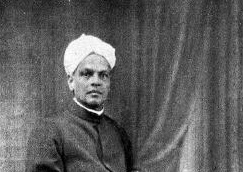
However, within the political circles in India — at that time in the 1930s when Gandhi’s Civil Disobedience Movement and Sathyagraha mass-agitations were gathering enormous momentum thanks to a rising tide of nation-wide nationalism — Sastri was not admired by the leadership of the Indian National Congress half as much as those in the the vaulting corridors of imperial power in Whitehall, Westminster in London. Despite the personal rapport and trust that Sastri enjoyed with Mahatma Gandhi, he found himself terribly at odds with the likes of Jawaharlal Nehru, Sardar Patel, Rajaji and other stalwarts of the Congress Party.
Srinivasa Sastri had earlier, in fact, himself held positions in the Indian National Congress! He had joined the Congress in 1908 and had served as the Secretary of the Madras District Congress Committee in 1911. He had been quite an active member until 1922 when he resigned in protest against the Non-Cooperation Movement initiated by Gandhi and the Congress leadership. Sastri viewed the movement as radical and extra-constitutional. He doubted the ability of Gandhi’s followers and apostles to maintain pacifism and was critical of the confrontational approach, preferring constitutional methods and cooperation with the British colonial framework.
During his time with the Congress, Sastri was known for his moderate and constitutional approach to the struggle for independence. It inevitably led to a falling out with the more radical “top brass” (high command) of the Indian National Congress such as Jawaharlal Nehru, Sardar Patel, and C. Rajagopalachari (Rajaji).
Sastri resigned from the Congress.
************
After leaving the Congress, Srinivasa Sastri went on to found the Indian Liberal Federation (or Indian Liberal Party). He was content to continue his political work through that platform which represented a less popular but far more moderate, liberal, and constitutionalist segment of Indian politics, distinct from the mass civil disobedience and radical nationalist strategies pursued by the Congress leadership.
In spite of Sastri having repudiated the INC and left it, the fact that Mahatma Gandhi had still handpicked him and had also wholly endorsed the British Government’s choice of his candidacy to go to South Africa as Agent-General on an ambassadorial assignment, it is my surmise that it caused considerable pique — or envy or both — against him amongst the “top brass” of the Congress. To further add to the consternation of Nehru and other leaders of the INC, Srinivasa Sastri was also nominated to join the important Delegation of prominent Indian leaders attending in 1930-32 the historic Round Table Conferences in London.
These lengthy Conferences were held to deliberate upon and make recommendations for Constitutional Reforms related to British Rule in India which did in fact have far-reaching ramifications later in history for the Independence of India.
At these crucial meetings of the Round Table convened by the British Government in London, Sastri participated actively while making significant contributions to the proceedings. But then he did so not on behalf of the Indian National Congress but as the leader of the Indian Liberal Federation. The inputs and recommendations given by him at the Conferences were at complete variance with those of the INC’s own approach and strategies. Thus, the “top brass” of the Congress Party became even more resentful and deeply critical than before of Srinivasa Sastri.
Nehru’s worst suspicions about Sastri’s ideological stance vis-a-vis how the Freedom Struggle against the British must be conducted were confirmed. He was irked deeply by Sastri’s steadfast view that the struggle for India’s Independence must be based firmly on principles of “constitutionalism” and not on the fervor of “nationalism“. Nehru felt that Sastri was overly sympathetic to and cooperative with the British rulers, as the record of his work in South Africa had already shown and then, also especially evident at the Round Table Conferences where Sastri and his associates had largely accepted British proposals that the Congress itself had rejected as unfair.
Sastri’s stance favored dominion status for British India and ongoing constitutional reform over immediate full independence. This position put him ideologically squarely apart from the Congress mainstream led by Nehru, Patel, and Rajaji. The mainstream INC thus became hostile towards Sastri. It began an imperceptible yet strident campaign of criticism against Srinivasa Sastri in spite of his being in the good books of Mahatma Gandhi. Their criticism was aimed mainly at what was perceived as Sastri’s excessive sympathy for and cooperation with British colonial rulers. Nehru, in particular, saw Sastri as too conciliatory and cooperative with the British, especially during moments of crisis and political struggle. For example, Nehru remarked in his autobiography that although Sastri was an excellent orator, he seemed to advocate “mute submission” and was not very effective during critical times when followers needed strong leadership.
************
It is quite probable that apart from ideological difference of opinion, Nehru’s distinct discomfort with Sastri arose also from a suppressed sense of envy.
In the 1930s, Jawaharlal Nehru was unquestionably the rising star within the Indian National Congress. He commanded the awe and obedience of the entire Party rank and file. He was indeed the Crown Prince, the undeclared heir to the Mahatma. And Nehru was respected in the country also for his comprehensive and seemingly unmatched grasp of world affairs, international relations and diplomacy. Foreign Affairs was considered Nehru’s turf and forte and none within the INC could dare challenge him on that front. If at all there was any Indian at that time who could easily hold a candle to Jawaharlal Nehru if not even perhaps excel him, it could be none other than the Rt. Hon’ble Srinivasa Sastry.
Sastri’s mastery of the English language, polished oratory, and constitutional approach made him an elite diplomat and international representative of Indian interests. He had shown that he could successfully engage with British political leaders and that too with great aplomb even at august global forums like the League of Nations, the Imperial Conference, and diplomatic missions to South Africa and the UK. His diplomatic efforts, such as the Cape Town Agreement with South Africa safeguarding Indian minority rights, were pioneering, representing India in a sophisticated international liberal framework. Sastri’s work greatly helped advance Indian self-respect globally and it laid the groundwork for India’s evolving global legitimacy, moving toward the idea of dominion status within the British Empire. Here was a man then who — quite like Nehru himself — thus took to international diplomacy and India’s Foreign Affairs like duck to water. Nehru the rising star in the INC could not have relished Sastri being looked upon as an equal expert on foreign affairs. That title belonged exclusively to Nehru and he would brook no challengers.
Above all, what might have also irritated Nehru no end was the fact that Mahatma Gandhi himself personally valued Sastri’s role for presenting Indian claims in global fora, complementing thereby Gandhi’s mass civil disobedience with Sastri’s constitutional diplomacy and intellectual weight.
Nehru thus, it can be reasonably conjectured, had much personal motive indeed to grow quite hypercritical of what he believed was Sastri’s diplomatic elitism and caste/racial biases which, in fact, he charged, were what had distanced Sastri, in the first place, from the mass movements of the INC and alienated him from the vast population of poor, marginalized Indians.
Within the INC rank and file in some quarters, the narrative eventually thus gained currency and began circulate about in hushed whispers and and murmurs — that Sastri’s diplomacy often reflected elitism and a kind of “performative Brahminness,” emphasizing refined Indian culture and distance from poorer Indians and indigenous allies. And that Sastri’s kind of elitism in the country is what weakens mass movements for political rights. The narrative also falsely described Sastri’s efforts to separate Indian concerns from those of other marginalized groups like black South Africans during his diplomatic work as very problematic, and that it revealed his own deep caste and racial biases that could only limit solidarity and broader nationalist appeal.
All the above points are clearly reflected in Nehru’s remarks about Sastri in his autobiography and elsewhere.
*************
It is important for us today who are students of history to clearly understand what Anglophilia meant at the time in the history of the Indian Independence struggle.
Anglophile elites, typically Western-educated middle-class professionals (lawyers, teachers, journalists, academicians who came from the Brahmin caste), played a major role in introducing constitutional, legal, and diplomatic methods to the independence cause. Their familiarity with British political institutions enabled them to negotiate with colonial authorities and represent Indian interests internationally. Their engagement helped frame Indian nationalism within a global legal and diplomatic context, advancing Indian claims through constitutional reforms, dialogue, and international forums.
Leaders like Srinivasa Sastri exemplified this thing called Anglophilia by using their mastery of English and British-style diplomacy to advocate for Indian rights abroad, complementing mass movements led by figures such as Gandhi.
Leaders like Nehru — in spite of being himself an unabashed Anglophile in every sense of the term — adopted a posture of being very allergic to so-called “anglophilia” only because it suited them politically to neutralise those whom they saw as ideological rivals. The best way to do that was to accuse leaders like Sastri of turning elitist toadies of the British. The elites’ focus on constitutionalism sometimes did slow or complicate more confrontational efforts in the freedom struggle, leading thus to internal disagreements about strategy.
Nonetheless, Mahatma Gandhi at least very clearly understood that the so-called “anglophile elites” of India were contributing essential diplomatic skills, constitutional knowledge, and international legitimacy to India’s independence struggle through their advocation of moderation and cooperation with British institutions. Their dual role in a way helped him shape a pluralistic nationalist movement balancing elite negotiation and mass resistance, although perceived affinity with British interests sometimes limited their influence among radical nationalists.
**************
Largely due to such a surreptitious campaign of calumny unleashed by the top leadership of the Indian National Congress, Srinivasa Sastri soon came to be branded in mainstream Indian politics as an Anglophile. And to add insult to injury, he was also disdained as a “performative orthodox Brahmin“.
How and why did such blatantly unfair stereotyping of Sastri happen?
It would require perhaps the forensic skills of a professional historian delving into that period in history to study it and be able to write about how exactly it happened. But it would not be unreasonable to surmise here that Srinivasa Sastri got stuck with that unsavoury tag of “elite Anglophile” thanks mainly to misunderstanding and grossly misinterpreting — by ripping out of context — many of his public utterances… especially the eloquent speeches he had given in South Africa, which was where he had achieved the most impactful work in his career as a gentleman-diplomat.
Here below is just one sample of such a speech Sastri had gone on record to have made (in 1927) and the likes of which, most probably, served later as grist for the rumour mills of Delhi spreading the malicious canard about Sastri’s Anglophilia and which Congressmen believed was true.
“It is no part of our intention either now or at any time in the future to challenge the political supremacy of the white part of the population of South Africa. We admit to the full your right to maintain the civilisation which you value, the modes of living, the standards of comfort which you have set up for yourselves, amidst discouragement and difficulties, which we fully appreciate. We recognise that it will be your right to determine the public policy of this sub-continent, and model it to yours and the satisfaction of the public interests.
“This being out of the way, we recognise as a natural corollary that there must be certain limitations and restrictions upon the political and municipal freedom of Indians here (in South Africa) so that this essential requirement may be satisfied. We are anxious to disarm your suspicions in the matter.
“And any application which might be made for the freedom of the Indian population in a request for the removal of disabilities pressing upon them, and any petition for facilities enabling them to live a happy, contented and prosperous life—all these things must be understood as being subject to this limitation, with which no wish is there to interfere in, or dispute the political supremacy of, the Europeans of this sub-continent”.
************
Anyone today reading the above extract of Sastri’s speech without any knowledge of the context in which it was made in South Africa might unthinkingly only jump to the conclusion that yes, as Nehru had accused him, he must have been, “overly sympathetic and cooperative with the British rulers” and that “he seemed to advocate “mute submission” to them.
To the best of my knowledge, there is little on record in the public domain reporting that Rt. Hon’ble Srinivasa Sastry ever defended himself against the accusation of “elitist toadyism” hurled against him. He would never have stooped to that level of countering uncharitable slander whispered about him behind his back… He would simply have ignored it all and withdrawn. To defend himself under such circumstances in the newspapers or in the public square would have been beneath the man who was known always for having maintained the dignity of his “method of kindly inoffensiveness“.
There is a very emotional passage in the very same speech of Sastri quoted above. It was made in South Africa for an entirely different occasion. But in my view, those could be the very words that Sastri might have repeated today today to us were he to be called to offer an explanation, justification or a defense of what he was charged with by peers and rivals in politics back in 1930-32. And those words in his own defense would surely qualify yet as another classic example of his “method of kindly inoffensiveness“:
“You know, being men and women of the world, that there is only one truth and a thousand lies; there is only one course of action in a difficulty and there are beside it a hundred wrong courses each inviting you to itself. It is hard—I realise it fully– it is hard to do what is right, to speak the truth, to keep to the straight path in front of you when there are temptations to make a great mark, to create a sensation which the superficial observer will regard as smart or clever, but which cannot contribute anything to remove the evil of the situation.
“Suspicions had been aroused, accusations had been flung about recklessly, that it is necessary to be quite clear and emphatic on the point. It is, unfortunately, true, in the political world, that when politicians repudiate something we usually suppose that there is something wrong about it. Politicians are a tribe who do not always trust one another. When they repudiate anything they are anxious that the repudiation shall be taken at its face value, that their honesty shall not be questioned, and their bona fides shall be above cavil. But, when another man repudiates anything, they laugh, ignore it, even sneer and say, “We know what these political statements are!”
“I want you to acquit me of saying anything that will look like a political statement of this kind. There cannot be any temptation for me to deceive you in making a statement in which I did not fully believe. I have a sacred duty to the cause I represent. There are circumstances surrounding my work; there is sufficient guarantee that I will not make myself consciously guilty of exaggeration, a wilful distortion of the facts or a calculated concealment of feelings deep in the mind”.
**************
After the unkindly offensive way he was treated by the leadership of the Indian National Congress, Srinivasa Sastri political career began to unravel and rapidly wane… He became slowly a broken man…. How did he cope with the isolation? To what did he turn his attention next in life?
(to be continued)
Sudarshan Madabushi