
The Varnashrama system, as described in Manusmriti and other ancient texts, was structured fundamentally to organize society based on vocational aptitudes and duties, aiming to maintain social order and harmony in accordance with cosmic and moral laws (dharma). (Chapter 1.88-91).
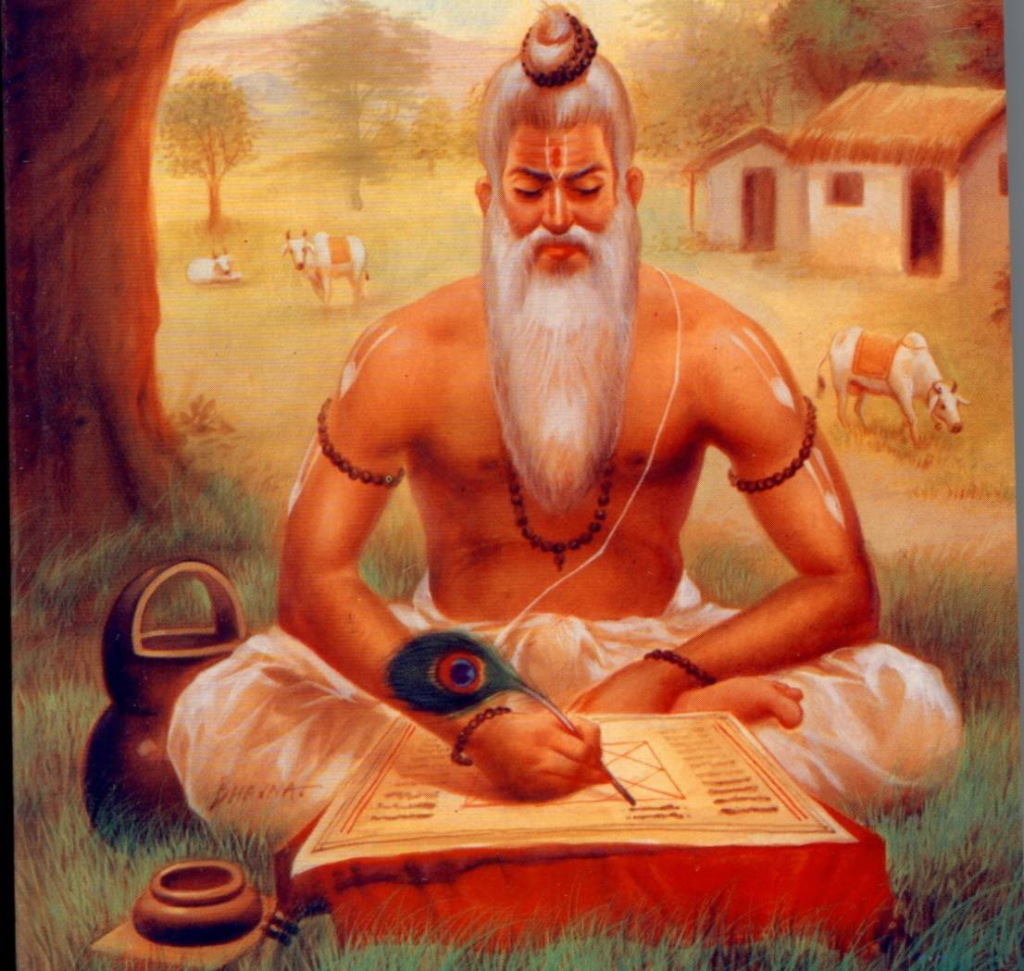
This system classified society into four main varnas: Brahmins (priests and teachers), Kshatriyas (warriors and rulers), Vaishyas (traders and agriculturists), and Shudras (servants and laborers), prescribing for each a defined set of duties and rights that ideally aligned with their natural qualities and societal role.
Each varna had specific responsibilities (dharma), contributing to the overall stability and functioning of society. Social roles and duties were ideally assigned based on one’s inherent qualities (guna) and actions (karma), not strictly birth alone, although in practice the system during some periods in long history got ossified into rigid caste structures. Flexibility, in fact, was recognized in the Manusmriti (9.336), which anticipated and allowed adaptation of varna duties in times of social distress, indicating the Maharishi’s deep awareness of social dynamics and necessary resilience.
The Varnashrama system aimed to prevent rampant rivalry among elites — within all three castes by clearly delineating their respective societal roles, thus aiming to avoid the destructive competition and instability seen in societies with unregulated elite aspirant surpluses.
In contemporary discourse, the Varnashrama or caste system has often been demonized or misunderstood, especially by socio-political ideologues who reduce it to rigid, hereditary discrimination without recognizing its originally intended social-structural function and its nuanced philosophical basis. This oversimplification fails to appreciate the ancient Indian effort to integrate social order, vocational aptitudes, and moral duties in a complex, interdependent framework designed for societal harmony.
Thus, from a sociological and historical perspective, the Varnashrama system can be seen as an early institutional mechanism to manage elite competition and maintain social stability, a function that modern societies — both in Western countries and in India — struggle with amidst egalitarian ambitions but face disruptions such as elite overproduction.
*********
The Varnashrama system in Manusmriti mapped directly onto the dynamics of elite overproduction by preemptively managing social aspirations, stratifying duties and privileges, and preventing competitive instability among elites.
How was that accomplished by the Maharishi? By assigning specific roles, duties, and privileges to each varna (Brahmins, Kshatriyas, Vaishyas, Shudras), directing individuals toward pre-designated spheres of influence and occupation, thereby restricting mass competition for elite status.
By “restructuring expectations,” the Manu Smriti ensured that Brahmins remained wedded to serving as priests/teachers; and Kshatriyas remained rulers/warriors; and they were prepared respectively for spiritual/intellectual or governance/military leadership. Others (Vaishyas, Shudras) were to remain focused on trade or service respectively. This greatly minimized rivalry among the aspirants for top positions and kept the elite numbers in check. Manu thus provided a direct answer and pragmatic solution to the “musical chair” syndrome central to elite overproduction.
The “restructuring of expectations” was related not only to the assignment of mundane vocations but it was also hitched to transcendent ideals to be realised in life called “purushaartha-s”. These were four in number and they each became the highest goals in life in which the 4 different castes would each aspire to find fulfilment …. even in times of āpada (आपद्), or “distress” “calamity,” “misfortune,” “danger,” “hardship,” or “social crisis“.
They were “dharma” (rule by virtue) for the Kshatriya; “artha” (acquisition of material wealth) for the Vaishya; “kama” (contentment in enjoying creature comforts or the “good things in life”) for the Sudra and…. for the Brahmin, the highest “purushaartha” was “moksha” (ceaseless striving for spiritual elevation and final liberation).
In Manu’s system of varnashrama, thus, secular vocations of each caste — i.e. varna dharma — all got tied to ultimate spiritual ends — the 4 purushaarthas.
एते चतुर्णां वर्णानामापद्धर्माः प्रकीर्तिताः ।
यान् सम्यगनुतिष्ठन्तो व्रजन्ति परमं गतिम् ॥
“These are the misdeeds (apad-dharma) of the four castes which have been declared; despite which, if only their duties they properly perform, each shall attain the supreme goal.”
*********
Rishi Manu furthermore also imposed hierarchical constraints and restricted privileged access on each social class.
In other words, his Smriti laid down lengthy rules for Brahmins and Kshatriyas (over 1000 verses each!), but then he restricted access to elite knowledge, rituals, and governance to these classes, and largely excluded the broad population. Shudras and Vaishyas were to face barriers to upward mobility to elite positions, which, while limiting individual aspirations, however, did stabilize social order and prevented an excess of elite competition for a limited pool of prestigious roles.
Manu’s system next went on to prescribe certain penalties for role deviation and promoted virtue through dharma, ensuring that aspirants to upward mobility within society conformed first to their assigned duty before engaging in higher elite occupations. Such a penal system prevented the proliferation and frustration so characteristic of “elite overproduction”. And it was the king’s role (rajdharma) to enforce the norms, using law and punishment to stop rebellious ambition and maintain the social equilibrium.
*********
In his monumental work on Indian Philosophy, “A HISTORY OF INDIAN PHILOSOPHY” (1922) – 5 Volumes , Surendranath Dasgupta explained Manu’s system of “hierarchical constraints, restricted privileged access and penalties for non-conformity’ very lucidly:
QUOTE:
The duties of Hindu ethical life consisted primarily of the prescribed caste-duties and the specific duties of the different stages of life, and this is known as varnasrama-dharma.
Over and above this there were also certain duties which were common to all, called the sadharanadharmas.
Thus, Manu mentions steadiness (dhairya), forgiveness (ksama), self-control (dama), non-stealing (cauryabhava), purity (sauca), sense-control (indriya–nigraha), wisdom (dhi), learning (vidya), truthfulness (satya) and control of anger (akrodha) as examples of sadharana–dharma. Prasastapada mentions faith in religious duties (dharma-sraddha), non-injury (ahimsa), doing good to living beings (bhuta-hitatua), truthfulness (satya-vacana), non-stealing (asteya), sex-continence (brahma-carya), sincerity of mind (anupadha), control of anger (krodha-varjana), cleanliness and ablutions (abhisecana), taking of pure food (suci-dravya-sevana), devotion to Vedic gods (visista-devata-bhakti), and watchfulness in avoiding transgressions (apramada).
The specific caste-duties however, according to Manu, must be distinguished from the common duties described above.
The specific duties of a Brahmin are acceptance of gifts as alms, teaching, performing sacrifices and so forth; the specific duties of a Kshatriya are protection of the people, punishing the wicked, not to retreat from battles and other specific tasks; the duties of a Vaisya are buying, selling, agriculture, breeding and rearing of cattle, and the duties of a Sudra are to serve the three higher castes.
Thus, the individual of a specific community who observes the duties of his class does not serve his own community merely, but also and in the same process, all other communities according to their deserts and needs, and in this way the whole of humanity itself.
… The sadharana duties are obligatory equally for all individuals, irrespective of their social position or individual capacity. The statement that the common good (sadharana-dharma) could be regarded as the precondition of the specific caste-duties implies that, if the latter came into conflict with the former, then the former should prevail. This is, however, inexact; for there is hardly any instance where, in case of a conflict, the sadharana dharma, or the common duties, had a greater force.
…In the Rămayana … Sambüka was a Sudra saint (muni) who was performing ascetic penances in a forest. This was a transgression of caste-duties; for a Sudra could not perform tapas, which only the higher caste people were allowed to undertake, and hence the performance of tapas by the Sudra saint, Sambuka was regarded as adharma (vice) in the kingdom of Rama; and, as a result of this adharma, there was a calamity in the kingdom in the form of the death of an infant son of a Brahmin. King Rama went out in his chariot and beheaded Sambüka for transgressing his caste-duties.
Instances could be multiplied to show that, when there was a conflict between the caste-duties and the common duties, it was the former that had the greater force. The common duties had their force only when they were not in conflict with the caste-duties.
The (Bhagavath) Gita is itself an example of how the caste-duties had preference over common duties. In spite of the fact that Arjuna was extremely unwilling to take the lives of his near and dear kinsmen in the battle of Kuruksetra, Krishna tried his best to dissuade him from his disinclination to fight and pointed out to him that it was his clear duty, as a Kshatriya, to fight.
It seems therefore very proper to hold that the common duties had only a general application, and that the specific caste-duties superseded them, whenever the two were in conflict.
UNQUOTE
**********
In essence, Manusmriti’s Varnashrama system functioned as a very efficient societal solution to elite overproduction: by tightly regulating ambition, defining roles, and punishing transgression, it deterred surplus elite rivalry and kept society stable and hierarchical.
**********
In India today, on everyone’s lips and heart there is one remarkable catchphrase: “aspirational young generation” hailed as the “great demographic dividend” that in this century, the country will surely reap — in terms of unprecedented economic growth and societal advancement by leaps and bounds. It is this sense of national surging optimism that, in fact, is seen reflected too in Modi’s great vision statements such as “atma-nirbhar” and “vikshith bhaarath“.
This great mood of optimism is not really misplaced. But then, to me, it does appear more often than not greatly overstated for the simple reason that the vision does not seem to take into consideration Peter Turchin’s problem-definition of “elite overproduction”.
(to be continued)
Sudarshan Madabushi