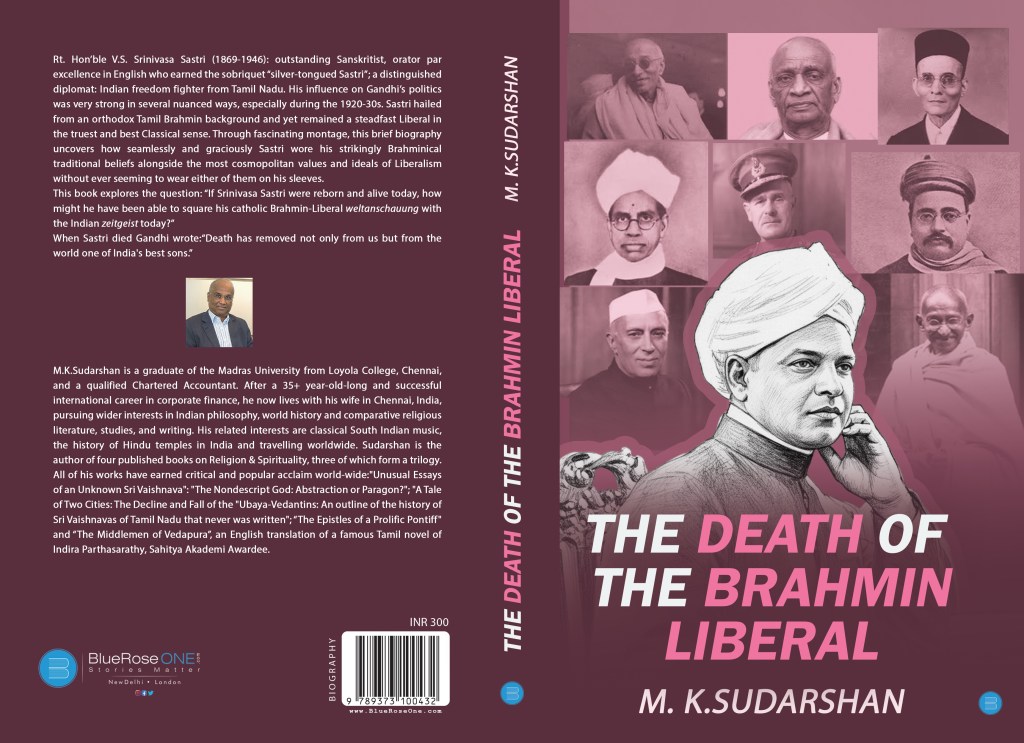
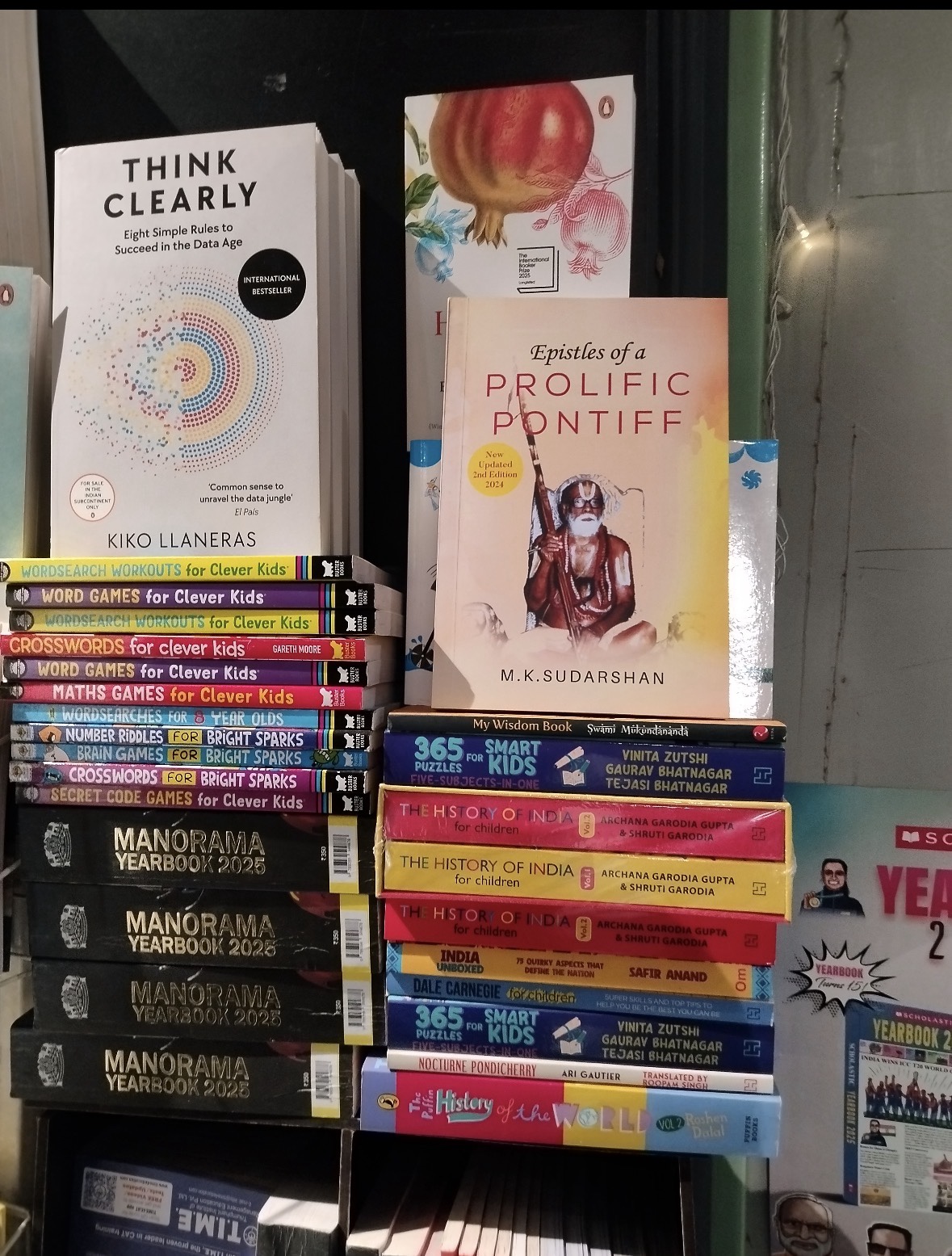
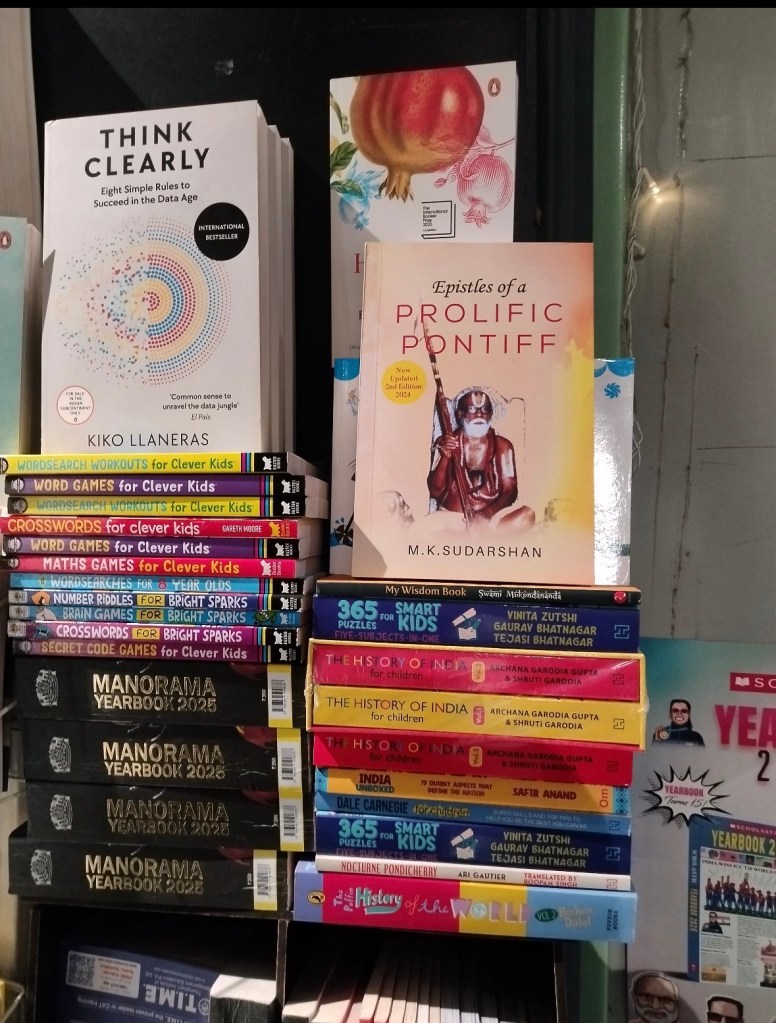
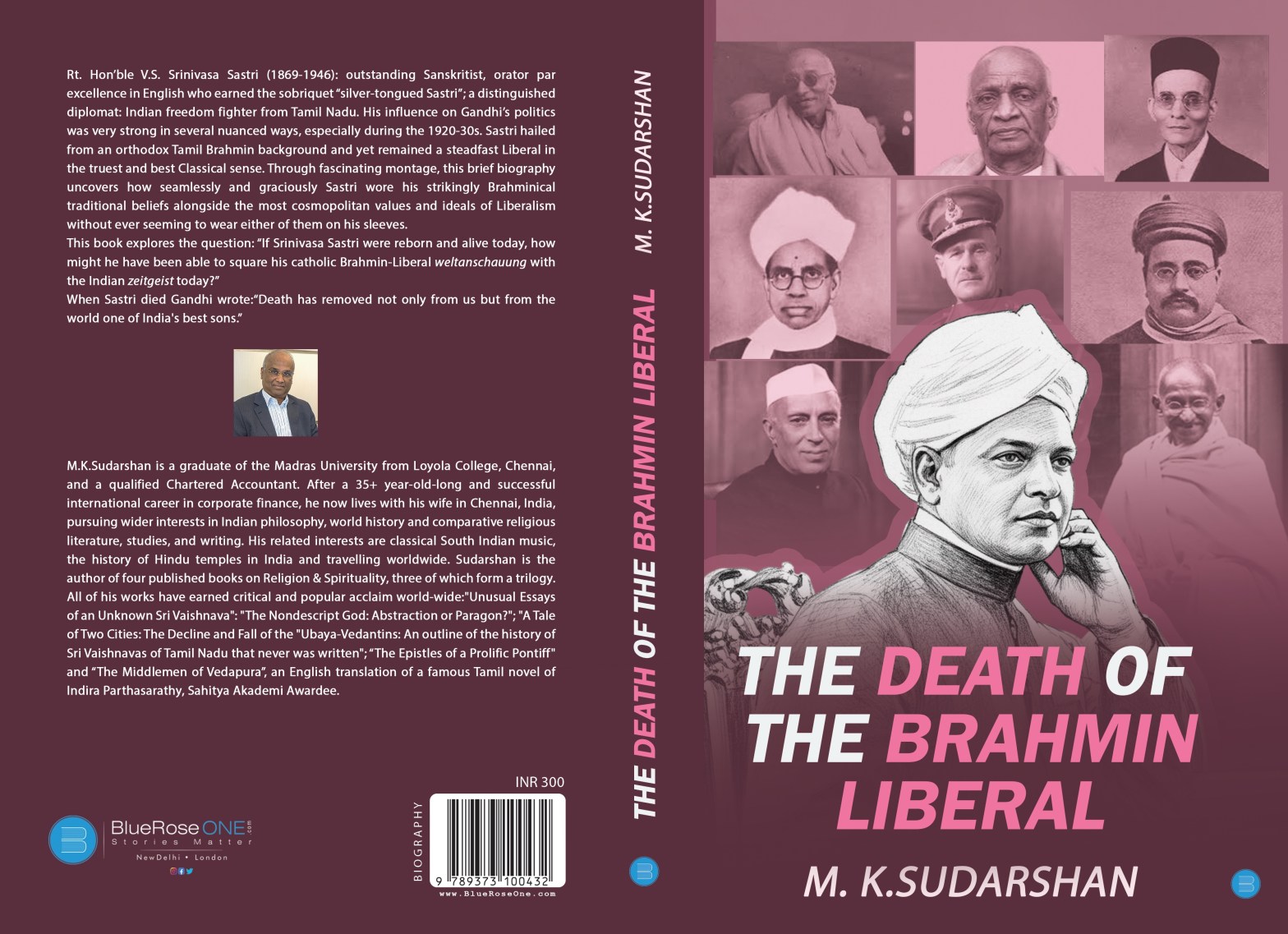
The book’s central thesis is that the balanced and principled “Brahmin–Liberal” ethos embodied by V S Srinivasa Sastri—marked by civility, ethical liberalism, and a harmonious blend of tradition and modernity—has all but vanished from India’s public life, and its absence has deep consequences for political and social discourse today.
Three Key Themes
• The complex relationship between tradition and liberal reform: The book explores how Sastri managed to uphold his Brahminical roots while championing secular, liberal, and progressive ideals, demonstrating that tradition and modernity need not be adversaries.
• The decline of civility, decorum, and ethical idealism in contemporary politics: By highlighting the contrast between Sastri’s mode of engagement and today’s public sphere, the narrative laments the loss of respectful debate and dharmic values in Indian society.
• The intellectual and personal isolation of the moderate: Drawing on Sastri’s marginalization by both right and left, the work reflects on how principled moderation is often misunderstood and sidelined in times of political polarization, yet remains vital for a healthy democracy.
************
Each of the three central themes in “The Death of a Brahmin-Liberal” is most vividly illustrated in specific chapters:
1. Tradition and Liberal Reform
Best Illustrated in: Chapter 14–16: “Anti-Sanatanist Liberal or Orthodox Performative Brahmin?”
These chapters detail Sastri’s navigation of his Brahminical heritage and his progressive advocacy, highlighting his debate over the Sarada Act with the Sringeri Shankaracharya and his ability to work within and reform tradition without abandoning core values.
2. Decline of Civility, Decorum, and Idealism
Best Illustrated in Chapter 20: “Death of a Brahmin-Liberal”
This concluding chapter directly addresses the thesis that the ethos of ethical idealism, civility, and respectful debate—embodied by Sastri—has declined drastically, serving as the author’s meditation on the cultural consequences of this loss in modern India.[amazonaws]
3. Isolation of the Principled Moderate
Best Illustrated in Chapter 9: “The Years in Political Wilderness” and Chapter 18: “New Delhi Ignores, Durban Short Shrift and Mylapore Forgets Him”
These chapters document Sastri’s marginalization by more radical political actors and his organizational and intellectual solitude, offering poignant examples of both external neglect and inner steadfastness typical of the isolated moderate
ஸ்வாமி வேதாந்த தேசிகரின் “ரஹஸ்ய த்ரய சாரம்” எனும் அபூர்வ கிரந்தத்தில் விளக்கப்படும் பக்தி தத்துவம் குறித்து எழுந்திருக்கும் சிந்தனைகள் — அது ஒரே நேரத்தில் ஆன்மீக உயர்வையும் நற்பெருக்கையும் விளைவிக்கும் ஒரு புனிதச் சுழற்சியாகப் பதிவாகின்றன.
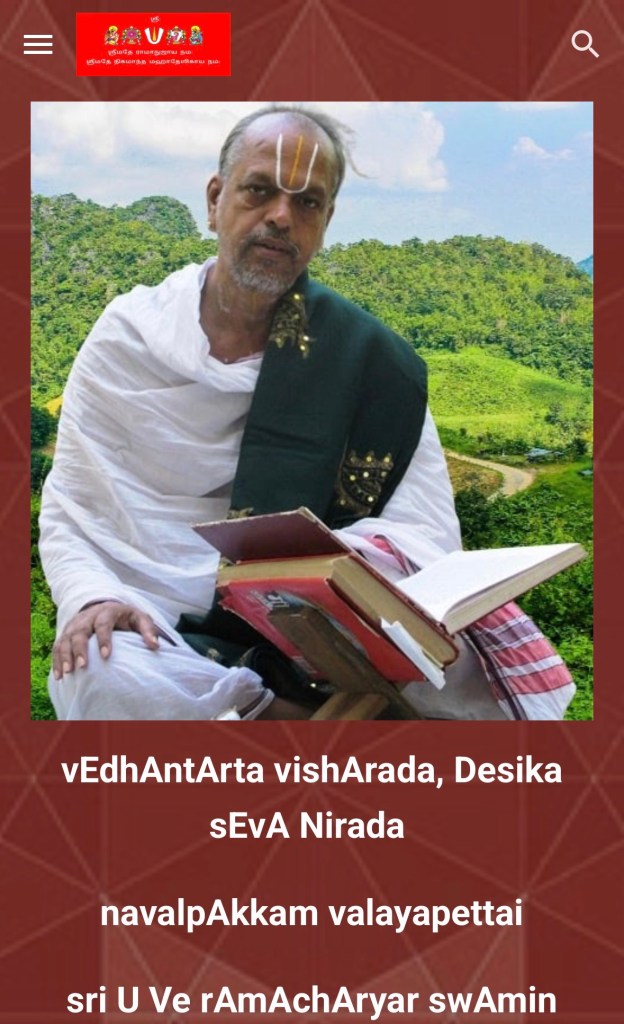
எங்கள் ஸ்ரீ வைஷ்ணவ சமூஹத்தின் காவலனாகிய ஸ்ரிமத் வேதாந்த தேசிகரின் “ரஹஸ்யத்திரய ஸாரம்” என்பதின் திவ்யார்த்தங்களை விளக்கும் ஸதாசார்யர் உ.வே. ஸ்ரீ வளையப்பேட்டை இராமாச்சார்ய ஸ்வாமிகள் அவர்கள் ஆவாராந்திரம் ஓவ்வொரு வார இறுதியிலும் அருளும் கலாசேபங்களில், அடியேன் தன்னுடைய ஆத்மாபிமானத்தின் அடையாளமாக, அந்த திவ்ய உபதேசங்களில் எனக்கு ஆழமாகப் பதிந்துத் தீண்டிய சூத்திர-அனுபவத்தைத் தம் நெஞ்சில் சீராக ஊன்றிக்கொள்ள ஒரு சிறு முயற்சியாகச் செய்கிறேன்.
இம்முன்நாள் கலாசேபத்தில் ஸ்ரீமன் இராமாச்சார்யர் ஸ்வாமிகள், ஸ்வாமி தேசிகர் அருளிய முக்கிய உபதேசங்களுள் ஒன்றான, “பகவத் பக்தி”யின் அளவுகள் எவ்வாறு அனேகமாய் மாறுபடுகின்றன — ஒருவரிடமிருந்து மற்றொருவருக்கும், ஒரே ஜீவனிடத்திலும் காலம் காலமாய் வேறுபட்டு வருவதைப் பற்றியும், அதன் தத்துவபார்வையையும், மிக எளிமையாக விளக்கமளித்தார்.
அப்பக்தியின் தூரம் எவ்வாறு அளவிடுவது? அவ்வளவிலும் வேறுபாடு எவ்வாறு அறியப்படும் என்று வந்த வேளையில் ஸ்வாமிகள் கூறியது— “பகவத் பக்தி” வெறும் மனநிலை அல்ல; அது பொருளுறக் கைவரப் பெறும் பலனும் உடைய ஒரு மார்க்கம். அந்த பலன்கள் யாவும் பக்தியின் வலியிடையைச் சார்ந்து இயங்குகின்றன. பக்தி எவ்வளவு ஆழமோ, அந்த அளவிற்கு பகவானுடைய அனுக்ரஹங்களும் பெருகுகின்றன.
இதன் பின்னர் அடியேன் தன்னிடம் ஒரு கேள்வி எழுப்பினேன். “இவ்வாறு பக்தியின் பலன்கள் அதன் தீவிரத்திற்கே ஒப்பாக அமைகின்றன என்ற இந்த ஸதாசார்யர் உபதேசத்தின் தத்துவத்தை ஒரு பக்தன் தன் அனுபவத்தில் எப்படித் தீர்க்கம் கண்டு அறிய முடியும்? தன் பக்தி-விருத்திக்கு நடப்பன ப்ரயோஜனங்கள், தன்னுடைய பூர்வபக்தி தீவிரத்திற்கே முந்தினவையா என்ற தெளிவை எவ்வாறு உணர்வது?”
எனது மனம் கூறியது: இக்கேள்விக்கும் பதில் மிக ஆழமன்று — மிக எளியதென்றே.
பக்தியே தன்னுடைய பலன். பக்தியே தன்னுடைய அனுக்ரஹம்.
பக்தியின் ப்ரபலம் அதன் விளைவுகளைக் காட்டுமேயன்றி, அந்த விளைவுகள் மறுபடியும் நமக்குள் மேலும் தீவிரமான பக்தியை உருவாக்கும். இவ்வாறே பக்தி ஒரு உயர்ந்த பண்பின் சுழற்சி போல, ஒவ்வொரு சுற்றிலும் ஆழமாகி, உயரத்தின் படிகளை ஏறச் செய்கிறது.
பக்தி முதலில் சாதாரண ஆராதனை வடிவங்களிலே தொடங்கும். அவ்வாறான ஆராதனை ஆழமாகும் போது, பகவானுடைய அருள் தன் அனுபவத்தில் வெளிப்படும்; அதுவே உலகிய ப்ரார்த்தனைகளின் நிறைவை மட்டுமன்றி, அந்த நிறைவு நிலையிலிருந்து பக்தனை மேலும் உயர்ந்த ஆத்யாத்மிக நிலைக்கு வழிநடத்தும்.
அப்பொழுது பக்தியின் வழி தீவிரமடையும்; உலக ஆசைகள் நிறைவேறும் போது மனம் இயல்பாகவே திவ்ய சம்பந்தங்களை நோக்கிச் செல்கிறது. சில்வரைப் பிண்ணிட்டு நம்முள் ஒரு புதிய ஏக்ஹாக்ரம் தோன்றும் — “திவ்ய தேசங்கள்” நோக்கி யாத்திரைகள் மேற்கொள்ளவொணும், அங்கேயே பகவத் ஸந்நிதியானந்தத்தை அனுபவிக்கவொணும் என்ற ப்ரேரணை எழும்.
அவ்வாறே யாத்திரை-பக்தியும் மேலும் பரிணமித்து, ஆராதனைக்குப் பின்பு எழும் ஜீவனின் தபஸ்யாபரிய நிலைக்கு வழிவகுக்கும். இப்போது அந்த பக்தன் உலகப்ரார்த்தனைகள் எல்லாம் விட்டு, ஆத்மாநுபவம் நோக்கிய நெருக்கமான பானை எழும்.
அப்படி அந்த அளவிலான பக்தி ஒருவரை “ரஹஸ்ய கிரந்தா”னாம் ஸ்ரீ வேதாந்த தேசிகரின் “ரஹஸ்யத்திரய ஸாரம்” போன்ற தீவிர தத்துவ நூல்களை ஆராயப் ப்ரேரிப்பிக்கும்.
இவ்வாறு பார்க்கும்போது, பக்தி தன்னையே மேலும் தீவிரமாக்கும் தன்மை உடையது என்பதை நாமறிந்துகொள்கிறோம். அதுவே பகவானுடைய அதிசயமான கருணைக் கட்டமைப்பாகும்.
ஆகப் பக்தியின் உண்மையான ப்ரயோஜனம் அதன் தனதிய விருத்தி — இந்த அடுக்கடுக்கான பக்தியின் வட்டத்தோடு நம்மை உயரத்தின் பாதையில் நடத்தி, நம்மை நம்முடைய பரம பின்னலான பகவானிடத்தில் மேலும் அணைத்துச் சேர்க்கும் பவித்ர சுழற்சியாகும்.
அந்த உண்மையே பக்தி எனும் சக்ரத்தின் திவ்ய ரகஸ்யம்!
Adiyen
Daasoham 🙏
**********
Below is the original blog I had written in English which was then rendered above as a Tamil version with the assistance of an AI tool:
________________
At the end of each of our “Kalapshepam” ongoing sessions on Swami Desikan’s “Rahasya Traya Saaram” that our revered Sadhachrya U Ve Sri Valayapettai Ramachar Swami is delivering for all our benefit in weekend hour long online classes, “Adiyen” makes an attempt to distill from it what impresses me most as the most important lesson that I should internalise.
In the last class , Sriman Ramachar explained to us Swami Desikan’s important statements on how many are those in the world who cultivate Bhakthi towards Bhagavan but the intensity of such Bhakthi varies from person to person and even in one person it could vary from time to time .
How to recognise the difference or variation in the intensity of Bhakthi ? Sriman Ramachar explained this point also very lucidly :
“Bhagavat Bhakthi” is not without rewards. “Bhagavan” bestows many blessings upon the devotee whose behaviour in life is characterised by Bhakthi . The more intense the Bhakthi the more fulsome is Bhagavan’s blessings . The rewards of Bhakthi thus are directly proportional to its intensity .
“Adiyen” next asked myself the question : How is a Bhaktha to know or realise the truth of the statement that rewards of Bhakthi are directly proportional to its intensity? Also, how is a Bhaktha to ascertain for himself or to objectively begin measuring if the rewards yielded to him/her — or the fruits he has come to enjoy — are indeed commensurate with the intensity of Bhakthi that he has cultivated in life towards Bhagavan?
In other words , the question I posed to myself was how is a devotee to recognise the extent of his progress on his journey on the path of Bhakthi? How is he or she through the experience of Bhagavan’s blessings in life to know that the harvest of Bhakthi is being reaped?
My mind tells me that the answer to the question is not so complicated as one might fear.
Bhakthi is its own reward . Bhakthi is its own blessing.
The outcomes of Bhakthi are indeed dependent upon its intensity. However, the efforts exerted in the cultivation of Bhakthi only result in evermore intense efforts of Bhakthi. Bhakthi thus can be measured by observing that it leads one to the next higher turn of Bhakthi, in fact, in an upward spiral.
Bhakthi in the beginning is limited to simple forms and practices of worship. But as such simple worship increases in intensity, Bhagavan bestows rewards not only in the form of ordinary blessings viz. mere fulfilment of some worldly desire . Bhagavan in the process also, more importantly, helps the devotee to graduate to the next level of intensity of Bhakthi all by himself. Bhakthi turns thus more intense when the devotee, with his worldly desires now fulfilled, suddenly finds his mind turning towards matters more spiritual .
Simple forms of worship now turn into more intense forms … The devotee, for example , now feels the urge to go on long pilgrimages to several “Divya Desams…” to have more intense experience of Bhagavan’s presence there!
Thereafter, that Bhakthi also turns into even more intense Bhakthi, for then the Bhakthi feeling graduates to a yet higher level — i.e. the Bhaktha no longer has any worldly or material desire to satisfy but now wishes to pursue even higher spiritual goals in life.
For, e.g. we might allude to the intensity of Bhakthi now manifesting itself in the form of a deep longing to delve deep into the study of a profound “Rahasya grantha” like Swami Desikan’s “Rahasya traya Saaram”!
So, here we see how Bhakthi becomes a reward for its own intensity . And that too is a miraculous handiwork of Bhagavan!
So, from the few examples cited above , we can possibly understand through contemplation of how Bhakthi indeed begets more intense Bhakthi and it is that process which in itself is the real and substantive reward of Bhakthi .
Bhakthi thus is truly what is called a virtuous cycle … a spiral of intensity that enables a Bhaktha to climb higher and higher to eventually get nearer and nearer to Bhagavan.
The book’s central thesis is that the balanced and principled “Brahmin-Liberal” ethos embodied by Srinivasa Sastri—marked by civility, ethical liberalism, and a harmonious blend of tradition and modernity—has all but vanished from India’s public life, and its absence has deep consequences for political and social discourse today.
Three Key Themes
• The complex relationship between tradition and liberal reform:
The book explores how Sastri managed to uphold his Brahminical roots while championing secular, liberal, and progressive ideals, demonstrating that tradition and modernity need not be adversaries.[amazonaws]
• The decline of civility, decorum, and ethical idealism in contemporary politics:
By highlighting the contrast between Sastri’s mode of engagement and today’s public sphere, the narrative laments the loss of respectful debate and dharmic values in Indian society.[amazonaws]
• The intellectual and personal isolation of the moderate:
Drawing on Sastri’s marginalization by both right and left, the work reflects on how principled moderation is often misunderstood and sidelined in times of political polarization, yet remains vital for a healthy democracy.
“The Death of the Brahmin-Liberal” by M.K. Sudarshan, launched yesterday, offers a reflective and original tribute to the statesman V.S. Srinivasa Sastri, focusing on his unique balance of classical Brahminical upbringing and liberal humanist values—a synthesis the author mourns as deeply endangered in contemporary Indian life.
Book’s Central Thesis and Purpose
Rather than presenting new biographical research, Sudarshan frames his work as a personal montage of impressions, weaving together established historical sources, family anecdotes, and his own commentary. The core argument is not the demise of Sastri as a memory, but rather the extinction of the “Brahmin- Liberal model” — a civic ethos characterized by decency, decorum, idealism, and Dharmic values that Sastri embodied and that the author finds largely absent in current public life.
Sastri’s Relationships with Contemporary Leaders
A centrepiece of the book is Sastri’s nuanced relationships with India’s other great leaders. Most notably, Srinivasa Sastri and Mahatma Gandhi held a relationship grounded in deep mutual respect and frequent, candid debate, with Gandhi affectionately considering Sastri his “elder brother” and often relying on his counsel during pivotal moments of India’s freedom movement.
Despite their differing political strategies—Sastri as a constitutionalist and Gandhi as a leader of mass civil disobedience—their correspondence and personal rapport reflected a rare capacity for principled disagreement and enduring friendship.
In contrast, Sastri’s stance toward Jawaharlal Nehru was more contentious; their shared commitment to independence was tempered by Nehru’s critiques of Sastri’s “moderate” approach at the Round Table Conferences and his aversion to radical activism.
The narrative also highlights the complex, respectful ideological rivalry with C. Rajagopalachari (Rajaji), with whom Sastri eventually parted ways over the Congress’s adoption of non-cooperation and civil disobedience, yet maintained intellectual respect and decorum.
Structure and Thematic Focus
The book opens with detailed tributes from Sastri’s descendants and acquaintances, setting a tone of familial and scholarly reverence. The following chapters chronicle Sastri’s pivotal diplomatic and political work—especially his role in South Africa, relationship with Gandhi, and his choices during the independence struggle. Sudarshan presents Sastri as intellectually and ethically complex: committed to constitutionalism, social reform, and incremental progress, yet never shying from defending tradition against orthodox excesses or political dogma.
• Highlights include Sastri’s debate over the Sarada Act with the Sringeri Shankaracharya, his literary passions (Valmiki Ramayana and Shakespeare), and the nuanced criticisms he faced from contemporaries like Nehru.
• Sastri’s liberalism is portrayed as principled and lived, distinct from modern “neo-liberal” technocracy; he is shown valuing education, free enterprise, and minority rights, but always within a framework of moral responsibility and justice.
Literary Appraisal and Critical Perspective
The author’s style is elegant and subtly didactic, blending biography, historical analysis, and personal reflection. Sudarshan resists both eulogizing and simplistic condemnation, instead raising provocative questions about identity, performativity, and the fate of liberalism in India.
• The use of Sastri’s own voice—through speeches, letters, and lectures— brings immediacy and depth. Modern parallels are drawn to contemporary liberal and secular figures, yet the author cautions against shallow imitation.
• Sudarshan’s critique of civil disobedience, Gandhian tactics, and later Congress politics is sharp but balanced, focusing on the enduring need for civility, mutual respect, and principled dissent—in contrast to populism, performative activism, or divisive identity politics.
• The closing chapters explore Sastri’s marginalization and propose a larger meditation on memory, loss, and the possibility of renewal, asking if such intellectual giants can be reborn or only commemorated.
• Deeply informed by primary sources and family lore, granting authenticity to this book.
• Literary and philosophical sophistication: dialogues with religious tradition, Western literature, and Indian constitutionalism are topical.
• Nuanced treatment of liberalism’s decline, performative identity, and historical complexity are all themes well essayed here.
RECOMMENDATION
This book stands out as a heartfelt and erudite tribute, bridging the personal and the political, tradition and modernity. Sudarshan succeeds in rescuing Sastri from relative obscurity, inviting reflection on the values he stood for— and challenging today’s readers, intellectuals, and leaders to rediscover the spirit of robust, ethical liberalism grounded in Indian traditions.
***********
A MUST READ BOOK THIS DEEPAVALI and NEW YEAR SEASON !
The renowned, now nonagenarian author, novelist , playwright (winner of Sahitya Akademi and Sangeeth Nataka Awards and Padmashree), and a doyen of classical Tamil literature, Sri. Indira Parthasarathy ( pen name “Eepa”) lives in quiet retirement in his comfortable retreat and Athulya Home for Seniors (they call it “Assisted Living Residence” these days) in a salubrious semi-urban, beach-side neighbourhood of South Chennai.
This morning Eepa forwarded to me a WhatsApp message about a most unusual subject-matter : the Tamilian’s all-time favourite breakfast dish of “Iddly”!
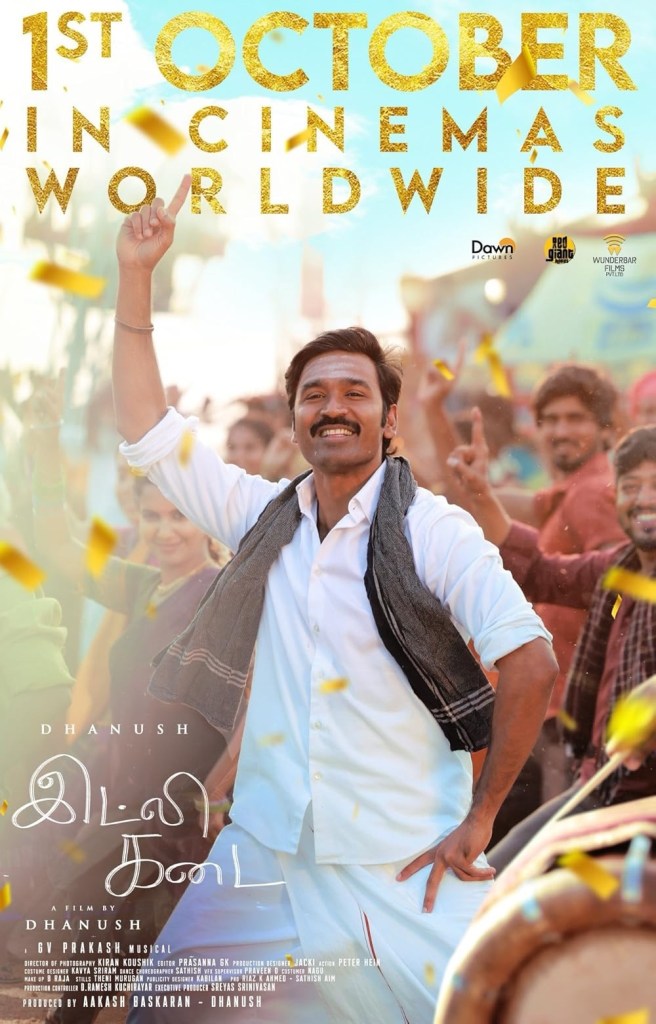
Eepa’s playscripts in the past, I know, have inspired quite a few cinema playscripts in the Tamil and Malayalam film-worlds. So, at the first glance at his WhatsApp message, I thought it was going to be something maybe to do with the widely advertised just about-to be-released pot-boiler Tamil movie in cinema-theatres and with the intriguing title : “Iddly Kadai” …Iddly Cafe !
But no, Eepa was done for good with anything to do with Cinema… His message was about something altogether more pedestrian, quotidian … and more hilarious ! Eepa’s forwarded message was about a Tweet on X posted by Shashi Tharoor, the dashing man who all English-speaking Indians love as an Anglophilic walking Oxford Dictionary and a Dr. Samuel Johnson wannabe.
This was Eepa’s message:
Someone on Twitter called Iddly as ‘steamed regret’ and below is Shashi Tharoor’s reply for the same — from a news article. That remark prompted Tharoor to offer a poetic defence of the South Indian staple: “Poor soul has clearly never had a good one. A truly great idli is a cloud, a whisper, a perfect dream of the perfectibility of human civilisation,” he wrote. He went on to add: “It’s a sublime creation, a delicate, weightless morsel of rice and lentil, steamed to an ethereal fluffiness that melts on the tongue. With the right accompaniments, it is the culinary equivalent of a Beethoven symphony, a Tagore sangeet, a Husain painting, a Tendulkar century. To call such a thing ‘regret’ is to have no soul, no palate, no appreciation for the finest achievements of South Indian culture. I can only feel pity for you.”
Reading Eepa’s message made me chuckle to myself. I’m not an Anglophile but I have read Tharoor’s books and op-eds and have nothing but admiration for his elegant prose and eloquent speeches in nearly perfect Queen’s English and Oxonian diction. The phrase “Iddly is a regret” made me wonder if it was a poetic coup de grace in an attack against Tamilian tastes in general or whether it was disguised satirical disdain for their dietary preferences.
Iddly, a staple breakfast food in South India, is often stereotyped this way in North Indian and global memes as too “plain” compared to spicier or richer preparations. Such jokes might not reflect genuine dislike but playful banter regarding cultural preferences. Calling Iddly a “steamed regret” is a tongue-in-cheek, somewhat sarcastic critique implying that Iddly is bland, uninspiring, or disappointing as a food item, especially compared to other more flavorful or visually appealing dishes. It is a comment rooted in stereotype: Iddly, being soft, plain, and mild, dull or lacking excitement…. a near-accurate caricature of most mild-mannered boring Tambrahms like me, perhaps ?
This type of remark is common on social media, where users exaggerate for humor or effect.
Shashi Tharoor’s own poetic, rhetorical defence highlighted however that such a remark overlooks the aesthetic and culinary subtlety iddly represents in South Indian tradition. According to him, a well-made Iddly is a piece of art that has no parallel anywhere else in India, if not the world. Only a person with a very superficial sense of gastronomy would ever dismiss it as “regret“.
While Tharoor’s rather foppish defence of Iddly did amuse me very much , what however made me burst out laughing was Eepa’s final wry, dry, sardonic and witty comment which was a masterpiece of a tail-piece for Tharoorian excess:
Eepa said : “Tharoor would not have gone to all that great trouble defending Iddly if only he had but only once come to our Home here and tasted the Iddly served by Athulya’s kitchen”!
Ever since Trump slammed the punitive “left-right punch” tariffs of 25%+25% tariff on India weeks ago, there’s been an ongoing debate in the public square on why our Government’s response has been so pusillanimous if not craven so far.
Trump’s Tariff War on India
The economic pundits and journalistic commentariat are busy writing copious, dense op-Eds in the nationwide press and holding forth with their pedantry on national television talk-shows. They say that India cannot and must not take any aggressive or retaliatory measures — neither on the trade front nor on the foreign policy front — to go head-to-head on a collision course against the Trump Administration because such a step would only make the situation far worse than it already is now for Indian economy prospects, , Indian export competitiveness, India’s unemployment problem and above all India’s long term geopolitical interests. In this public-square debate, one of the most vehement arguments I have heard clearly reflect the the angst felt over possible loss of what is called precious “access to American Technology”.
Some of the arguments I have heard are well reasoned while others seem no more than expressions of deep angst over India’s dependence on what is claimed to be “key American high-technology source for Defence, Aerospace, Aviation, Cyber-Tech, Microchip manufacture etc.” which would all be at great risk of loss should Donald Trump get more infuriated with Indian show of continued doughty resistance.
The well-nuanced arguments, for example, go something like this :
“We are dependent on both the USA for sustaining our economic growth. We have a significant share of military hardware that is essential to deal with the threats ( Hercules and heavy lift aircraft which are inescapable for supporting our troops in high altitude, Apaches, Torpedoes, missiles, P8i aircraft and various others which have proved their worth. The stopping of GE 404 has stalled the delivery schedule of LCAs.
“USA has been helpful in filling the gaps in our nuclear fuel, in counter terrosim efforts in UNSC Initiatives such as the ISR are helping us to bridge the tech gaps. The QUAD though the future is uncertain has delivered on other than war initiatives( IPOIM IPES, STEM, HADR, MDA etc.,)”
“Next, Trump might even stop the export of GE engines as needed by national security. He stopped engines for the Turkish stealth fighter. When someone asked the MD HAL about this he said he was tying up everything with GE but 10- Mk1 Tejas are still standing idle parked in hangars awaiting engines”.
Here below are examples of a few other types of argument which sound like they are based more on visceral angst rather than cold calculation. But the effect they have on the rest of us all, generally speaking, is to put a big spook into our minds —- i.e. a terrible fear that if “access to American Technology” gets denied by Trump to India, the heavens will come crashing down on this country.
“Trump’s act of urging Europe to impose 100% tariffs on India is diabolical. But what should the Indian PM do? We are dealing with a person who is powerful and demented, with a huge ability to hurt India. Restraint is therefore paramount.
“Modi has to tell Trump that he is unfair and that this action seems directed at India, not Russia. I think Trump will reverse track — not immediately, but eventually — not because of what Modi says but because he will realise that the tariffs on India help no one and hurt many, including the US.
“This is not the time to infuriate the madman of the US by engaging in a wordy duel with him, but we must try to keep that madman as cool as much as possible with some chocolate words even as we continue purchasing Russian oil.
“Donald Trump is the US President, and relations with the US matter ! Not just directly. It can use its influence to create problems for us. Many economists have said or implied that our long-term development can soar or sink depending on that fact.
**********
Now, let’s take a good look at data and facts.
American Technology imports by India is really not such a big deal for the Indian economy or its Defence and other industry.
A little bit of digging info relevant data of the last 10 years reveals clearly that in terms of significance to the overall GDP (both in nominal and PPP terms), imports of high technology from the US (both hardware supply and IP brain-ware) do not add up to anything so very impactful on our economy as to arouse such terrifying angst.
Below is a summary of what I was able to gather from a very high-level focused search into relevant data available in the public domain.
From the information gathered about India-US trade over recent years and estimates on technology-related imports:
• India’s total imports from the USA were about $20.46 billion in 2015, growing steadily in recent years to about $38.99 billion in 2024.
• Among the top product categories imported by India from the USA are machinery, mechanical appliances, electrical machinery, optical and medical apparatus, and also defense-related capital acquisitions.
• Technology goods (including machinery, electrical and electronic equipment, optical instruments) and services likely constitute a significant share of these imports.
• The defense sector procurement from USA forms a part of this aggregate, with the Indian Ministry of Defence budget in FY 2024-25 around $75 billion, though a major share is now from indigenous sources. Still, defense capital acquisitions include foreign procurements, likely from the USA.
• The bilateral trade between India and the USA hit approximately $128-129 billion in FY 2022-23, with imports from USA around $39 billion in 2024.
• Roughly half or more of India’s imports from the USA are in high technology and capital goods segments based on their share of intermediate and capital goods imports.
Estimating conservatively, aggregating technology goods and services imports (including from the defense industry sector) from the USA to India over the last 10 years (2015 to 2024) in USD terms could be in the range of:
• Starting around $20 billion in 2015 and rising almost to $39 billion in 2024 with an average around $30 billion per year.
• Over 10 years: Approximately $300 billion USD aggregate technology imports (goods and services), including defense-related procurements, from the USA to India.
This is a reasoned estimate based on available import data trends, product and sector categories, including defense allocations and bilateral trade reports.
************
To calculate the percentage of India’s GDP represented by the estimated $30 billion annual technology imports from the USA over the last 10 years:
• India’s nominal GDP grew from about $2 trillion in 2015 to approximately $3.7 trillion in 2024. • The average GDP over the 10 years (2015-2024) is roughly estimated around $2.8 to $3 trillion. • Using a midpoint estimate of $3 trillion average GDP annually for simplicity.
Now, $30 billion annual technology imports as a percentage of $3 trillion GDP is:
30 billion /USD3,000 billion USD×100= 1%
So, India’s total technology imports from the USA in goods and services, including defense-related,have been roughly about 1% of India’s GDP annually over the last 10 years. (This percentage may vary slightly with yearly GDP fluctuations but generally stays close to this mark).
In PPP terms, India’s GDP is much higher, estimated around $10.5 trillion (2018 figure) and projected to be higher in recent years.
Using the $10.5 trillion PPP GDP estimate as an annual average (conservative given growth trends), the $30 billion technology imports represent:
30 billion/10,500 billion USD×100= 0.29%
Thus, when India’s GDP is measured in PPP terms, the $30 billion annual technology imports from the USA correspond to roughly 0.29% of India’s GDP, notably lower than the approximately 1% when using nominal GDP.
This reflects how PPP adjustments give a different scale to GDP reflecting cost-of-living and price level differences, especially for an emerging economy like India.
**********
Hypothetically, if technology exports to India from the USA were curtailed substantially or even stopped, as a punitive foreign policy measure of Donald Trump, the overall impact on India’s economy would likely be a pinprick rather than a grievous wound for the following reasons:
• Estimated technology imports from the USA (goods and services, including defense sector) are about $30 billion annually, which is roughly 1% of India’s nominal GDP and about 0.29% of India’s PPP-adjusted GDP.
• While technology imports are critical for certain sectors and defense capabilities, in the broader context of India’s $3+ trillion nominal GDP and rapidly growing domestic technology and manufacturing capacities, such imports are a small fraction of the economy.
• India maintains significant trade diversification and is actively developing its own indigenous technology ecosystem, including the ICT sector targeted to grow to $1 trillion by 2025.
• Even with such imports curtailed, the Indian economy’s size, resilience, and diversification would ensure that this constraint acts more like a limited shock or manageable disruption rather than a systemic threat.
• However, specific sectors highly dependent on certain advanced technologies or defense supplies may feel acute pain, but the macroeconomic impact would be contained to a minor GDP percentage, unlikely to threaten overall growth or stability.
In conclusion, a punitive cut-off or heavy restrictions on technology exports from the USA would create challenges but would amount to a pinprick—not a grievous wound—to India’s economy overall.
If only India had in the last 10 years invested in its own indigenous R&D the $300 Bn or maybe even a half that it spent on technology imports from the USA, who knows , we wouldn’t be wringing our hands today over Trump’s Tariff war, would we?
Do we see China worried about Loss of American Technology sources? No… because they have self-belief in their own R&D for most of their tech-needs and … for the rest … they know how to steal it from America and the West. India on the other hand cannot seem to match the Chinese enterprising spirit .
பச்சைமா மலை போல் மேனி பவளவாய் கமலச் செங்கண் அச்சுதா அமரரேறே ஆயர்தம் கொழுந்தே என்னும் இச்சுவை தவிர யான் போய் இந்திரலோகம் ஆளும் அச்சுவை பெறினும் வேண்டேன் அரங்கமா நகருளானே
O Achyuta! With a body like a great green mountain, a mouth like coral, with eyes shaped like a red lotus—O Lord of the celestials! O tender sprig of the cowherds! Apart from the pleasure of uttering these words, I desire nothing else—not even the experience of ruling Indraloka (the world of the celestials)!”
The above Tamil “paasuram” appears as the second verse in Sri Tondaradipodi Azhwar’s most celebrated 45-stanza hymn “TIRUMAALAI” in praise of the great Deity in the ancient temple of Sri Rangam.
The Azhwar proclaims that the joy of singing the Lord’s names is superior to even the highest heavenly bliss.
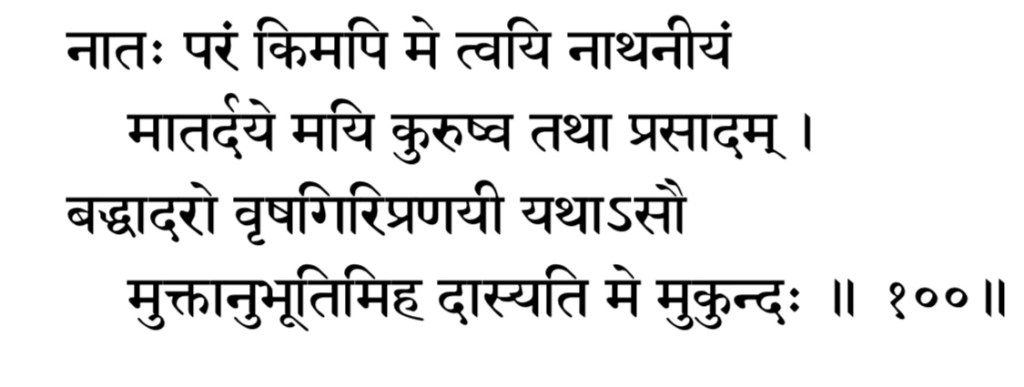
The Azhwar’s sentiment expressed ages ago, is what was in much more recent time in history, came to echoed in equally soul-stirring verse in a Sanskrit shloka (#43) of Swami Vedanta Desikan’sSri Varadaraja Panchasat!
In the verse below, he exults over his experience of worshipping Sri Varadaraja Perumal at Kanchipuram and counts it as surpassing even any imagined heavenly bliss to be experienced in Sri Vaikuntam, the celestial Abode of Almighty Sriman Narayana! :
(— Sadagopan.org)
**************
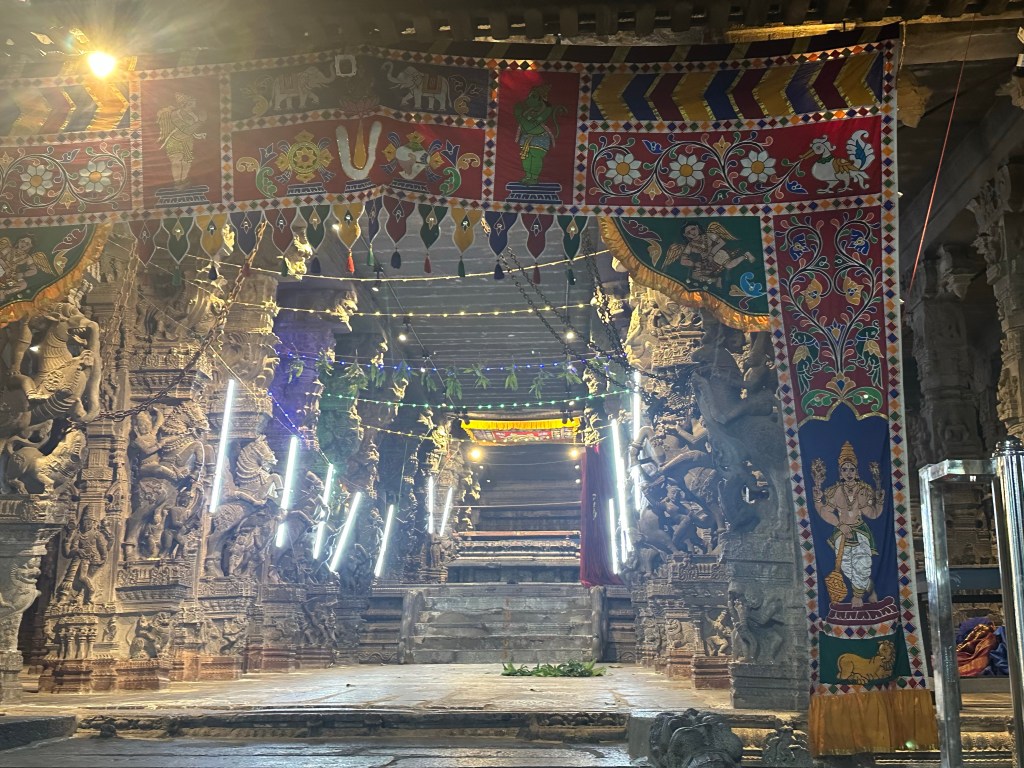
All the above verses of the Azhwar and Swami Vedanta Desikan and the thought underlying them were what I found were swirling about inside my own mind last evening (September 30, 2025), when my wife and I had the divine privilege of going as pilgrims to offer worship to the Deity, Sri Varadaraja Swamy of the Temple at Kanchipuram on the occasion of Navarathri Mahotsavam as well as at the “Avatara Sthala” of Sri Desikan at Sri Villakkoli Perumal Kovil at the nearby town of Thoopul.
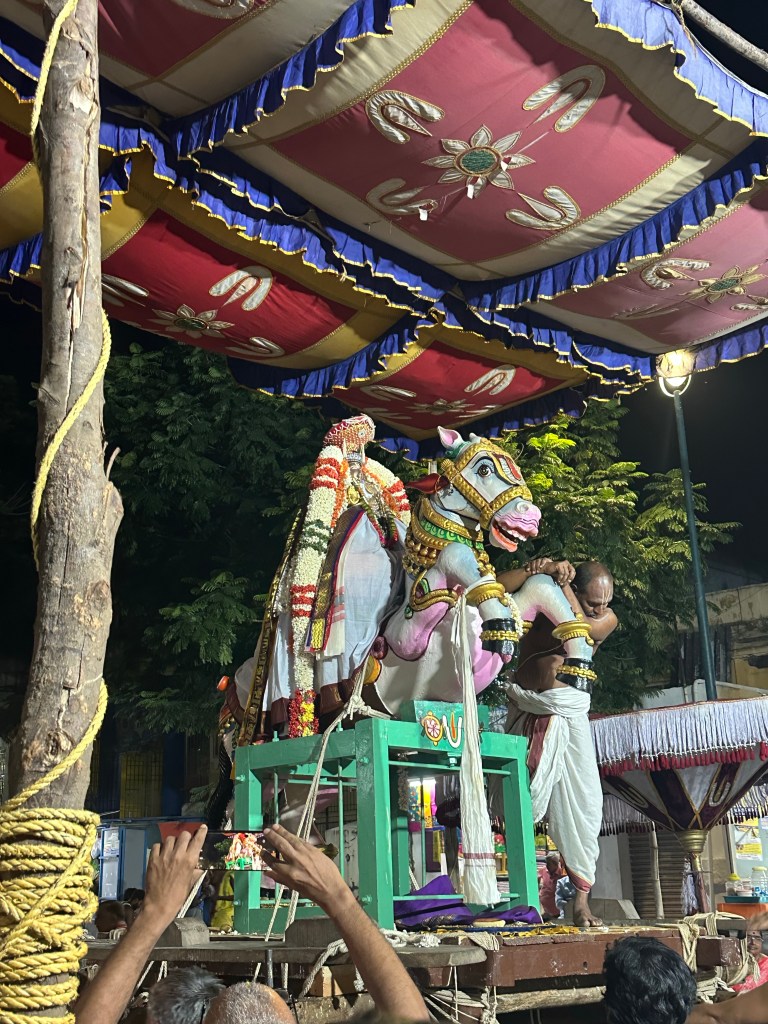
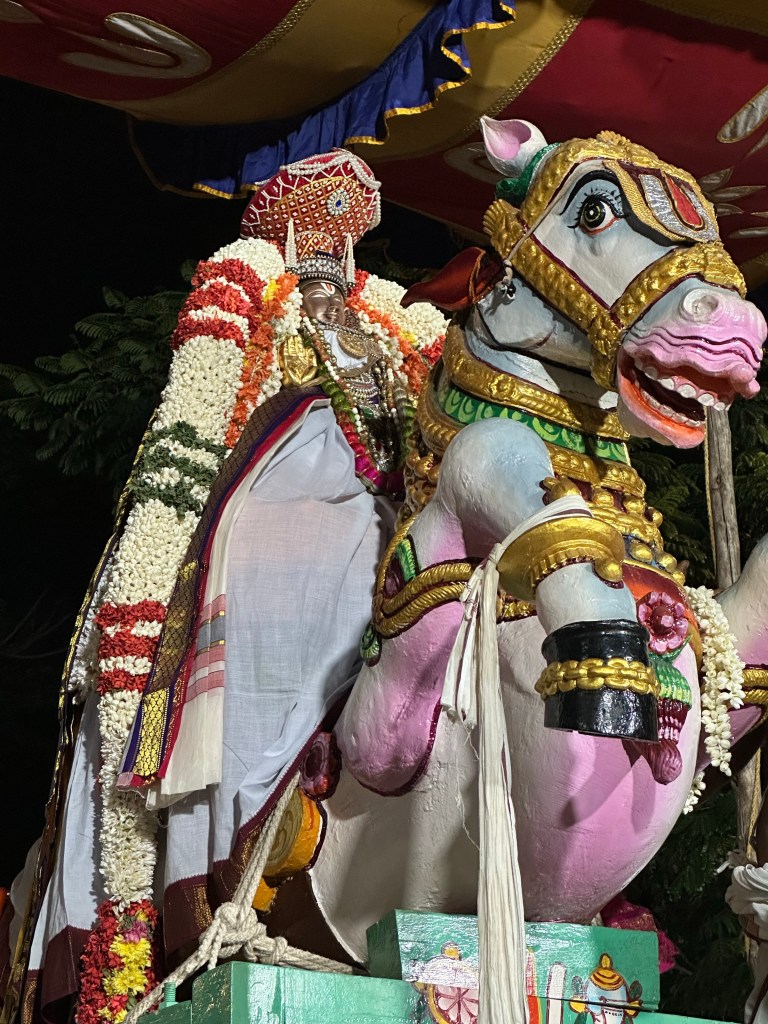
Watching the magnificent , bedazzling splendour of the “purappadu” (procession) of Swami Desikan as we followed it from Thoopul to Kanchipuram … and then the overwhelming breath-taking sight we had of the marvellous “serthi sevai darsanam” of Sri Perundevi Thaayaar and Sri Varadaraja Athigiri Perarula Perumal felt almost exactly like what I could possibly imagine then, in that moment, might have been paroxysmal Bhakthi outpourings in the “Pacchaimaamalai pol meni…” paasuram of the Azhwar and the “mukthaanubhavam” moment that had been felt by Swamy Desikan … “samsaara esha bhagavannapavarga eva”…
As the procession of Perumal and Thaayaar slowly, in all its glory and majesty, wended its way from the temple sanctum to the outer main mantapam , Swami Desikan’s own glorious procession on a horse-palanquin — “ashwa vaahanam” — that had begun, in fact, an hour and half earlier, previously from Thoopul, arrived at the great portal gates (mahaadwaara) under the towering mahagopuram of the Kanchipuram temple .
My wife and I wondered what good or charitable deeds we had done in life to have earned the twice-blest grace (“Bhagavath anugrham”) of being able to witness and worship both Acharyan and “Divya Dampathi Tiruvadi” at the same time and together in each other’s presence!
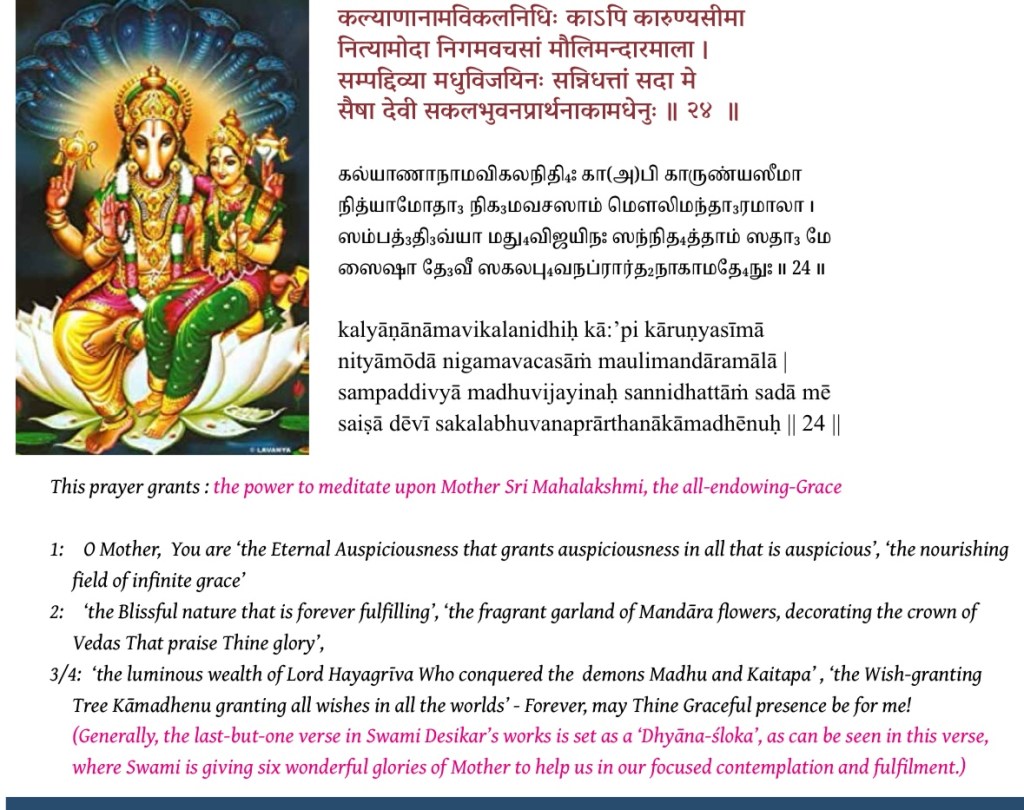
As the procession of Perumal and Thaayaar moved slowly forward, I was able at last look over the heads of the thronging crowds to glimpse, at very close quarters, the beatific pose, posture and the compassionate, smiling visage of the Sri Perundevi Thaayaarutsava archa murthy. The dhyaanashloka from the Sri Stuthi composed by Sri Desikan in Her praise crept at once into my mind in that moment:
**********
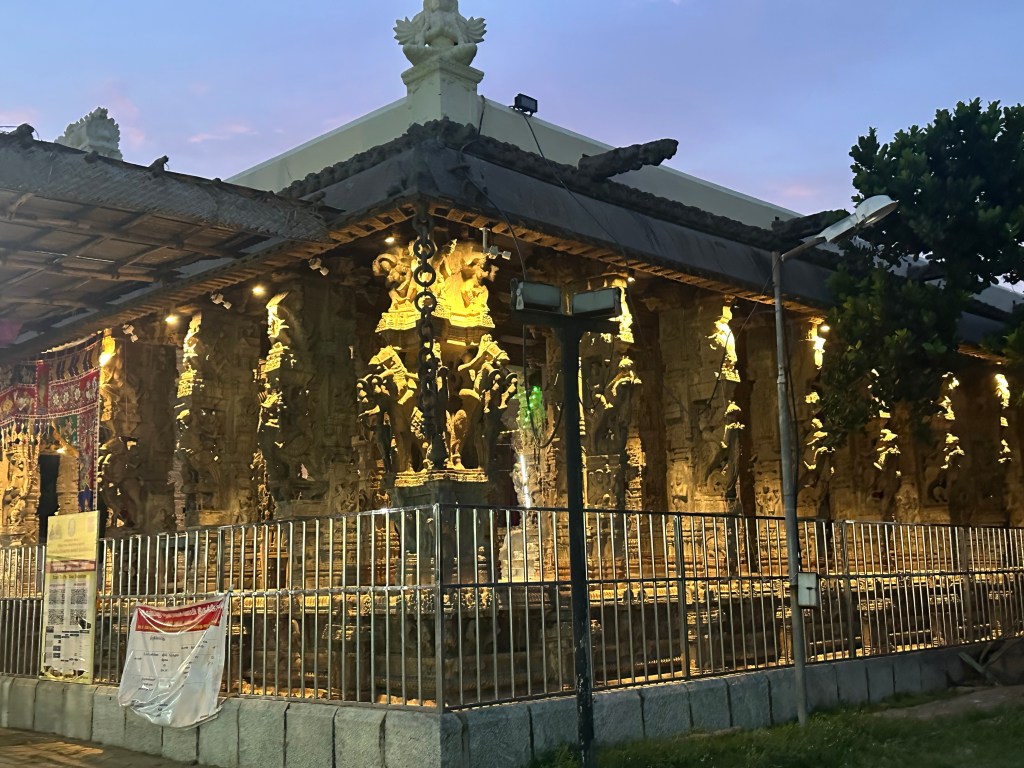
The processional Deities then ascended the flight of stone steps to climb into the great “aayiramkaal mantapam” with vaulting roof and granite stone pillars all bearing exquisite, intricately sculpted carvings, all in the ancient Pallava and Chola-times style of temple architecture.
The surging crowd of pilgrims, amongst whom my wife and I too mingled, then witnessed a heart-warming festive, ritual enactment of Divya Dampathi “serthi sevai darsanam”. What made the sight so vivid, picturesque and ineffably beatific for us was the accompanying lilting sound of “naadaaswaram” music … The melodies of the pipers’ tunes in different classical raagam wafted through the evening air and echoed beyond the temple ambience. The crowds of pilgrims stood still as if mass mesmerised by what was most certainly a sight for the gods, not merely for mortals!
Perumal and Thaayaar were then seen ceremonially seated upon a massive and high stone pedestal inside the mantapam … Dharmaadipeetam! The divine royal couple then granted, majestic and gracious audience to the pilgrim crowds that in the hundreds stood below with folded hands and minds awe-struck in ecstasy.
It was interesting to observe then that the “Kodai” or Sacred Umbrella held over Thaayaar has been made of glowing gold while that which swayed gently over the shoulders of Perumal was made of brilliant Silver! It clearly was meant to convey the truth that for all Worshippers gathered there that evening, the real show-stealer and cynosure was Sri Perundevi Thaayaar indeed! But that of course was not to say that Sri Varadaraja Perumal, standing by with a bemused smile curling his lips, seemed to have any objection to letting His Consort overshadow Him!
A quick but solemnly conducted consummative ritual ceremony of Bhagavath Tiruvaaradanam was conducted by the priests and after which we all received the holy sacrament of Theertham and Sattaari and then we dispersed slowly out of the temple gates.
For my wife and I, it was truly an evening to remember forever …
“Sri Peru Devi Naayaki sametha Sri Varadaraja Perumal ParaBrahmane Namah !”
Rangamannar and Sri Lakshminarasimha Swami Perumal Kovil , Bheemana Street Abiramapuram commenced on September 27 through 30th, 2025 .
Pavithrotsavam: Sri Andal Rangamanar Sri Lakshminarasimha Kovil , Bheemana St. Abiramapuram, Chennai – Sep 27-30 2025 … I had the mahaabaagyam to participate in kainkaryam as one of the three Homam Ritwiks. (Following behind)
The pavithrotsavam Homam and other rituals continued for 3 full days , morning and evening. The culminating purnahuthi ritual on 4th day was conducted today Sep 30th with great Vedic fervour and fanfare at the temple . I had the baagyam of participating in the Homam on all the 4 days as one of the Ritwiks (Vedic subordinate priestly servitor).
During the rites , a very special chant was conducted by the chief priest (hota) of ApAmArjana Stotra Japa (from the Vishnu Dharmottara Purana) and Swami Vedanta Desikan’s “Garuda Panchaashath” and “Sri Raghuveera Gadyam”. It was my delight to join the chanting with him.
The significance of Pavithrotsavam was well explained by the Brihaspati swami who hails from Tirukannapuram. Please watch the video below .
“Always sugarcoat the Truth if bitter; if you can’t do that, then just silently look the other way”:
सत्यं ब्रूयात् प्रियं ब्रूयात्
न ब्रूयात् सत्यं अप्रियं
************
The Trump family, including Donald Trump Jr., Eric Trump, and Jared Kushner, holds a majority stake in World Liberty Financial (WLF), a cryptocurrency company founded in 2024.
In April 2025, WLF signed an agreement with the Pakistan Crypto Council (PCC) to promote Pakistan as a center for cryptocurrency in South Asia and to advance the country’s blockchain infrastructure. The deal was sealed in Islamabad with high-level Pakistani officials and representatives from both WLF and PCC present.
The exact size of Pakistan’s investment in WLF (World Liberty Financial) in crypto terms has not been publicly disclosed in precise figures; reports consistently describe the partnership as a government-backed venture and a landmark agreement but do not mention a specific investment amount or stake percentage for Pakistan itself.
The deal is governmental in nature and marked by high-level attendance from Pakistani leadership, but published statements and financial disclosures have been vague regarding the direct capital commitment or token allocation from Pakistan. There is no official or media-sourced report stating the crypto-denominated value of Pakistan’s investment in WLF.
Seen as a conflict of interest, Trump’s prioritization of family ventures in Pakistan has undermined long-standing US strategic and economic alignments with India, prompting concerns among other American allies about the reliability of US commitments.
There are widespread fears that Pakistan’s use of crypto via the Trump-linked World Liberty Financial (WLF) deal may facilitate money laundering and the financing of terrorism. Multilateral agencies have flagged Pakistan’s crypto pivot as having insufficient oversight, raising risk factors for both global anti-terror regimes and international financial stability.
Pakistan’s use of crypto is part of a broader diplomatic effort to secure favorable terms with the IMF, referencing El Salvador’s strategy; this could reshape the global financial architecture, especially in terms of digital asset norms and bilateral power projections.
Pakistan-Trump crypto relationship is viewed as a major driver of international uncertainty, undermining anti-terror finance norms, destabilizing US strategic alliances, and forcing realignments in South Asian economic and security relations.
**************** ****************
If you have read the above unvarnished summary of the subject-matter then you’ll surely understand what the world will get from faithfully embracing the age old dictum:
“Always sugarcoat the Truth if bitter; if you can’t do that, then just silently look the other way”:
सत्यं ब्रूयात् प्रियं ब्रूयात्
न ब्रूयात् सत्यं अप्रियं
No one in the Indian Government or Parliament has formally raised the issue of conflict of interest regarding the Trump-Pakistan business relationship, possibly due to diplomatic caution, the complexity of Trump’s dual role as businessman and politician, and the ongoing Indo-US strategic priorities. Analysts and commentators have warned that questions over ethical boundaries and personal interests are being ignored at the top, as the relationship is seen as a sensitive matter, especially in the aftermath of military actions and the need to keep open channels with Washington. Recent podcasts and interviews with senior officials, such as Jake Sullivan, note widespread unease but no official parliamentary intervention.
The US Congress and Senate have, in fact, launched an inquiry. The Senate Permanent Subcommittee on Investigations, led by Senator Richard Blumenthal, began probing the Trump family’s WLF dealings with Pakistan for “potential conflicts of interest and violations of the law” starting in May 2025. The probe requests communications and documentation, but WLFI has resisted compliance, framing the investigation as anti-innovation. Despite these efforts, the Republican majority and the broader context of partisan gridlock have limited more forceful action, and many concerns have yet to reach the level of public hearings or legislative censure.
At the UNGA level, no major initiative or focused debate has been launched regarding the terror financing or money laundering risks of the WLF-Pakistan deal, although concerns are discussed in the corridors and side meetings of international agencies. India has chosen instead to escalate the matter through formal channels like FATCA (Foreign Account Tax Compliance Act) and FATF (Financial Action Task Force), focusing on regulatory and compliance frameworks rather than direct public confrontation at the UN. This gives India leverage within a technical, rules-based environment where evidence of money laundering or terror finance can be scrutinized.
The Indian liberal press, including publications such as The Hindu, has maintained near-complete silence on the Trump-Pakistan-WLF issue. This may be attributed to concerns over diplomatic backlash, the complexity and opacity of the deal, the potential repercussions for Indo-US relations, and apprehensions about opening up the issue to public controversy or political polarisation. While mainstream outlets like The Indian Express, The Hindustan Times, and Times of India have reported the story—often quoting international sources and foreign experts—liberal editorial pages have avoided sustained investigation or commentary, perhaps fearing accusations of anti-Americanism or jeopardising access to key diplomatic sources. The Indian Government and Parliament have not publicly raised the issue of conflict of interest in the Trump–WLF–Pakistan relationship, likely due to diplomatic sensitivities, complex US-India strategic interests, and the absence of bipartisan impetus; while commentators and ex-officials have noted the ethical dilemma, no formal parliamentary or cabinet-level action has been initiated.
The US Congress and Senate committees have not fully aired the conflict of interest issue as it affects POTUS, but media reports confirm that the Senate Permanent Subcommittee on Investigations and select financial ethics panels have launched inquiries into WLFI’s dealings with Pakistan; WLFI has responded by framing criticisms as regulatory overreach and has so far resisted document requests, while broader public sessions or legislative censure remain stalled amid partisan divides.
The United Nations General Assembly has not taken up the issue of terror financing or money laundering in the WLF–Pakistan deal, partly because member countries—including the US, Pakistan, and Gulf allies—prefer to contain and address concerns through technical forums such as FATCA and FATF; India has instead escalated its complaints to these regulatory bodies, seeking for the deal to be subjected to international compliance review and risk assessment rather than dramatic UN censure.
The so-called liberal press in India, especially The Hindu, has largely avoided investigating or editorializing about the Trump–Pakistan–WLF nexus, most likely due to diplomatic caution, the complexity of the business and political interests involved, and fears of jeopardizing Indo-US strategic ties; some mainstream outlets have mentioned the controversy, but sustained investigative attention or in-depth editorial coverage remains absent, highlighting the broader atmosphere of reticence and self-censorship within influential press circles.
Watch the YouTube video below or read its full Transcript by scrolling down to the bottom after reading my own thoughts on the great speech that Dr. Sarvepalli Radhakrishnan, former President of India delivered at the Kerala University many years ago .
Dr. Radhakrishnan said: It is not enough to only think right … it is imperative to feel nobly … it is only then can we do what is right.
A question that arose then immediately within my mind was this: How does one get to “think right” in the first place? How is one to know if one’s thoughts are “right”?
The Upanishad gave me the answer to the question in a terse but very profound “vaakya” or pronouncement:
“सत्यं वद। धर्मं चर। स्वाध्यायान्मा प्रमदः।”
(“Satyam vada. Dharmam chara. Swadhyayan maa pramadah”)
The true test to know if your mind or “buddhi” (intellect) is thinking right is to be be mindful of what you speak. “Sathyam Vada”. What comes out of one’s mind is, invariably, whatever is going on inside one’s mind. If the Truth is always spoken by all men, it will mean surely then that the thought behind all speech would always be right. It is only behind untruthful speech that there is always lurking unrighteous thought.
Now, it is not always easy for us to know what is Truth or what is less than Truth. Sometimes as we all know only too well, it is “Convenience” or what is expedient that often defines for us what goes by the name of Truth. Which is why often it is said Man is always “very economical with the Truth” in all dealings with fellowmen and the world at large. So, in that case, Truth becomes (as is often cynically observed) very relative : i.e. one man’s Truth is another man’s Untruth.
So, given the above relativism of Truth, how then are we to ascertain if one is thinking right at all?
Again , it is to the Upanishadvaakya that that we may turn to obtain a clear answer: “dharmam chara”…
One mustalwaysbe mindful, says the Upanishad, about whether what one is about to do isthe righteous (not self-righteous) thing to do.
A deed that otherwise might seem very thoughtless might actually yet be very right. So, it is our deeds in life, in the final reckoning, that are the most authentic testimony to — as Dr.Radhakrishnan in his eloquent speech puts it — whether we are thinking right, we are feeling nobly and we are speaking truthfully.
The Upanishad then already anticipates our inevitable, corollary question too: How is one to know Dharma?
The answer given is categorical: स्वाध्यायान्मा प्रमदः।…. Do not neglect self-study (swadhyaya)…!
Ceaseless “swadhyaya” means only this: faithful study of Veda-Vedantic scriptures which are indeed our country’s greatest and most fundamental source of the highest Truths and highest Wisdom. They contain invaluable guidelines to how Man can live wisely and fulfil the utmost potential of his indwelling human spirit.
That high sentiment and message, simple but powerful, are precisely what Dr.Radhakrishnan in his speech below has delivered. He defines too, at the same time, what the true purpose of Indian Universitiesis:
“We deal here with human beings, not with dead material. It is our ambition to make them full human beings”.
This speech of the former President of India, I wish, would be read, memorised and sung like a personal anthem by all the Vice Chancellors of all Universities in India.
Jai Hind! Jai Bharath! 🇮🇳
Sudarshan Madabushi
———————————————————
Video-link and Transcript ⬇️
This is All India Radio. Dr. Sarvepalli Radhakrishnan, former President of India, was a scholar and a thinker. Addressing the silver jubilee function of Kerala University, he emphasized that the aim of every university should be to help the students to think rightly, to act nobly.
“Universities are the means by which the traditions of a country—intellectual, artistic, and ethical, as well as technical skills—are transmitted from one generation to another. These are institutions which make for the progress of any community. We deal here with human beings, not with dead material. It is our ambition to make them full human beings.
Education is for man to think, to feel, to do, to be. These are the aims which we should set before ourselves. Without thought, nothing great can be achieved. Even when the gods are supposed to have performed tapas, Panini tells us tapas is reflection, it is discussion, it is reviewing matters. We must think.
All the progress we have achieved in this world is due to the work of the great thinkers, and so far as this thinking process is concerned, it is not right for us to segregate ourselves. Most of us think that we think. Many of us are afraid to think. They would rather be dead than think, because it’s too dangerous to think or to start innovations. For one man who thinks, a thousand repeat what that man says and they don’t think anything at all.
But the progress of the world is due to the thought mechanism of human beings. All the great inventions which we have had in recent times, which have led to the alleviation of misery—the discovery of anesthesia, radiotherapy, nuclear energy—these are all the works done by enterprising individuals whose minds were perpetually at work. To them we owe a great deal.
But to think is not enough. We may have the right thought, but we do not have the inclination to put that right thought into practice. We know now that nuclear energy, if used for wrong purposes, would bring about the destruction of humanity, but we are not afraid of the disastrous consequences. The human being is so made that, even if he rationally anticipates the consequences of a particular course of action, he does not shrink from it. Something more is necessary.
We know the right; we cannot do it. We know the wrong; we cannot abstain from it. Two thousand years ago, Aristotle made out that ideas are not enough. Ideas may become inert, they may become inactive, they may not enter into the life of a society. You must persuade the people; you must make them love the right and hate the wrong.
There it is—this next object of feeling nobly, feeling rightly, feeling for the right thing—that comes. We have to think rightly and feel nobly. If we do the two things together, it will be possible for us to do the right. In other words, inflexible determination—great will—these things can be used for translating the ideas into realities. The right ideas can be put into practice if we are able to love them, to feel for them, to make all our emotions concentrate on them, and make them understand that this is not merely intellectually right but it is emotionally noble.