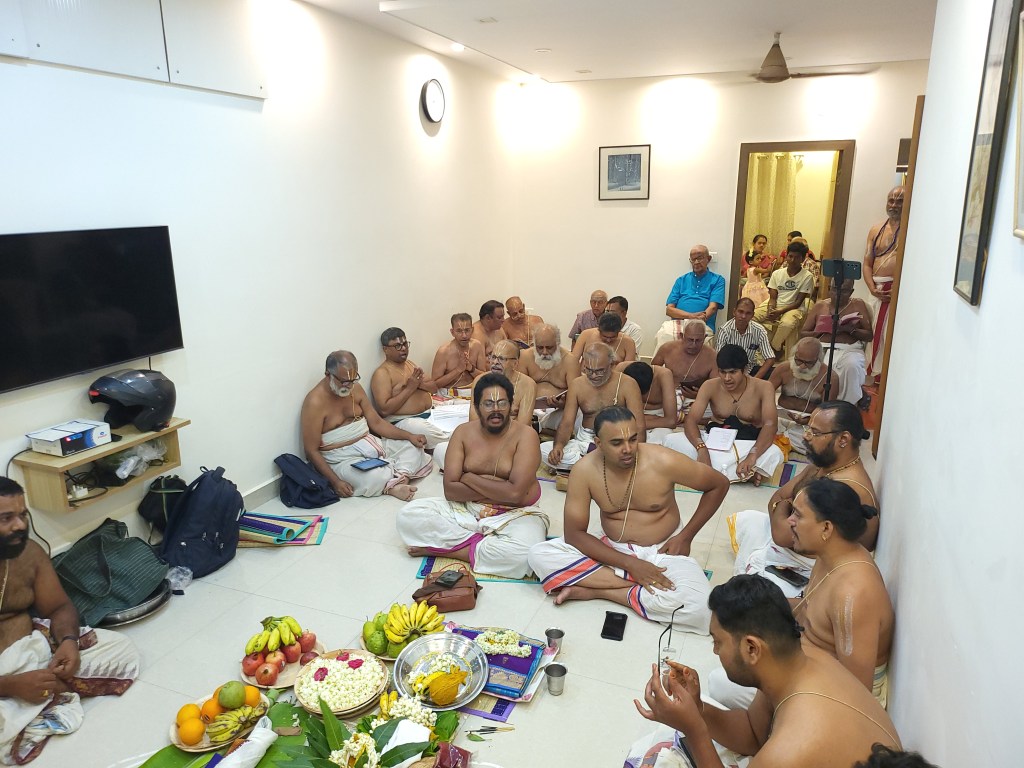
The “thanian” for Sri Vedanta Desikan: a “manthra” in itself.

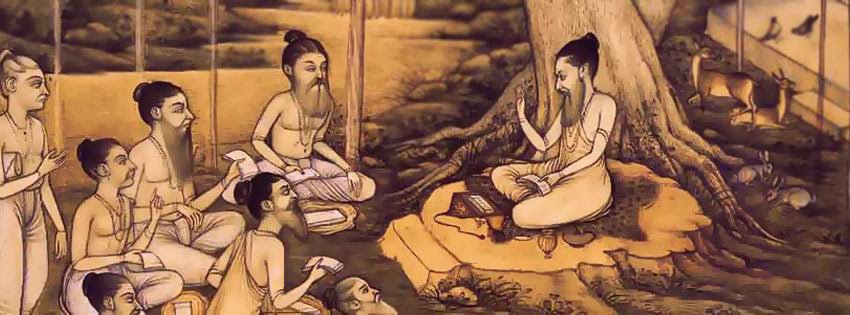
Sri Vedanta Desikan (1268-1368 CE)

Swami Sri Desikan’s “thaniyan

It is customary for all Sri Vaishnavites reciting the Sanskrit hymns of Swami Desikan to commence with a invocatory verse called “thaniyan“, and it runs as follows:

Sriman Venkatanatharya: kavi-tharkika-kesari,

Vedhanthacharya-varyome Sannidhatham Sadha-hrdi!”

The above ‘thaniyan‘ for Swami Desikan was composed by his son, and one of foremost disciples, Sri. Kumara varadacharya“. It is an epigrammatic verse that has for long served as a traditional, prefatory tribute to all of Swami Desikan’s Sanskrit verses.

There is another ‘Thaniyan‘ composed by another equally famous disciple of Swami Desikan, “Sri.Brahma-thantra-swathanthra-swami”. This disciple, known to be the founder of the Parakala Muth lineage of today, sang his “thaniyan” (“Ramanuja-Dhaya-pathram.“) which traditionally prefaces the recitation of Tamil hymns or sukthis of the Azhwars.

The ‘Thaniyan‘ for the Sanskrit hymns, the subject of this essay, is commonly known to serve three purposes.

First, it introduces the reciter of the hymn to its author.

Secondly, it gives a biographic glimpse of the greatness of the author.

Finally, it also serves as a quick and quiet prayer to the author beseeching him to let the Creative Spirit that inspired composition of the hymn also guide the reader or reciter to its proper understanding and appreciation.

The recitation of a “Thaniyan” prior to a hymn implies that the author of the hymn is a great and venerable soul; the hymn has been divinely inspired; and that a genuine appreciation of the hymn is not possible without the wholehearted blessings of the author’s spirit and which the reader must devotedly seek.

A ‘Thaniyan‘ is also essentially reflective of a cardinal Sri Vaishnavite belief that spiritual mentors, ‘gurus’ or ‘Acharyas’, are to be regarded as God-on-earth and one of the five “means” or ‘panchOpAya‘ by which Godhead may be attained by a disciple — the other four ‘upayas‘ being ‘karma‘, ‘gnyana“, ‘bhakthi‘ and ‘prappatti’.

The “Kasyapa-samhita” is often quoted as follows to support this belief :

“guruve parabrahmam guruve param-dhanam guruveparaha kamo guruve- parayanam || guruve-paravidhya guruve-paragathihi |

yasmath ~ dupadeshta ~ so tasmad-gurutharo guruhoo |l

Meaning:

The guru is God Himself; he is the real Wealth;

The guru is the fit object of love; he is the sole refuge.

The guru is true Wisdom; he is the only Way;

A Savior is he and verily, the Savior of Saviors!

Now, by introducing the author to a reader/reciter, a ‘Thaniyan‘ holds the ‘Acharya‘ up as a symbol of “upeya” (the Ultimate Human Goal); then, by providing a biographic snapshot of the author it provides the reader with “upaya” the means, to know more about the Reality of ‘upeya‘; and lastly, by incorporating an element of “prayer” within itself, the “Thaniyan” reminds readers of the nature of the “sambhandham, or relationship, subsisting between “upaya” and “upeya“, between Supreme End and temporal means.

Because of the very special purpose above that a ‘Thaniyan‘ serves, it is often believed by devout Sri Vaishnavas to be an esoteric ‘manthra‘ in its own right (which is perhaps why it is called ‘Thaniyan‘ in Tamil, i.e. “separate” or “independent“! It is said that even if one were to be, for whatever reasons, unable to recite the whole of the holy hymns of Swami Desikan, mere repeated chanting of ‘Thaniyan‘, in a spirit of desperate devotion, would be the “manthric‘ equivalent of realizing fully all the truths couched in the ‘Acharya’s‘ original hymns!

The first word “Sriman” in the ‘Thaniyan‘ refers to one who is blessed by “Sri” — the Goddess of Plenitude and Prosperity. One would tend to think this particular epithet is rather inappropriate to describe Swami Desikan who was known to have lived all his life in a state of utter penury. He was known to have spurned wealth by summarily rejecting opportunities for advancement in the secular world (vide. his “Vairagya-panchakam“).

In Swami Desikan’s case, thus, the term “Sri” refers instead really to a state of being characterized by “auspiciousness” i.e. being in a constant state of “heavenly existence on earth” uncircumbscribed by the wants, desires, hope, fears and despair of common humanity.

Swami lived all his life as a truly ‘liberated’ and ‘fearless’ soul ever in service to the Supreme Lord (‘mukthaanu-bhuthimiha daasyati me mukundaha’ vide his famous Sanskrit hymn the “dhaya-satakam”). All the fine qualities of ‘head and heart‘ — virtuousness, nobility, integrity, leadership, compassion and high idealism — were exhibited by the Swami in several incidents and events in his long career in life as a colossal spiritual preceptor of the 13th/14th-century world (CE).

The next word, ‘Venkatanatharya‘, refers to Swami Desikan’s first naming as “Venkatanathan” by his parents. Now this would have been a very pedestrian way of introducing the ‘Acharya‘ in the ‘Thaniyan‘ but for the suffix “Arya” being included in this epithet. The word “Arya‘, in Sanskrit, is said to denote “acquisition of exalted status in any field of human endeavor“.

Venkatanathan’s early life is known to bear ample testimony of his having acquired such ‘exalted status‘ by having been initiated into all the right ‘samskaras‘ (holy rites of passage or sacraments) and by undergoing apprenticeship under very able and scholarly mentors. He then mastered every single discipline that he chose to pursue and which included all branches of philosophy and theology, humanities, sciences, languages, arts and crafts (‘sarva-thanthra‘). Even at a very early age he commenced expounding and commentating on daunting and abstruse matters on the frontiers of philosophical thought. It was thus that he came to be designated “Arya“.

The next word “Kavi-tarkika-kesari” is a title and it is a tribute to Swami Desikan’s poetic genius and the formidable array of his superior skills as a dialectician and debater.

Now, as a poet Swami Desikan was a maestro of euphony, sonority, metric-rhythm, syntax, vocabulary, prosody and grammar. By a mere phrasing he could evoke a whole world of cascading ideas and imagination. Language was his slave; idiom and style were his lackeys; allegory and alliteration were his mere minions. There were no limits of poetic experience that he did not cross; no peaks of verbal fancy that he left unscaled; and of the great VisishtAdvaiti-c theme of the human search for spiritual redemption, there was little Swami Desikan, in a literary sense, left unexplored.

The towering majesty of his poetic script in “hamsa-sandesham” or “yadhavabhyudayam” is said to be matched, word-for-word, by the intense feeling which we know is the hall-mark of his shorter poems like “Gopala-vimshati” or “Godha-sthuthi“. Swami Desikan wrote thus for the common laity as well as for the cognoscenti and captured both their hearts and imaginations.

As a ‘dialectician and debater‘ – ‘tharkikan‘ — Swami Desikan was deeply feared as a veritable “simham” or fierce lion by the adversaries in his times.

In his days the philosophical underpinning of the Visishtadvaitic school of Sri Ramanuja or his precursors was still being subjected to critical onslaughts by monists and other thinkers known to advance superb technical refutations of Sri Vaishnava doctrines.

Swami Desikan’s singular contribution to VisishtAdvaita was that he protected it, by providing an insulation of sheer logic for it, against intellectual marauding. He thereby established its shining truth in vigorous and unambiguous terms. A great advaitic scholar of those times, Appaya Dikshitar, was known to have remarked that but for the “great fence of irrefutable logic built by Venkatanathan around the lush pastures of Sri Vaishnava truth, advaitic-dialecticians could have simply devoured it all up for breakfast like goats gobble grass!”.

The word ‘Tharkikan‘ also refers Swami Desikan’s efforts to formulate sound philosophic basis for t doctrine of “prappatti“. His magnum-opus, the “Srimad rahasyatrayasara‘ , is known to be a monumental contribution towards the distillation of what indeed is the core of Vaishnava faith.

The next word in the ‘thaniyan‘ “Vedantacharya” and this is a designation believed to have been conferred by Lord Ranganatha Himself on Swami Desikan for his outstanding polemic work, the ‘Sata-dhushani’ – a master rebuttal of several ‘advaitic‘ postulates and doctrines . It denotes Swami’s famous ability to provide true, correct and fair interpretation of matters related “Vedhanta-sastra”.

The suffix “varya:” added to this epithet is to indicate that this title, having been given by Lord Ranganatha, is hence non-pareil or “unequaled” by any other honour bestowed by mere mortals on Swami Desikan.

The last phrase is “varyomay sannidhatham sadha hrdi“. This phrase is truly the most essential in the ‘Thaniyan‘. It is a sort of prayer to Swami Desikan beseeching him to forever come and dwell inside the reciter’s mind and guide him to proper appreciation of the truths propounded in the hymn.

The ‘thaniyan‘ of Swami Desikan, recited with devotion, is believed confer on disciples enlightenment of the highest order required for the discovery of truths that the “Vedantacharya” himself held dear and cherished all his life.

Kavitharkika Simhaya Kalyana Gunasalin Srimate Venkatesaya Vendhantha Guran nama:

Sudarshan Madabushi
India: “no country for intellectuals”?

https://open.substack.com/pub/thedigitalmeadow/p/the-death-of-the-public-intellectual?utm_campaign=post&utm_medium=web


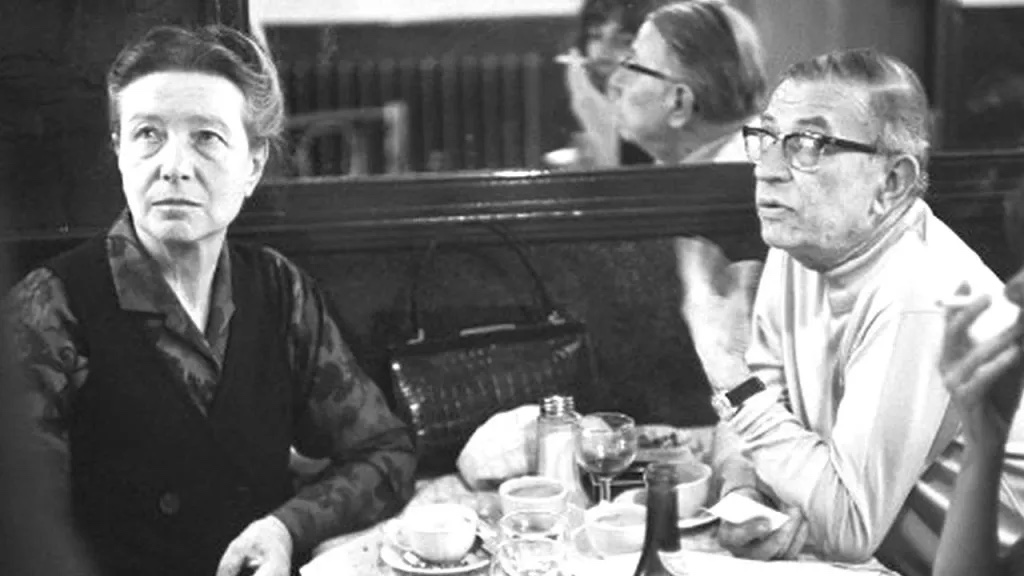
Simone de Beauvoir and Jean-Paul Sartre at the Café de Flore in Paris, 1970

The above article is an excellent commentary on the subject of the waning vigour of the traditions of intellectualism in public debate within the general life of societies right across the globe.

Why is the modern public intellectual a dying species?

The above essay traces the cause to many reasons in America. But after reading it, from the perspective of an Indian, I can say that “India is no country for intellectuals”. And the reason is the current generations of intellectuals in our country do not quite make the grade of those who are their forebears in ancient India.

1. A true intellectual must be open to learning from other cultures and engage in constant self-reflection.

2. The intellectual’s role is to challenge insularity and provoke introspection, not to blindly defend tradition.

3. The intellectual must stand apart from society to critique it honestly.

4. Today there is a huge disconnect between the intellectual elite and the masses. Indian intellectuals often fail to communicate effectively with broader society and they do not anymore drive meaningful cultural change.

5. The electronic media and social media are now the predominant intellectual marketplace or public square of the world.

_______________ ********* ——————-

A very perceptive online friend of mine, who currently lives in the USA, after reading the above Substack article emailed me his trenchant comments which I reproduce below ⬇️

Attention span these days has greatly been reduced. Everything has to be given in capsule form. No one has the inclination to digest – the Vedantic concept of Nidhidyasanam – it has vanished.  Serious discussion is almost verboten. Entertainment is the preferred dish.  An apposite example is the bastardisation of the old Pattimanram in Tamil. Solomon Pappiah has debased it  to a coffee shop exchange of jokes.  As the article rightly points out, today it is the Influencer and not the Intellectual who occupies centre stage. Laura Loomer of the USA is a prime example.

I could not have agreed more with the view of the friend from America. He was absolutely spot on ! And his observations triggered in me further thoughts on the matter which I then shared with him in a follow-up email this morning . Below ⬇️, I reproduce my email which is in fact, in a manner of speaking, amplification of the friend’s own views … especially on the vanishing ancient tradition of “nidhidhyaasana”.

Just by way of information, I give below in summary what is nidhidhyaasana.

In the traditional Vedantic process, spiritual practice is described in three main stages:


Śravaṇa: Listening to the teachings of the scriptures.
Manana: Reflecting on and reasoning about those teachings to remove doubts.
Nididhyāsana: Engaging in continuous, focused meditation to internalize and directly realize the truth of those teachings.

In the ancient past in India, however, this term had a very narrow and technical connotation. Nididhyāsana was the mental state where a practitioner meditated deeply on the mahāvākyas (great statements) of the Upanishads.

—————— ********* —————

Let me now , reproduce below my emailed response to my online friend in America:

Sir, Let me add to the list of main reasons you have compiled as accounting for the “death of the public intellectual”. 

You have correctly diagnosed one to be shrinking  “attention span” in people of the present generations. 

I’d include also “intolerance” and impatience”. 

By “impatience” I mean unwillingness and incapacity to listen to the other point of view to truly understand the opposite view or argument. In ancient time in India, much intellectual debate and discourse was fecund and lofty only because of the tradition of “purva paksha” that was embraced by all of those generations. Before starting of a debate, each side would first have to present in a summarised manner the opposite side’s view or position… and vice versa. Both parties must satisfy each other thus that they each had fully and correctly grasped each other’s respective ideas and arguments. It is only thereafter … after the “purva paksha” motion had been passed to mutual agreement … that the real debate started. 

Purva Paksha” demands not only great patience but also intellectual rigour and honesty … qualities which sadly are all woefully lacking in today’s fora of debate and discussions. It is because the etiquette of formal “purva paksha” has been lost , that we find today’s debates even in Parliament and  Assembly to be so either rancorous, meaningless or downright vapid and slovenly. 

Next, by “intolerance” I mean ill-tempered attitude to the debate. Today’s debating stage is a pugilist’s ring. Debaters today descend so easily into ad hominem attacks, personal pique the moment they sense that they can’t effectively counter an opposing view. An intellectual challenge at once is seen as a personal affront. 

Instead of shedding light on the real motion of debate, the two sides then only end up generating great heat. In such an atmosphere of simmering or near-vituperative back and forth verbal attacks, no really valuable ideas or insights emerge from the so-called “intellectual exchange”. It all finally ends up as “sound and fury signifying nothing”. 

The galleries of course find everything oh all so entertaining! Oh, so much fun! And they applaud! To them it is electrifying intellectual tamaasha of sorts. 

It is true today that it is the “influencer” not the intellectual who is the arbiter of public opinion . Opinions are really winds of fashion . But serious thought — and the serious exploration of fresh or new ideas and insights in the public domain — today has totally gone out of fashion. 

Intellectualism is just breezy fashion these days because it parades and preens itself on the glitzy catwalks of TV studios presided over by slick and glib anchorpersons who cannot really tell the difference between sober cerebration that can elevate the mind and frenzied celebration of what at best can tittilate or tantalise it . 

Intellectualism is no longer the sartorial sophistication and elegance in which the ancient Rishis of India, once upon a time in our land, used as attire for their superior thinking minds. 

To conclude, however, let’s turn to somber poetry. 

We are the hollow men

We are the stuffed men

Leaning together

Headpiece filled with straw. Alas!”

The above verse is from “The Hollow Men” by T.S. Eliot, a poem first published in 1925. This modernist work explores themes of spiritual emptiness, disillusionment, and the fragmented state of humanity after World War I.

The “hollow men” represent individuals who are spiritually and morally empty—lacking substance, conviction, or purpose. The “stuffed men” suggests they are filled with meaningless material, like straw, evoking the image of scarecrows. 

I can’t help imagining to myself who amongst us in our societies in this country are “hollow men” and who are the “stuffed men”.

T.S. Eliot’s poem is known for its haunting tone and ends with the famous lines:

This is the way the world ends

Not with a bang but a whimper

Well… about the “end of the world”, I know I cannot ascertain or predict it intellectually. However, what I can and so say with a reasonable degree of certainty and objectivity is this :

The great furious debates of our times that our own intellectuals in India — Eliot’s  “stuffed men” — engage in are often no more than whimpers masquerading as bang…. 

Sudarshan Madabushi

Savukku Sankar interview with T. R.Ramesh: “The BJP cares little for Hindu temples!”

The YouTube video below covers the legal battle that T.R. Ramesh , the NGO crusader for freeing Hindu Temples in Tamil Nadu from the clutches of the Tamil Nadu HR&CE Commission, has been taking to the Courts recently.

The battle is about whether the surplus funds of the Temples can be expropriated by the HR&CE Commissioner to be used to fund the Tamil Nadu governments Public Education policy goals and projects such as setting up large scale educational institutions and colleges. In a recent case , the Court has granted interim conditional Stay Order in favour of T. R. Ramesh.

The video interview below covers a wide ranging discussion on the innumerable shenanigans and misdemeanours of the HR&CE Dept. and the rampant rot and corruption in which it has allegedly been steeped in the last 5 or 6 decades in Tamil Nadu. Ramesh gives a very graphic account indeed in the interview about all the nefarious skulduggery.

Towards the end of the interview , however, when a pointed question is asked about what the powerful All-India political party , the BJP, has done in the last 10 years to rein in the TN HR&CE Department’s delinquency, T. R. Ramesh scathingly answers that “BJP is all just empty talk and no real deeds in this matter!”

Watch the full video below ⬇️

********

After watching the interview, a relative of mine, a US naturalised Citizen, was so outraged that he sent me this message (in Tamil) below ⬇️

🙏 ஸ்ரீ. ரமேஷின் ப்ரமாத கருத்துள்ள பேட்டி.

எனக்கு ரொம்ப பிடிச்சது அவருடைய பாஜக குறித்த அபிப்பிராயம்.

பஜக மத்திய அரசில் பத்து ஆண்டுகள் மேல் ஆட்சில இருக்கு. ஏன் இந்தியாவிலே, தமிழ் நாட்டில் மாத்திரம் அல்ல, கோவில் நிலமைய சரி படுத்தலன்னு என் மனசு கேள்வி. திரு. ரமேஷ் சரியாக விளக்கினார். பாஜக கோவில் மேல் விருப்பமில்லை. ஆனால், கோவில் பணத்திலும் வாக்குகள் (votes ) மேலும் விருப்பம்.

Many in the Indian diaspora abroad are often similarly outraged by what is happening to Hindu temples in TN under HR&CE administration. They are unable fathom or understand the complex dynamics and undercurrents that lie beneath Tamil Nadu politics, administrative control over Hindu temples and the constant tug-of-war that is waged between temple stakeholders and its usurpers.

My reply to my American relative thus was as below ⬇️

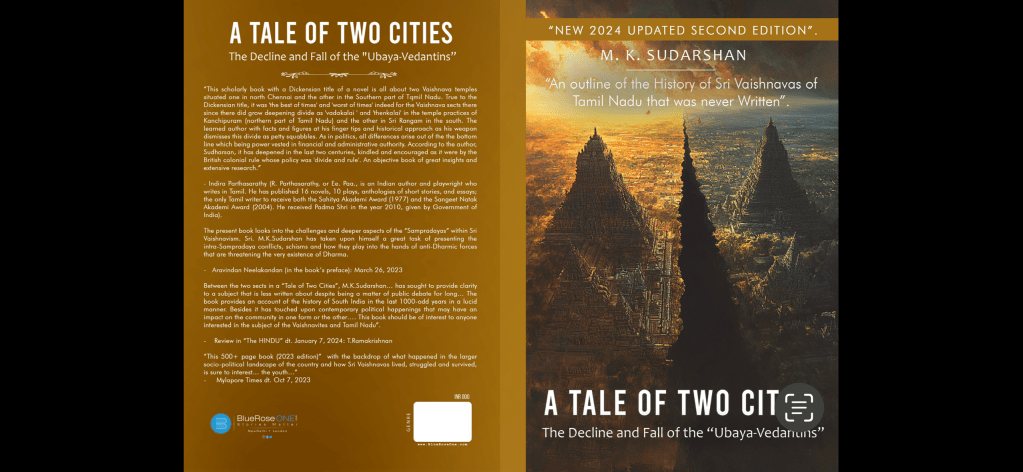
https://www.amazon.in/dp/B0DM37BTM4?ref=KC_GS_GB_IN

என் புத்தகம் “The Tale of Two Cities: The Decline and Fall of the ubaya vedantins (2024)” இல், ஒரு தனி அதிகாரத்தில் இந்தக் கேள்வியை விரிவாக எடுத்துரைத்துள்ளேன். இந்தியா முழுவதும் உள்ள சுமார் 6,50,000 இந்து கோயில்கள் சேர்த்து, ஆண்டுக்கு கிட்டத்தட்ட 44 பில்லியன் அமெரிக்க டாலர் அளவுக்கு பங்களிப்பு வழங்குகின்றன. தங்கம், வெள்ளி, ரத்தினங்கள், நிலம் மற்றும் சொத்து ஆகிய வடிவங்களில் நூற்றாண்டுகளாகச் சேர்க்கப்பட்ட கோயில்களின் செல்வம், கிரேக்கம், போர்த்துகீசம், துருக்கியர், பாரசீகர், ஆப்கான்கள், மங்கோலியர், பிரஞ்சு, பிரிட்டிஷ் ஆகிய பல வெளிநாட்டு ஆக்கிரமிப்பாளர்களின் கொள்ளையுக்கும் பிலண்டருக்கும் இலக்காக இருந்தது.
பிரிட்டிஷ் 250 ஆண்டுகள் இந்தியாவை ஆட்சி செய்த காலத்தில், கோயில்களை பலவீனப்படுத்தவும், அவர்களின் செல்வத்தை சுரண்டவும் பல சட்டங்கள் இயற்றப்பட்டன. பிரிட்டிஷ் சென்ற பிறகு, இந்திய அரசியல்வாதிகள் அதே யுக்திகளை கற்றுக்கொண்டு தங்களது சொந்த பாக்கெட்டுகளை நிரப்பத் தொடங்கினர். HR&CE சட்டம் (Hindu Religious and Charitable Endowments Act) ஒருபோதும் ரத்து செய்யப்படவில்லை. அது அரசுக்கு மிகப் பெரும் வருவாய் ஊற்றாக தொடர்ந்து இருந்தது.


செல்வம் மட்டுமல்ல, கோயில்கள் தமிழக அரசியல்வாதிகளின் கையில் அனைத்து வகையான அரசியல் ஆதாயங்களுக்கும், வாக்கு வங்கி அரசியலுக்கும் ஒரு சாதனமாக மாறின. நில அபகரிப்பு, தங்கம் வெளிநாட்டு கடத்தல், சிலை கடத்தல் — இவை அனைத்தும் பல பில்லியன் டாலர் மதிப்புள்ள ஒரு மாநிலமெங்கும் பரவிய தொழில்துறையாக மாறின. அரசியல், குற்றம் மற்றும் சட்ட அமைப்பு ஆகியவற்றுக்கிடையே உருவான கூட்டணி, அனைத்து அரசியல் கட்சி வரிகளையும் கடந்து விரிந்த ஒரு தீய நலவாத வலையமைப்பை உருவாக்கியது.
இந்துக்களின் கோயில்கள் ஒரு பொன் குடமாக இருந்தன; எந்த அரசியல் கட்சியும் தங்கள் விருப்பப்படி அதில் கை வைக்கலாம், கொள்ளையடிக்கலாம், ஏனெனில் சட்டங்களை உருவாக்குபவர்கள் தாங்களே சட்டங்களை மீறினால் அவர்களை யாரும் தடுக்க முடியாது. அமெரிக்காவில் “military-industrial complex” நாட்டின் பெரும் பொருளாதாரத்தை கட்டுப்படுத்துகிறது என்று பேசுகிறீர்கள்; அதுபோல் இந்தியாவிலும் “religio-political complex” எனும் ஒரு பெரிய, செழிப்பான அமைப்பு இந்து கோயில்களின் செல்வத்திலிருந்து பொருளாதார ஆதாரம் பெறுகிறது. தமிழகத்தில் HR&CE ஒரு “complex” மட்டுமல்ல; அது ஒரு “mafiadom”.

In my book “The Tale of Two Cities: The Decline and Fall of the “ubaya vedantins (2024)”, in a separate chapter I have covered this question. The contribution of about 650,000 Hindu temples across India account for nearly $44 billion . Temple wealth in the form of gold, silver, gems, land and property etc. accumulated over past countless centuries was the target of loot and plunder of many foreign invaders , Greek, Portuguese, Turkish, Persian, Afghan, Mongol, French and British. Several Laws were enacted during the 250 years the British ruled India which were designed to virtually bleed temples and drain their commonwealth. After the British left, Indian politicians learnt the same tricks to line their own pockets. The HR&CE Act was never repealed . It continued to provide a very lucrative stream of revenue to the Government. Not only wealth , temples became a handy tool in the hands of all politicians in Tamil Nadu for all kinds of political leverage and cynical vote-bank skulduggery. Land appropriation, Gold exfiltration, idol smuggling … everything became a multi-billion dollar state wide enterprise. The nexus between politics, crime and the legal system created a nefarious network of vested in terry’s with its tentacles spreading into and cutting across all political party lines. Hindu temples were pots of gold into which every political party could dip its hands and keep pilfering loot with impunity because nobody could stop law-makers if they themselves chose to be law breakers. Just as in America you talk about the great “military-industrial complex” which controls a great part of the country’s economy, here in India too there is a vast and thriving “religio-political complex” that draws all its economic sustenance from Hindu temple wealth. In Tamil Nadu, the HR&CE is much more than a “complex”. It is mafiadom.

*********

The above brief explanation was really the very best I could do to to help someone so far away on the other distant side of the world to gain at least a birds-eye view of the kind of heroic struggle that persons like T.R. Ramesh are tirelessly engaged in this little corner of the world called Tamil Nadu where Hindu temples are really “geese that lay golden eggs” for powerful politicians.

So why would then even the BJP which claims to be the champion of Hindutva and their Ayodhya Ram temple simply to better its own election prospects, not conspiratorially look the other way when it is well known that no politician is ever going to stop fighting tooth-and-nail for what he/she knows is enormous and inexhaustible spoils of the Hindu Temple are out there just for easy grabbing, easy raking and easy taking?

Sudarshan Madabushi

“Naming is not knowing”, says Richard Feymann; but “Naming is the key to knowing”, says the “Purusha Suktam”and “Vishnu Sahasranama” (Part 2 of 2- CONCLUDED).

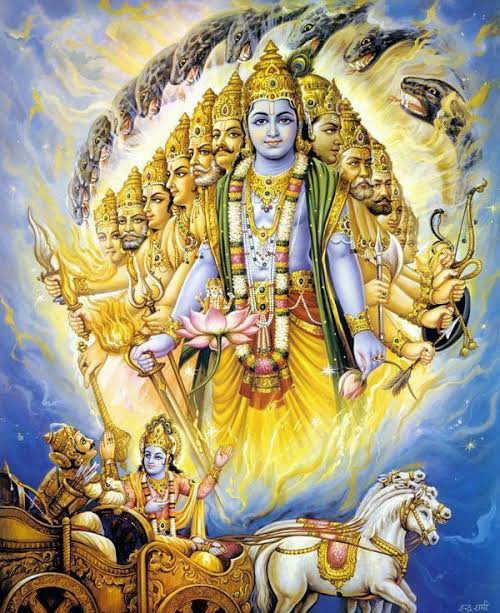
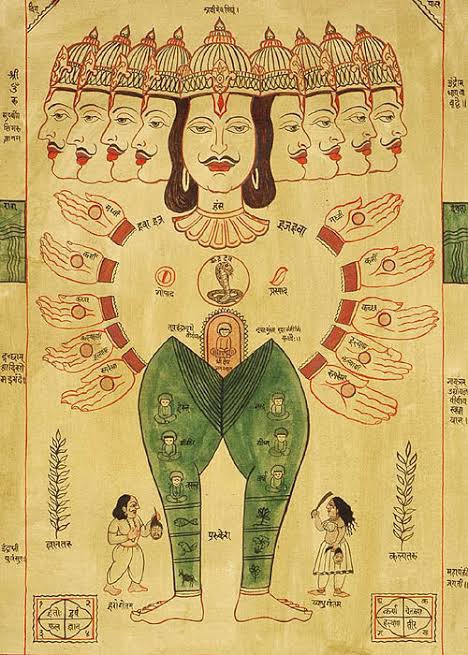
The Purusha Suktam hymn describes the primordial cosmic creation as a process in which the universe and all its elements emerge from the sacrifice of the Purusha, the Cosmic Being. The hymn details how various aspects of the cosmos—such as the moon, sun, wind, earth, sky, and even the social classes—arise from different parts of Purusha’s body.


However, the hymn does not explicitly describe a process of “naming” things during this creation. Instead, it focuses on the manifestation or emergence of cosmic elements and beings from the Purusha through the act of sacrifice. The text poetically enumerates what arises from each part of the Purusha, but does not mention a divine or ritualistic act of assigning names to these entities.


Some later Vedic texts, such as the Satapatha Brahmana, do reference the act of creation through uttering specific sounds or words (e.g., “bhūh,” “bhuvah,” “svah”), which are associated with generating earth, air, and sky, and could be interpreted as a form of naming. However, this motif is not present in the Purusha Suktam itself.


In summary, while the Purusha Suktam adumbrates the emergence and differentiation of cosmic entities, it does not directly address the process of naming them at the time of creation. The focus is on the origin and interconnectedness of existence, rather than on the assignment of names.

********* *********** *******

The Vishnu Sahasranama is a revered Sanskrit hymn consisting of one thousand names of Lord Vishnu, found in the Mahabharata’s Anushasana Parva.

Each name highlights a specific quality, attribute, or aspect of Vishnu, who is regarded as the preserver and protector of the universe. The hymn is both a form of praise and a spiritual practice, believed to bring peace, protection, and spiritual upliftment to those who recite it with devotion.

The phrase from the preamble, “yaani naamaani gaunaani vikhyaataani mahaatmanah,” can be translated as:
“Those names of the great-souled (Vishnu), which are secondary (gaunaani) and well-known (vikhyaataani)…”

In this context, “gaunaani” means descriptive or attributive names, as opposed to the primary or essential name.

The verse acknowledges that these thousand names are well-known epithets and attributes of Vishnu, each expressing a different facet of his divine nature. The act of listing and chanting these names is seen as a way to contemplate, invoke, and connect with the many aspects of the divine, reflecting the Hindu belief that the ultimate reality (Brahman) manifests in numerous forms and names.

********* ********* *********

Now, reading the Purusha Suktam and the Vishnu Sahasranama together offers clear insight into the Vedantic view of creation and the process of naming as an epistemological act.


• The Purusha Suktam describes the emergence and differentiation of the cosmos from the primordial Purusha, detailing how various elements and beings arise, but it does not explicitly mention the act of naming them.


• The Vishnu Sahasranama presents a thousand names of Vishnu, each reflecting a quality, function, or aspect of the divine, and the preamble (“yaani naamaani gaunaani vikhyaathaani mahaatmanah”) acknowledges these as descriptive and well-known names.


In Vedantic epistemology, naming is closely related to the concept of śabda (word or testimony), one of the accepted sources of valid knowledge (pramāṇa). Names are not merely labels; they are seen as pointers to underlying realities or attributes. The process of naming (nāma) and form (rūpa) is fundamental in Vedantic thought, as creation is often described as the manifestation of names and forms from the undifferentiated absolute (Brahman).


The Mundaka Upanishad, for example, explicitly says, “From Brahman are produced all these: the Creator (Brahma), names and forms and nourishment for all”.


Thus, naming in Vedanta is an epistemic act—it is how the undivided reality becomes knowable, differentiated, and accessible to cognition.

The thousand names in the Vishnu Sahasranama exemplify this: each name is a way of knowing, relating to, and invoking the divine, reflecting the belief that the ultimate reality manifests as multiplicity through names and forms.


In summary:
Purusha Suktam: Describes the differentiation of cosmic elements.


Vishnu Sahasranama: Demonstrates the epistemic function of naming as a means of knowing and relating to the divine.


Vedantic epistemology: Recognizes śabda (word/testimony) as a means of knowledge, and views naming as a process by which the absolute becomes manifest and knowable.

So, in Vedantic terms, the process of naming is integral to how creation is known and experienced, serving as a bridge between the unmanifest and the manifest, the undivided and the differentiated.

Sudarshan Madabushi

“Naming is not knowing”, says Richard Feymann; but “Naming is the key to knowing”, says the “Purusha Suktam”and “Vishnu Sahasranama” (Part 1 of 2).

This morning a very erudite online friend of mine, a retired Judge of the High Court of Telangana, Justice T.N.C. Rangarajan ( https://tshc.gov.in/showFormerJudgeProfile?id=278) forwarded to me for my edification an extremely thought-provoking article on the Richard Feynman.

Who is Richard Feynman?

Richard Phillips Feynman (May 11, 1918 – February 15, 1988) was an American theoretical physicist. He is best known for his work in the path integral formulation of quantum mechanics, the theory of quantum electrodynamics, the physics of the superfluidity of supercooled liquid helium, and in particle physics, for which he proposed the parton model. For his contributions to the development of quantum electrodynamics, Feynman received the Nobel Prize in Physics in 1965 jointly with Julian Schwinger and Shin’ichirō Tomonaga.

Know more about Feynman here https://en.m.wikipedia.org/wiki/Richard_Feynman.

The article on Richard Feynman is a brief one and is about how he thought that the way children are taught in schools and home to gain general knowledge about the world around them at large is deeply flawed and deficient. The article is worth reading fully and hence I am reproducing it below although it might be said by scholars that Feynman hasn’t said anything really that wasn’t already said by Tiruvalluvar a millennium ago :

“கற்க கசடற கற்பவை கற்றபின் நிற்க அதற்குத் தக”
(from the Thirukkural)

“Learn thoroughly and without fault what should be learned, then conduct yourself according to that learning.

Parimelazhagar’s went on further in fact to elucidate the above Kural with his commentary emphasising that learning (கற்க) is not complete without understanding (அறிதல்) and that true learning involves:


• Understanding the subject deeply,
• Removing doubts and misconceptions,
• Internalizing the knowledge so it can guide conduct.

Nonetheless, the modern physicist, Richard Feynman’s insight is brilliant too indeed… We all think that once we have learned to name things , concepts, ideas or categories , we have fully understood them. Wrong, says Feynman … Naming is only the beginning of knowing , not the culmination of understanding .

Here below is a summation of Feynman’s view:

Richard Feynman On The Difference Between Knowing the Name of Something and Knowing Something

Abhishek Chakraborty

When it comes to better ways of learning, no scientist, let alone a Nobel laureate, gets mentioned more than the great Richard Feynman.

Feynman is the most curious and high-spirited character I’ve read about who believed that the world is much more interesting than any one discipline. Therefore he was curious about almost everything he came across.

Following is the important part of Feynman’s presentation which I wish to draw your attention:

See that bird? It’s a brown-throated thrush, but in Germany it’s called a Halzenfugel, and in Chinese they call it a Chung Lingand even if you know all those names for it, you still know nothing about the bird. You only know something about people; what they call the bird. Now that thrush sings, and teaches its young to fly, and flies so many miles away during the summer across the country, and nobody knows how it finds its way.

The point that Feynman’s trying to make is that simply knowing the name of something doesn’t mean you understand it. In order to talk to each other, we have to have words, but we often talk in fact-deficient, obfuscating generalities to cover up our lack of understanding.

In Surely You’r Joking, Mr. Feynman, he illustrates this very problem with regards to a science book for kids.

For example, there was a book that started out with four pictures: first there was a wind-up toy; then there was an automobile; then there was a boy riding a bicycle; then there was something else. And underneath each picture it said, “What makes it go?

I thought, “I know what it is: They’re going to talk about mechanics, how the springs work inside the toy; about chemistry, how the engine of the automobile works; and biology, about how the muscles work.”

It was the kind of thing my father would have talked about: “What makes it go? Everything goes because the sun is shining.” And then we would have fun discussing it:

“No, the toy goes because the spring is wound up,” I would say.

“How did the spring get wound up?” he would ask.”

“I wound it up.”

And how did you get moving?”

“From eating.”

“And food grows only because the sun is shining. So it’s because the sun is shining that all these things are moving.” That would get the concept across that motion is simply the transformation of the sun’s power.

I turned the page. The answer was, for the wind-up toy, “Energy makes it go.” And for the boy on the bicycle, “Energy makes it go.” For everything, “Energy makes it go.”

Now that doesn’t mean anything. Suppose it’s “Wakalixes.” That’s the general principle: “Wakalixes makes it go.” There’s no knowledge coming in. The child doesn’t learn anything; it’s just a word!”

“What they should have done is to look at the wind-up toy, see that there are springs inside, learn about springs, learn about wheels, and never mind “energy.” Later on, when the children know something about how the toy actually works, they can discuss the more general principles of energy.

It’s also not even true that “energy makes it go,” because if it stops, you could say, “energy makes it stop” just as well. What they’re talking about is concentrated energy being transformed into more dilute forms, which is a very subtle aspect of energy. Energy is neither increased nor decreased in these examples; it’s just changed from one form to another. And when the things stop, the energy is changed into heat, into general chaos.

But that’s the way all the books were: They said things that were useless, mixed-up, ambiguous, confusing, and partially incorrect. How anybody can learn science from these books, I don’t know, because it’s not science.”

I hope you can understand where his frustration is coming from. There is, however, a simple way to test whether you know something or only know the name of something. It’s a popular learning method named after Feynman himself: The Feynman Technique.

If you have to test your knowledge about the concept of something, say energy, then without using the word “energy”, try to rephrase what you know about it in your own language. Without using the word “energy,” explain in simple words what makes the toy, the bicycle, and the automobile go. If you cannot, you may have learned nothing about science. Truth it, most of us have not. Most of us simply know the jargon, not the meat.

The Feynman Technique involves four steps:

  1. When you learn something, learn its concept, not just its name.
  2. Then explain it in simple words so that even a 10 year old can understand.
  3. Now, identify the gaps in your explanation. Most likely you won’t get it right the first time, and that’s OK. Go back to the source to better understand it.
  4. Next, simplify further, and try again.

You should try it. It’s actually not as simple as it sounds. As a kid, Feynman’s father gave him a problem many years ago which beautifully illustrates the technique.

He said, “Suppose some Martians were to come down to earth, and Martians never slept, but instead were perpetually active. Suppose they didn’t have this crazy phenomenon that we have, called sleep. So they ask you the question: ‘How does it feel to go to sleep? What happens when you go to sleep? Do your thoughts suddenly stop, or do they move less aanndd lleeessss rraaaaapppppiidddddllllllllyyyyyyyyyyyyyy? How does the mind actually turn off?’

We take other men’s knowledge and opinions upon trust; which is an idle and superficial learning. We must try to make them our own. Otherwise, it’s like having a belly-full meal that has been chewed but not digested, and hence cannot nourish us.

—- end of the article —-

After reading the above article, my own mind began to veer off in another but not unrelated direction. The process of naming things and categories struck me as being a deeply philosophical question. That line of thinking led me to begin pondering a bit on Vedantic epistemology. And I found myself beginning to ask myself the question whether Feynman’s views on Naming and Knowing were somehow relatable to the Rg Veda hymn of Purusha Suktam and the Mahabharata litany of “naama” in the Sri Vishnu Sahasranama.

(to be continued)

Sudarshan Madabushi

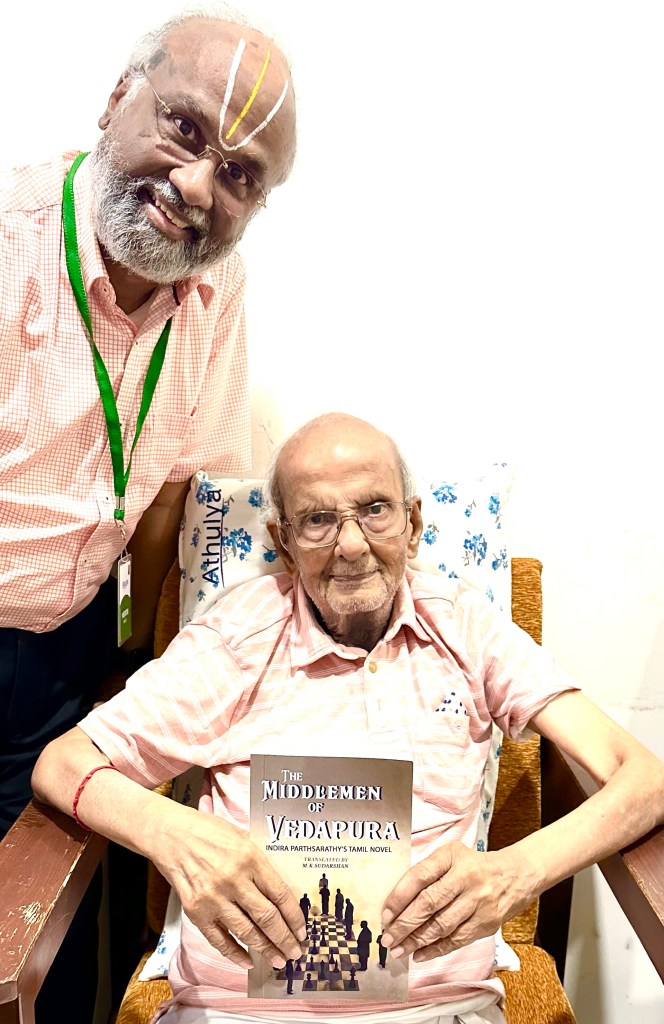
நேற்று 10 ஜூலை 2025: திரு இந்திரா பார்த்தசாரதி (ஈபா) அவர்களுக்கு 95வது பிறந்தநாள் வாழ்த்துகள்: தமிழ்ப் பண்பாட்டின் மிக அன்பான வழிகாட்டியும் சிறந்த முன்னோடியுமான அவர்களுக்கு எனது பரிசு

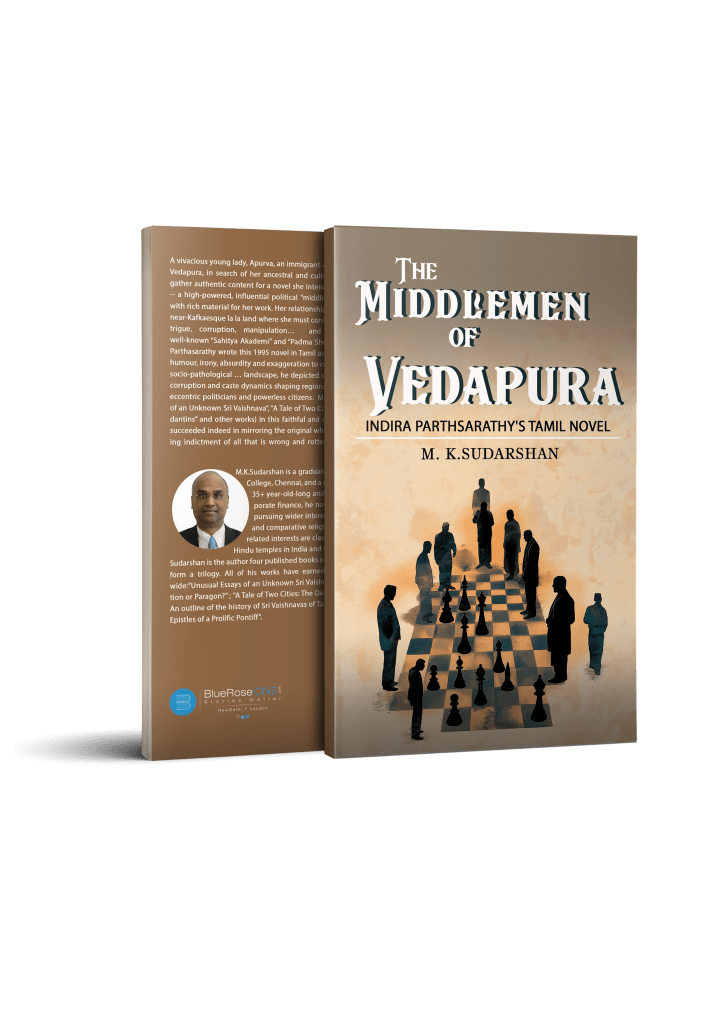
வேதபுராவின் நடுவணர்கள்: மூலத்தை மீறிய ஒரு அற்புதமான மொழிபெயர்ப்பு
இராசா இந்திரா பார்த்தசாரதி
மொழிபெயர்ப்பு: எம். கே. சுதர்ஷன்
ப்ளூரோஸ் பதிப்பகம், 2025
★★★★★ (5/5 நட்சத்திரங்கள்)


மொழிபெயர்ப்பு என்பதே மாற்றமாகிறது
ஒரு மொழிபெயர்ப்பு அதன் மூலத்தைவிட மேலாக இருக்கிறது என்று கூறுவது தைரியமானது. ஆனால் இந்திரா பார்த்தசாரதியின் 1995ஆம் ஆண்டு தமிழ் நாவல் “வேதபுரத்து வியாபாரிகள்” என்பதற்கு எம். கே. சுதர்ஷன் செய்த ஆங்கில மொழிபெயர்ப்பு இந்த சாதனையை அடைந்துள்ளது. இது வெறும் மொழிகளுக்கிடையே பாலம் அமைப்பதல்ல; ஏற்கனவே பாராட்டப்பட்ட ஒரு படைப்பிற்கு புதிய உயிர் ஊட்டும் முழுமையான மறுவடிவம்.
மிக முக்கியமான பாரதிய பாஷா பரிஷத் விருதைப் பெற்ற இந்த அரசியல் நகைச்சுவை நாவல், சுதர்ஷனின் அற்புதமான மொழிபெயர்ப்பில் புதிய பொருத்தத்தையும், நகைச்சுவையையும் பெற்றுள்ளது. இது இன்றைய வாசகர்களை ஈர்க்கும் வகையில், அதன் கூர்மையான நகைச்சுவியும், பண்பாட்டு உண்மையும் முழுமையாக பாதுகாக்கப்பட்டுள்ளது.


கதை: நகைச்சுவையும் கனவுலகமும்
“வேதபுராவின் நடுவணர்கள்” நாவலின் மையத்தில், அமெரிக்காவில் வளர்ந்த இந்திய வம்சாவளியான அபூர்வா என்ற இளம்பெண் தனது பாரம்பரியத்தைத் தேடி கற்பனையான வேதபுராவுக்கு வருகிறாள். இந்த பயணம், இந்திய அரசியலின் இருண்ட பக்கங்களை ஆராயும் காஃப்கா பாணி கனவுலக அனுபவமாக மாறுகிறது.

அவள் சந்திக்கும் நஞ்சுண்டன் என்ற சக்திவாய்ந்த நடுவணர், அதிகாரம், சாதி அரசியல், முறைகேடு ஆகியவற்றின் உண்மைகளை அறிய வழிகாட்டுகிறார். பார்த்தசாரதியின் சிறப்பு, இந்த கதையை ஒரு சமூக விமர்சனமாகவும், வாசகர்களுக்கு சிந்தனைக்குரியதாகவும் உருவாக்கியதில்தான் இருக்கிறது.
கற்பனையான வேதபுரா, பாரம்பரியமும் நவீனமும் மோதும், அதிகாரம் இருளில் செயல்படும், நேர்மையானவர்கள் முறைகேடு நிறைந்த சூழலில் வாழும் இந்தியாவின் சின்னமாக மாறுகிறது.

காலத்தை மீறும் அரசியல் நகைச்சுவை
இந்த நாவலை சிறப்பாக்குவது, அது கால எல்லைகளை மீறி பேசும் திறன்தான். 1995-இல் எழுதப்பட்டாலும், அரசியல் ஊழல், சாதி அரசியல், பண்பாட்டு அடையாளம் ஆகியவை இன்னும் 2025-இல் கூட மிக முக்கியமானவை.

பார்த்தசாரதியின் கூர்மையான நகைச்சுவை, பரிமாணங்கள் கொண்ட நையாண்டி, இந்திய அரசியலை வண்ணமயமாகவும், விமர்சனத்துடனும் காட்டுகிறது. இது குறிப்பிட்ட அரசியல் நடைமுறைகளையும், மனிதநேயம் குறைந்த அமைப்புகளையும் விமர்சிக்கிறது.

பண்பாட்டு மொழிபெயர்ப்பின் கலை
சுதர்ஷனின் மொழிபெயர்ப்பு பண்பாட்டு உணர்வும், மொழி திறனும் கொண்டது. இது அவரது முதல் தமிழ்-ஆங்கில மொழிபெயர்ப்பு என்றாலும், மிகச் சிறப்பாக உள்ளது. இந்திய தத்துவமும், நவீன வாழ்க்கை அனுபவமும் அவருக்கு இந்த நாவலை ஆழமாக புரிந்து மொழிபெயர்க்க உதவியுள்ளது.
மூலத்தின் பிராந்திய உண்மையை பாதுகாப்பதோடு, உலகளாவிய வாசகர்களுக்கும் எளிதாக புரியும் வகையில் மொழிபெயர்க்கப்பட்டுள்ளது. பண்பாட்டு குறிப்புகள், அரசியல் சாடல்கள், மொழி நுட்பங்கள் அனைத்தும் ஆங்கிலத்தில் பொருத்தமான வடிவில் வந்துள்ளன.
கதாபாத்திர வளர்ச்சி மற்றும் சமூக விமர்சனம்
அபூர்வா என்ற கதாநாயகி இந்திய சமுதாயத்தை பார்க்கும் சிறந்த கண்ணோட்டமாக இருக்கிறார். அமெரிக்க வாழ்க்கை அனுபவம், வேதபுராவின் அரசியலை புதுமையாகவும், அதிர்ச்சியுடனும் பார்க்க உதவுகிறது. அவளின் பயணம் வாசகர்களின் விழிப்புணர்வையும் பிரதிபலிக்கிறது.

நஞ்சுண்டன், அரசியல் நடுவணர், ஜனநாயகத்தின் பின்னணியில் செயல்படும் இருண்ட மனிதர்களின் சின்னம். அவர் முழுமையாக வில்லனும், ஹீரோவும் அல்ல; அரசியல் வாழ்க்கையின் ஒளி-இருளை பிரதிபலிக்கிறார்.

இலக்கிய உத்திகள் மற்றும் பாணி
இந்நாவலின் பலம், நகைச்சுவையும் கனவுலகமும் கலந்து இருப்பதில் உள்ளது. அரசியல் விமர்சனத்தை வாசகர்களுக்கு எளிதாகவும், ஆழமாகவும் எடுத்துச்செல்லும் விதமாக கதை அமைக்கப்பட்டுள்ளது.
பார்த்தசாரதியின் நையாண்டி, சித்திரவதை, நகைச்சுவை ஆகியவை அரசியல் வாழ்க்கையின் அபத்தங்களை வெளிப்படுத்துகின்றன. கதாபாத்திரங்கள் நகைச்சுவை அடிப்படையிலானவை என்றாலும், மனிதநேயம் கொண்டவர்களாகவும் இருக்கின்றனர்.
இன்றைய காலத்திற்கான பொருத்தம்
அரசியல் விவாதங்கள் அதிகம் நடக்கும் காலத்தில், “வேதபுராவின் நடுவணர்கள்” சமூகத்தை விமர்சிக்கும் இலக்கியத்தின் சக்தியை நினைவூட்டுகிறது. அரசியல் ஊழல், சாதி, பண்பாட்டு அடையாளம் போன்றவை இன்றும் மிக முக்கியமானவை.
இந்த நூல், இந்தியாவின் நவீன சிக்கல்களை புரிந்துகொள்ள விரும்பும் அனைவருக்கும் வாசிப்புக்குரியது.


சிறிய குறைகள்


மொழிபெயர்ப்பு பெரும்பாலும் சிறப்பாக இருந்தாலும், சில இடங்களில் பண்பாட்டு மொழிபெயர்ப்பு சிறிது கட்டாயமாக தெரிகிறது. தமிழ் வாசகர்களுக்கு எளிதில் புரியும் குறிப்புகள், ஆங்கில வாசகர்களுக்காக விளக்கங்கள் தேவைப்படுகின்றன.


சில இரண்டாம் நிலை கதாபாத்திரங்கள், இன்னும் சிறிது ஆழமான வளர்ச்சி பெற்றிருக்கலாம்.


இறுதி மதிப்புரை


“வேதபுராவின் நடுவணர்கள்” வெறும் நாவல் அல்ல; இது சமுதாயத்தின் பிரதிபலிப்பு. வாசிப்பவர்களுக்கு சிரிப்பும், சிந்தனையும், உலகை ஆழமாக புரிந்துகொள்ளும் வாய்ப்பும் அளிக்கிறது.


சுதர்ஷன் மொழிபெயர்த்துள்ள இந்த நூல், தமிழ் இலக்கியத்தை உலகளாவிய வாசகர்களுக்கு கொண்டு சென்றுள்ளது. இது வெறும் மொழிபெயர்ப்பு அல்ல; மூலத்தின் ஆன்மாவை காக்கும் புதிய படைப்பு.
இன்றைய இந்திய அரசியல், சமூக நிலைமைகள், பண்பாட்டு அடையாளம் ஆகியவற்றை புரிந்துகொள்ள விரும்பும் அனைவருக்கும் இந்த நூல் பரிந்துரைக்கப்படுகிறது.


இந்த மதிப்புரை, இந்திரா பார்த்தசாரதியின் 1995ஆம் ஆண்டு தமிழ் நாவல் “வேதபுரத்து வியாபாரிகள்” என்பதின் எம். கே. சுதர்ஷன் செய்த 2025ஆம் ஆண்டு ஆங்கில மொழிபெயர்ப்பை அடிப்படையாக கொண்டது.

*****************

Yesterday 10 July 2025: Happy 95th Birthday greetings to Sri Indira Parthasarathy (Eepa): My gift to a very dear friendly guide and outstanding doyen of Tamil literature

The Middlemen of Vedapura”: A Masterful Translation That Transcends the Original

By Indira Parthasarathy
Translated by M.K. Sudarshan
BlueRose Publishers, 2025
★★★★★ (5/5 stars)


A Translation That Becomes Transformation

There’s something audacious about claiming that a translation surpasses its original, yet M.K. Sudarshan’s English rendering of Indira Parthasarathy’s 1995 Tamil novel “Vedapuratthu Vyaabaarigal” achieves precisely this feat. The result is not merely a linguistic bridge between Tamil and English but a complete reimagining that breathes new life into an already acclaimed work.

Originally earning the prestigious Bharathiya Bhasha Parishad Award, this political satire has found renewed relevance in Sudarshan’s masterful translation. What emerges is a work that speaks to contemporary readers while maintaining the biting wit and cultural authenticity that made the original a literary landmark.

The Narrative: Satire Meets Surrealism

At its core, “The Middlemen of Vedapura” follows Apurva, a spirited young woman of Indian descent raised in America, who arrives in the fictional Vedapura to reconnect with her ancestral and cultural roots. What begins as a journey of cultural discovery transforms into a Kafkaesque exploration of India’s political underbelly.

Her encounter with Nanjundan, a powerful political middleman, becomes the gateway to understanding the darker realities of power dynamics, caste politics, and systemic decay. Parthasarathy’s genius lies in creating a narrative that functions simultaneously as entertainment and social commentary, where Apurva’s initial fascination gives way to a sobering confrontation with corruption and manipulation.

The fictional Vedapura becomes a microcosm of India itself—a place where tradition and modernity collide, where power brokers operate in the shadows, and where the idealistic often encounter the pragmatic realities of survival in a corrupt system.

Political Satire with Timeless Relevance

What makes this novel particularly compelling is its ability to transcend temporal boundaries. The narrative’s brilliance lies in its ability to transcend time, offering reflections on political figures and events both past and present. Written in 1995, the novel’s themes of political corruption, caste dynamics, and cultural identity remain devastatingly relevant in 2025.

Parthasarathy’s razor-sharp humor, layered with irony and exaggeration, paints a vivid portrait of regional politics in India—a world populated by eccentric politicians and disempowered citizens. The satire operates on multiple levels: it’s simultaneously a critique of specific political practices and a broader commentary on the human condition under corrupt systems.

The Art of Cultural Translation

Sudarshan’s translation deserves particular praise for its cultural sensitivity and linguistic dexterity. This is his first foray into translating Tamil fiction into English, and the result is a masterpiece. His background as both a corporate finance professional and a student of Indian philosophy proves invaluable in navigating the novel’s complex terrain.

Sudarshan’s nuanced understanding of the socio-political context, combined with his flair for language, ensures that the satire’s impact remains undiminished. The translation manages to preserve the original’s regional authenticity while making it accessible to a global audience—a delicate balance that few translators achieve.

The cultural references, political allusions, and linguistic nuances that might have been lost in a more literal translation are instead transformed into English equivalents that maintain their punch and relevance.

Character Development and Cultural Commentary

Apurva serves as the perfect lens through which to examine Indian society. Her American upbringing provides the necessary distance to view Vedapura’s politics with both fascination and horror. Her journey from cultural curiosity to political disillusionment mirrors the reader’s own awakening to the complexities of Indian governance.

Nanjundan, the political middleman, embodies the shadowy figures who operate behind the scenes of democratic processes. Neither entirely villainous nor heroic, he represents the moral ambiguity that characterizes much of political life. Through him, Parthasarathy explores how individuals become complicit in corrupt systems, sometimes by choice, sometimes by necessity.

Literary Technique and Style

The novel’s strength lies in its blend of realism and surrealism. The plot centers around a narrative that blends satire with Kafkaesque surrealism, creating a dreamlike quality that makes the political critique more palatable while intensifying its impact.

Parthasarathy’s use of exaggeration and irony serves to highlight the absurdities of political life without descending into mere caricature. The characters, while clearly satirical, remain recognizably human, making their actions both condemnable and understandable.

Contemporary Relevance

In an era where political narratives often dominate headlines, “The Middlemen of Vedapura” stands as a powerful reminder of literature’s ability to critique, question, and mirror society. The novel’s exploration of themes like political corruption, caste dynamics, and cultural identity speaks directly to contemporary concerns.

The book arrives at a time when questions about cultural identity, political integrity, and the role of diaspora communities in understanding “authentic” Indian experience are more relevant than ever. Apurva’s journey resonates with many Indians who find themselves navigating between different cultural worlds.

Minor Criticisms

While the translation is largely successful, there are moments where the cultural translation feels slightly forced. Some references that might have been immediately recognizable to Tamil readers require additional context for English readers, and occasionally the flow is interrupted by explanatory passages.

Additionally, the satirical elements, while powerful, sometimes overshadow the more subtle character development. Certain secondary characters could have benefited from more nuanced treatment beyond their symbolic functions.

Final Verdict

The Middlemen of Vedapura” is more than a novel; it is a mirror held up to society, reflecting its strengths, flaws, and contradictions. For those who dare to delve into its pages, it offers laughter, introspection, and a deeper understanding of the world we inhabit.

This translation represents a significant achievement in cross-cultural literary communication. Sudarshan has not merely translated a Tamil novel into English; he has created a work that stands on its own merits while honoring its source. The translation is not merely a linguistic exercise but a reimagining that captures the spirit of the original while making it accessible to a global audience.

For readers seeking to understand contemporary India through the lens of literary fiction, “The Middlemen of Vedapura” offers invaluable insights. It’s a book that rewards multiple readings, revealing new layers of meaning with each encounter.

Recommended for: Readers interested in political satire, Indian literature, contemporary fiction, and anyone seeking to understand the complexities of modern India through the lens of masterful storytelling.

This review is based on the 2025 English translation by M.K. Sudarshan of Indira Parthasarathy’s 1995 Tamil novel “Vedapuratthu Vyaabaarigal.”

Eepa and I

**************************************

(Part 4 of 4 Concluded): The “Seemantham” ritual: Age-old Sri Vaishnava “samskara” — rites, mantras, medico-spiritual significance and connection with the Bhagavath Gita

One very pertinent question about Seemantham that may arise in our minds is this:

If the rite of “Seemantham” is a Vedic “samskara“; and if it must be conducted for sake of ensuring the wellbeing of the pregnant mother, the protection of her natal womb and the fetal life growing inside, how is it that the performance of the “samskara” is enjoined only upon Vedic adherents in India?

No such ritual is practised by pregnant women in other countries and belonging to other religious faiths. Do such women in the rest of the world do not also conceive, become pregnant and nurture healthy fetuses? Are not healthy babies born to them too?

So what is so special about this Vedic “samskara” that it must be performed for the sake of our womenfolk belonging to the Vedic faith?

The most convincing answer to this very valid question I have myself been able to discover nowhere else in our scriptures other than in the Bhagavath-Gita.

***********

Krishna declares in the Bhagavad Gita that spiritual efforts undertaken in this life viz. svaadhyayana, tapas, saadhana, upaasana, bhakti, yoga etc. — that are yet incomplete and infructuous, will however continue in the next when the soul (atma) takes birth in a virtuous family.

In Chapter 6, Shloka 42 (6.42), Krishna explains that if a yogi or spiritual seeker does not achieve perfection in this life, the soul is reborn in a family of wise and spiritually advanced individuals, which provides a favorable environment to resume the spiritual journey from where it was left off:


अथवा योगिनामेव कुले भवति धीमताम्।
एतद्धि दुर्लभतरं लोके जन्म यदीदृशम्।। 6.42।।


Translation:
“Or else he is born in a family of wise transcendentalists. Such a birth is very rare in this world.”

This shloka assures us that spiritual progress is never lost and continues across lifetimes, especially when reborn into a virtuous or yogic family.

Krishna describes that when a soul is born into a spiritually inclined family, it is really a consequence or culmination of spiritual efforts exerted in previous ‘janma’ or lifetimes. The resultant birth thus provides a salubrious environment where the child is naturally exposed to spiritual values and practices, allowing the atma to restart once again its spiritual journey from wherever it had left off in the previous lifetimes.

Krishna emphasizes that such a birth is a rare blessing for the fetus, as the family into which it is about to be born will nurture divine wisdom and be supportive of its spiritual growth, endeavour and advancement right from the word go even while it is still in the pregnant mother’s womb and long before its childhood years.

In this profound shloka, the Gita assures us all that the spiritual progress made in past lives is never lost, nor wasted. Even if the soul faces external hardships in its journey due to karma, the innermost inclination (vaasana) for spiritual practice somehow finds a way to resurface and remains strong. The impressions (samskaras) of past saadhana (spiritual practice) continue, making it easier for the soul to advance further on the spiritual path in the new life. The soul quickly regains the knowledge and predilections from its previous existence and strives for perfection in spiritual knowledge in the ensuing life.

Krishna’s teaching highlights the continuity of spiritual effort and the importance of providing a nurturing, conducive environment, explaining that the Vedic system itself operates in such a way so as to arrange such a birth to an atma that facilitates the soul’s uninterrupted progress toward liberation (moksha).

What we can thus easily glean and conclude from Krishna’s teachings in the Bhagavad Gita is why and how — in the context of pre-natal rituals of a Vedic nature in the Hindu faith of India — the “seemantha samskara” when it is duly conducted for a pregnant mother in strict accordance with the relevant ‘dharmasastra” (e.g. “Apasthambha sutra” in this case) vouchsafes her the following “phalan” (fruit):


• Birth in a pious family means the individual is naturally exposed to spiritual practices and values, making it easier to continue their spiritual journey. The environment supports and encourages spiritual consciousness almost automatically.


• Birth in a well-to-do family removes economic obstacles, allowing the person to focus on spiritual development without material worries. This privilege is meant to be used for advancing religious endeavour, not merely for sense gratification.

************

To conclude, it must be understood clearly by us that the “seemantham samskara” for a pregnant woman belonging to the Vedic fold, confers upon her — through rites and mantra — many medico-spiritual benefits but also prepares her, physically and mentally, for the rigours of child-birth ahead. But the most important function of all that this “samskara” serves is that it is karmic pre-preparation and prelude for the fetal atma within the womb to resume the spiritual efforts it will engage in during the forthcoming lifetime … efforts which will eventually help complete or finish what in previous “janma-s” was left incomplete or unfinished.

(Concluded)

Sudarshan Madabushi

(Part 3 of 4) The “Seemantham” ritual: Age-old Sri Vaishnava “samskara” — rites, mantras, medico-spiritual significance and connection with the Bhagavath Gita

What are the specific mantras are chanted at the time of the seemanthan ritual? What do they signify?

During the Seemantham ritual, specific Vedic mantras are chanted with the primary purpose of protecting the pregnant woman and her unborn child, invoking blessings for their health, prosperity, and safe delivery. The mantras also serve to ward off negative influences and ensure the intellectual and spiritual well-being of the child.

Key Mantras and Their Significance
1. Seemantha Mantra

A central mantra recited during the ritual is:

येनादितेः सीमानं नयाति प्रजापतिर्महते सौभगाय।
तेनाहमस्यै सीमानं नयामि प्रजामस्यै जरदष्टिं कृणोमि॥

Translation & Significance:

  • This mantra refers to Prajapati (the Creator) performing Seemantha for Aditi (mother of the Devas) for her prosperity and the long life of her children.
  • By chanting this, the husband symbolically parts his wife’s hair, invoking similar blessings of prosperity, long life, and protection for the mother and child.
2. Invocation of Lakshmi Devi
  • The husband invokes Lakshmi Devi (goddess of prosperity) to protect the wife from evil influences, especially from negative spirits believed to be harmful during pregnancy.
  • The mantra for this invocation is:

आयान्ति काश्चिद्राक्षस्यो रुधिराशनतत्पराः॥
तासां निरसनार्थाय श्रियमावाहयेत्पतिः।
सीमन्तकरणौ लक्ष्मीस्तामावहति मन्त्रतः॥

Significance:

  • This set of verses seeks to drive away harmful spirits and invite auspiciousness and protection through the presence of Lakshmi Devi.
3. Mantras for Purification and Blessings
  • Mantras are also chanted to purify the fetus and seek the protection of deities such as Brahma, Agni, Raga (Rika), Vishnu, Soma, and Ganga.
  • The main deity invoked is often Raga (Rika), the presiding deity of the full moon, symbolizing beauty and intellect.
  • The intent is for the pregnancy to be fruitful, the child to be intelligent (like the sharp quill of a porcupine), and beautiful (like the full moon).
4. Udaka Shanti and Other Ritual Chants
  • Additional mantras, such as those from the Udaka Shanti ritual, are recited to sanctify water and bless the mother for strength and a smooth delivery.
  • Udaka Shanti Chant is a sacred Vedic ritual in Hinduism involving the chanting of 1441 mantras primarily from the Yajurveda, focused on invoking peace, harmony, and purification through the element of water (“Udaka” means water). The chant is performed during the Udaka Shanti Puja, which is conducted to purify the environment, remove negative energies, and seek blessings for prosperity and well-being in the home or before important ceremonies like Upanayana, Gruha Pravesh, marriages, or Seemantham before childbirth.
  • The mantras begin with a request to Lord Agnee (fire deity) and Lord Vishnu to listen and accept the prayers.
  • The chanting involves 1441 lines from the Yajurveda, each with a specific spiritual significance aimed at creating positive energy and pleasing the deities.
  • The ritual uses a Kalasha (a sacred metal vessel) filled with pure water, topped with a coconut and decorated with haldi-kumkum and mango leaves, symbolizing fertility, prosperity, and divine presence.
  • The chanting is accompanied by offerings such as flowers, Akshata (unbroken rice grains symbolizing fertility), and lighting of oil lamps (diyas) to invoke divine energies.
5. Grabh Raksha Stotram
  • In some traditions, the Grabh Raksha Stotram is chanted, which are prayers specifically for the protection of the pregnant woman and her unborn child.
Summary Table
Mantra/ChantPurpose/Significance
Seemantha MantraProsperity, long life, protection for mother and child
Invocation of Lakshmi DeviWarding off evil, inviting auspiciousness
Purification MantrasProtection by deities, intellectual and spiritual growth
Udaka Shanti MantrasBlessings for strength and smooth delivery
Grabh Raksha StotramProtection of mother and fetus

These mantras collectively sanctify the pregnancy, protect the mother and child, and invoke divine blessings for a healthy, intelligent, and prosperous future.

************

There is one question that still remains to be answered:

If the rite of “Seemantham” is a Vedic “samskara“; and if it must be conducted for sake of ensuring the wellbeing of the pregnant mother, the protection of her natal womb and the fetal life growing inside, how is it that the performance of the “samskara” is enjoined only upon Vedic adherents in India?

No such ritual is practised by pregnant women in other countries and belonging to other religious faiths. Do such women in the rest of the world not also conceive, become pregnant and nurture healthy fetuses? Are not healthy babies born to them too?

So what is so special about this Vedic “samskara” that it must be performed for the sake of our womenfolk belonging to the Vedic faith?

(Continued in Part-4)

Sudarshan Madabushi

(Part 2 of 4) The “Seemantham” ritual: Age-old Sri Vaishnava “samskara” — rites, mantras, medico-spiritual significance and connection with the Bhagavath Gita

  1. What is the significance of the ritual squeezing of the seed juice of the banyan tree into the pregnant wife’s nostrils in the seemantham ceremony?

The ritual of administering the juice of the banyan tree (usually from its sprouts or seeds) into the nostrils of a pregnant woman during the Seemantham ceremony holds deep symbolic, spiritual, and traditional significance in the Sri Vaishnava and broader Hindu customs.

Historical and Scriptural Roots
  • Vedic and Ayurvedic Foundation: This practice is rooted in ancient Vedic and Ayurvedic traditions. Texts such as the Sushruta Samhita, a foundational work in Ayurveda, mention the banyan tree’s medicinal properties, especially its ability to address various pregnancy-related issues and promote fetal health.
  • Pumsavana Samskara: The ritual is closely associated with the Pumsavana rite, a prenatal sacrament aiming to ensure the birth of a healthy child and, traditionally, a male heir. The act of introducing banyan juice into the right nostril is specifically mentioned in several Dharmashastra and Grhyasutra texts. (Apasthambha Sutra).
Symbolic and Practical Significance
  • Promoting Fetal Health: It is believed that the juice of the banyan tree has properties that help prevent miscarriage and ensure the well-being of both mother and child. The ritual is considered a remedy for preventing abortion and promoting a safe pregnancy.
  • Ensuring Auspicious Progeny: The act is accompanied by specific Vedic mantras, invoking blessings for the birth of a strong, virtuous, and healthy child. The ritual is seen as consecrating the fetus and inviting divine grace into the womb.
  • Medicinal Logic: In Ayurveda, nasal administration (nasya) is a recognized method for delivering medicines directly to the brain and nervous system. Banyan juice is thought to have cooling, nourishing, and stabilizing effects, which are considered beneficial during pregnancy.
Ritual Procedure
  • Preparation: The pregnant woman fasts and bathes, then dons fresh clothes.
  • Administration: The husband gently squeezes the juice of banyan sprouts or seeds into her right nostril, often while reciting specific mantras that pray for the safe and auspicious development of the fetus.
  • Symbolism: This act also symbolizes the shared responsibility and bond between husband and wife in welcoming the child, and the community’s collective wish for the family’s prosperity and continuity.
Cultural and Community Context
  • Community Blessings: The ritual is performed in the presence of elders and priests, underscoring the importance of community support and blessings for the expectant mother.
  • Continuity of Tradition: While the literal medicinal value may be debated today, the ritual continues as a powerful symbol of care, tradition, and the desire for a healthy next generation.
  • The squeezing of banyan seed juice into the nostrils during Seemantham is a blend of ancient medicinal wisdom, spiritual invocation, and cultural tradition—aimed at ensuring the health of the mother and child, sanctifying the pregnancy, and invoking divine blessings for a safe and auspicious birth.

2. Does the banyan tree seed juice contain medicinal elements? Is there any scientific basis ?

Scientific studies and traditional sources indicate that banyan tree seeds (Ficus benghalensis) contain a range of bioactive and nutritional elements:

  • Flavonoids, phenols, and tannins: These compounds have antioxidant and anti-inflammatory properties.
  • Sterols and saponins: Known for their potential cholesterol-lowering and immune-modulating effects.
  • Essential minerals: Seeds are rich in minerals such as calcium, magnesium, iron, zinc, copper, manganese, potassium, and chromium. These minerals are vital for various bodily functions, including blood sugar regulation, enzyme activity, and immune support.
  • Proteins and fibers: Banyan seeds have a notable protein and fiber content, contributing to their nutritional value and potential digestive benefits.
Documented Medicinal Properties

Research and traditional medicine attribute several health benefits to banyan tree seeds and their extracts:

  • Antidiabetic activity: Extracts from seeds and other parts of the banyan tree have been shown to help regulate blood sugar levels, likely due to their mineral content (especially chromium) and antioxidant compounds.
  • Antioxidant and anti-inflammatory effects: The presence of flavonoids and phenolic compounds supports the use of banyan seed extracts in reducing inflammation and oxidative stress.
  • Antimicrobial action: Some studies report antibacterial and antifungal properties, which may help fight infections.
  • Immunomodulatory effects: Certain extracts from the banyan tree, including seeds, have been found to enhance immune response in laboratory studies.
  • Other uses: Traditional uses include treatment for digestive issues, vaginal infections, and as a general health tonic.
Scientific Basis and Evidence
  • Nutritional analysis: Laboratory studies confirm that banyan seeds are a source of essential nutrients and bioactive compounds, supporting their use as a nutraceutical.
  • Pharmacological studies: Research on animals and in vitro (lab) models has demonstrated antidiabetic, anti-inflammatory, and immune-boosting effects from various banyan tree extracts, including seeds.
  • Traditional validation: The medicinal use of banyan seeds is well-documented in Ayurveda and folk medicine, with recent scientific studies providing partial validation for these traditional claims.
Summary Table: Medicinal Elements and Effects
Medicinal ElementHealth EffectScientific Evidence
Flavonoids, PhenolsAntioxidant, anti-inflammatorySupported
Sterols, SaponinsCholesterol-lowering, immune supportSupported
Essential MineralsBlood sugar regulation, enzyme aidSupported
Proteins, FiberNutritional, digestive healthSupported
Antimicrobial CompoundsInfection controlSupported
Conclusion

Banyan tree seed juice contains several medicinal elements, including antioxidants, minerals, and bioactive compounds. There is scientific evidence supporting its traditional uses, particularly for antidiabetic, anti-inflammatory, and immune-modulating effects. However, while laboratory and animal studies are promising, more clinical research in humans is needed to fully validate all health claims.

***************

What are the key specific mantras that are chanted at the time of the seemantham ritual? What do they signify?

(continued in Part-3)

Sudarshan Madabushi